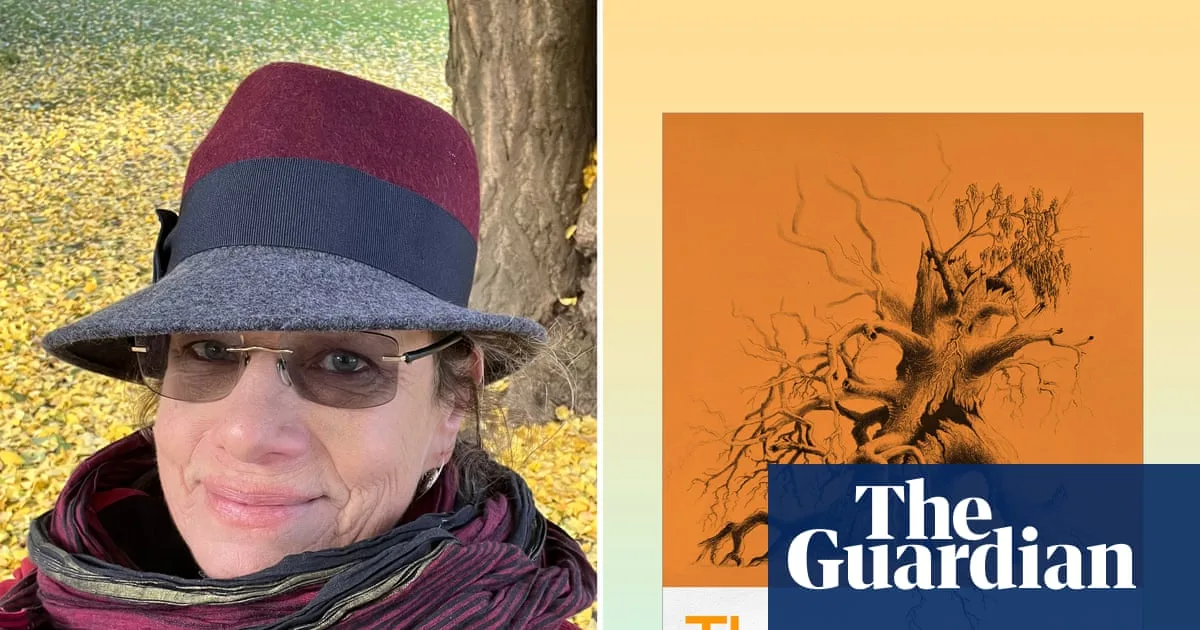
Eva Hornung’s novels have been praised for their visceral and sometimes brutal depictions; their darkness, but also sensuality and their exploration of risky themes. 2009’s Dog Boy, a harrowing but compelling novel about a boy who grows up in a pack of feral dogs, won the Prime Minister’s Literary Award; The Last Garden, about the repercussions of a murder-suicide, was awarded the 2018 South Australian Premier’s Prize for Literature.
The Minstrels is the South Australian author at her most ambitious: an epic that spans the lifetime of its protagonist, and reckons with not only personal tragedies and family drama but the larger wound of First Nations’ dispossession and the climate crisis. The story follows Gem, a feisty young girl who, along with her older brother, Will, enjoys all the freedoms of farm life on the family property in Dunriver, a small town in an unspecified part of Australia. But it’s a harsh world and drought is omnipresent.
The first third of the novel plods along as it establishes the setting and Gem and Will’s close relationship, Hornung relying on finely wrought sentences and paragraphs that contain whole worlds. If Gem were not such beguiling company, and her relationship with her brother not so intriguing, a reader might be tempted to wonder what all this is about. But then something happens during what is known as “the harvest run”: an annual ritual in which the district’s teenagers don balaclavas and sprint to a gorge and pools known as “the Minstrels” to lose their virginity. For Gem and Will, everything changes during one such run.

Decades of self-discovery follow – and then an unexpected letter from a lawyer forces Gem back to the family property. She discovers she is a highly capable farmer and relishes the work, even though she is haunted by the grief she’s experienced in this place. Hornung excels at depicting the hardship and brutality of farm life, as in a vivid scene of a ewe in tortured labour. Time marches forward, Gem ages, and soon the novel enters the realm of speculative fiction – or not so speculative, in this era of climate disaster, division, drones and AI.
Gem, tenacious as ever, ploughs on, forging connections with others in the district who are trying to survive, including Uncle Jim, a First Nations elder, with whom Gem collaborates to help preserve the local language. Slowly, but inescapably, the world outside the farm becomes a dangerous place, but Gem is determined to live with depth and meaning. That seems to be The Minstrels’ central and, at times, raging question: how are we to live on this continent as we progressively destroy every part of it?