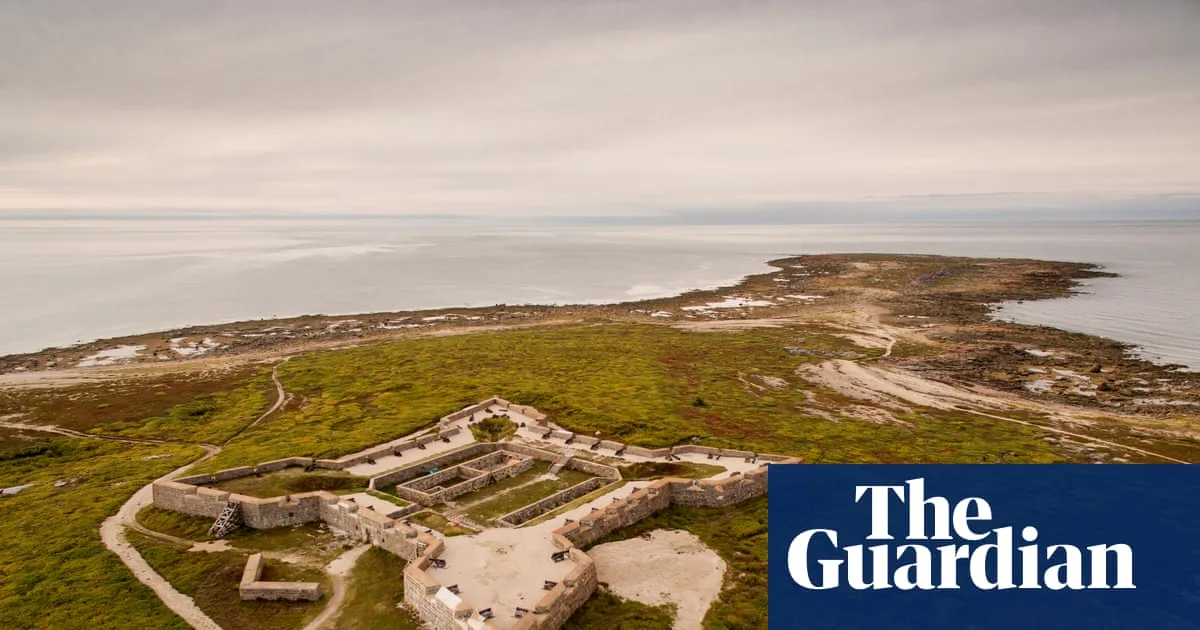
Ian McGuire's latest novel, White River Crossing, transports readers to the frozen wilds of 18th-century Canada, where colonial greed sets the stage for a disastrous gold-seeking expedition. Following his acclaimed works The North Water and The Abstainer, McGuire continues his exploration of Victorian imperialism's brutal underbelly, this time set in 1766 at the Hudson's Bay Company's Prince of Wales Fort in present-day northern Manitoba.
The story begins when a pedlar brings a rock veined with gold to Magnus Norton, the fort's chief factor. Consumed by greed, Norton dispatches his deputy John Shaw and two other company men, along with two Dene couples as guides, on a secret mission to claim the treasure. Norton, nearing retirement and already wealthy, hopes to return to England even richer, deliberately concealing the true purpose from his superiors.
The narrative primarily follows Thomas Hearn, a bookish former ordinand grappling with grief and loss of faith. In contrast, Shaw embodies brutish appetites, viewing both the land and its people as resources to exploit. As the group travels north, Shaw's crude arrogance leads to a fateful encounter: after winning back a Dene woman for the hot-headed guide Nabayah, Shaw demands a night with her as his reward, with devastating consequences for all.

McGuire vividly captures the bleak beauty of the landscape, from 'the blueish peaks of frost-tipped hills' to 'piles of shattered marrow bone and antler'. The novel's propulsive pace is marbled with cruelty and violence, including a graphically described amputation. However, character depth proves uneven: Hearn is convincingly broken and remade, while Shaw remains one-dimensionally villainous, and the Dene perspectives are largely overlooked.
In a foreword, McGuire pre-empts criticism of cultural appropriation by citing a paucity of first-hand Dene histories and emphasising commonality over difference. Yet the novel succeeds most when it allows Indigenous characters to see the world on their own terms, as in a powerful scene where a shaman expels an evil spirit. Ultimately, White River Crossing is a gripping but flawed tale of colonial greed and its human cost.