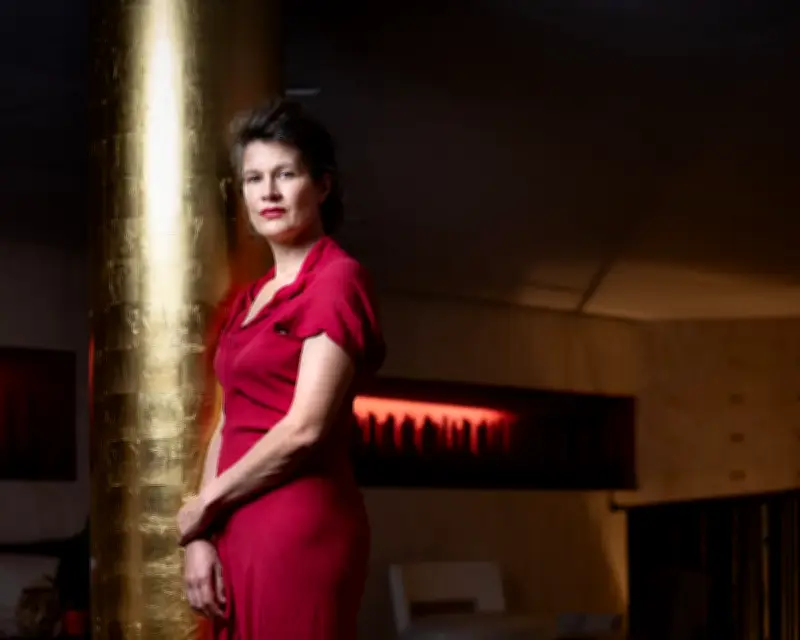
French musician Camille has released her sixth album, The Sound of Milk, a triple record that took 15 years to complete. The album is divided into three parts: Naissance (2015), Enfance (2020), and Adolescence (2025), each documenting a stage of her two children's lives. Camille, now 48, says she delayed releasing the parts because her children were too young and she felt too exposed. 'I needed to be able to step back and look at the journey. I needed to feel grounded enough to release it in a world that does not respect children and mothers,' she explains.
A Sonic Journey Through Motherhood
Naissance features no real instruments, relying instead on field recordings of baby gurgles and found sounds. Camille, known for vocal experimentation like beatboxing and raspberries, sees it as a manifesto against the disembodied nature of pop singing. 'As a woman, music is about a way of living. It's about breathing, being with my kids, singing along with what's going on around me in an open world,' she says. Enfance is described as a 'pocket musical,' full of ditties parents invent to teach children about everyday life. 'All families are pieces of art. We create our values, our worlds, a way of talking to each other,' she adds.
Adolescence is the most produced part, aligning with Camille's idiosyncratic pop catalogue since 2002, which includes songs for Ratatouille, Le Petit Prince, and the Oscar-winning soundtrack for Emilia Pérez (2024). The album addresses ecological collapse, disrespect for future generations, and screen-mediated myopia, but overall it defies darkness with joy, foregrounding maternal experience despite societal sidelining.

Fighting for the Album's Vision
Camille faced resistance from her label, Because (also home to Charlotte Gainsbourg), which wanted conventional radio songs. 'It took a lot of time to convince my label that this could be a record, because these songs are considered mother's things: “This should stay in your house. Do proper songs, radio songs, in the studio.” But these are songs. This is my life, and this – mothering – is making the world go around, guys, because this is where we all come from,' she asserts.
She acknowledges that the album's sing-songy vignettes might provoke cringes due to internalised misogyny. 'It's provocative,' she agrees. 'I completely understand what you're saying and I really appreciate you telling me that because I think lots of people are going to feel that way.' Camille herself initially felt the recordings were too private and sappy, but realised it was internalised misogyny. 'You believe you shouldn't be there,' she says. After her 2011 album Ilo Veyou dealt with her first pregnancy, she thought she shouldn't revisit motherhood, but then thought, 'I'll always be a mother – I can make 10 records about motherhood.'
Time Travel and Joy as Taboo
The album contains songs that reappear in different forms across the three parts, creating a sense of time travel. For instance, 'Monsieur Garçon' from Adolescence contrasts her teenage son with his toddler self. Camille calls parenthood 'hallucinatory' and 'mystical,' describing the album as about 'that vertigo, that wonder at the miracle of life.'
She criticises French President Emmanuel Macron's 2024 call for 'le réarmement démographique' (rearming the population to counter low birthrates). 'You can feel like you're making soldiers for the world, and if they're not soldiers, they can get bombed, because children and mothers and families can be bombed in this world,' she says, referencing artist Käthe Kollwitz's pacifist works. Camille argues that the approach ignores structural causes: 'Mothers deliver then they're asked to be efficient the next day, month or three months after. This is now what life is about.' The Sound of Milk stands for 'time, for joy, for what happens when you have time with your children.' She intentionally omitted the tough parts of parenting, noting that 'joy has become a taboo. It's irritating. We don't want to hear about it, it's like it's in the way. It's like ecology – oh, this is a luxury.'

Personal Background and Artistic Philosophy
Camille describes herself as 'completely a dark person' but uses optimism to counter depression. 'To fight depression you need joy. It sounds very redundant, but this is why I chose singing,' she says. Her 'high level of sensitivity' stems from a family history of darkness: her father was abandoned as a child and adopted, while her mother came from a wealthy family where nannies raised babies. Camille's mother had a breakdown after returning to work when her brother was three months old. Camille sees breastfeeding as 'slightly mending a transgenerational void on both sides.' The album cover shows her naked, feeding a baby on a blank tarmac surface, commenting on the realities of raising kids in the West. 'This is not a world for children and mothers,' she reiterates.
Family and Future
Her children, now teenagers, love the record. 'They're really proud,' she says. 'For his end-of-year show, my son invited me to sing the songs with his friends. And he's a teenager – he's going to be 16 – so I think it's very sweet.' She cries happy tears. Paradoxically, this will be the first tour her family won't join, making her reflect on creating family with her band and the public. Her kids' teenage years have sparked a new adolescence for Camille. 'In adolescence, you feel you could live without your parents, but you still need them. And as a parent, you feel, oh, I just love being with my children and they depend on me, but one day they'll be living their own lives. You're in between two worlds and you need to prepare,' she explains. 'It feels so good to care for the ones you love, it takes you out of your egocentric world, but then you think, who am I? How can I feel good with just myself so that they feel freer to become adults because they can feel that the mother is not depending on them to be happy? It's a big kick in the ass!'
Camille made the record to celebrate the magic of motherhood and to thank her children, enabling her to 'move on and become someone else again – and reinvent myself again and again and again.' The Sound of Milk is released via Because on 18 September. Camille plays Symphonique concerts in France on 24 June, 7 and 17 July, and tours France and Switzerland from 5 November.