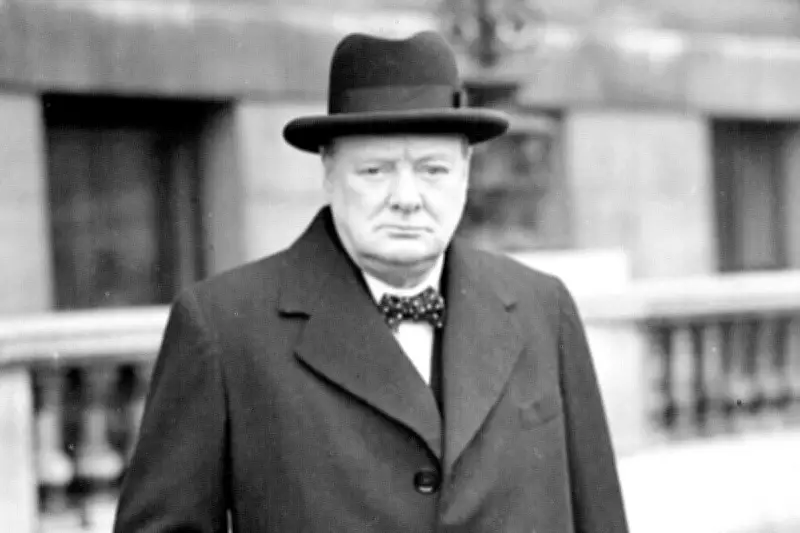
A video installation at the National Portrait Gallery in London has been removed following a dispute over its depiction of Sir Winston Churchill's role in the 1943 Bengal famine. The 40-minute piece, titled Persistence, was created by 2019 Turner Prize winner Helen Cammock and had referred to 'the wilful starvation of the Indian population by Winston Churchill'.
Open Letter Challenges Claims
The work prompted Churchill biographer Lord Andrew Roberts to lead an open letter challenging the claims, which was signed by more than 50 peers including Churchill’s grandson Sir Nicholas Soames, Michael Grade, and Zac Goldsmith. In the letter, Lord Roberts described the installation's description of Churchill as a 'bare-faced lie' and an 'ideologically motivated rant' that 'denigrated' the war-time Prime Minister.
Cammock, who narrated the work, also examined Oliver Cromwell’s 17th century military campaigns in Ireland and said he had 'starved people, en masse', which was 'a little like' Churchill in the Bengal famine. The Bengal famine of 1943 is estimated to have killed more than three million people in eastern India, with Churchill’s policies at the time being criticised by some for exacerbating the issue.

Artist Defends Work
After the work was taken down, Cammock said she made the decision to 'withdraw' it from the exhibition, though she said the decision was not 'made lightly'. She stated: 'There is an incredible pressure on artists and arts institutions to bend to external pressure; to be benign at best and silent at worst. I do not accept this pressure. To question, challenge and explore ideas and histories is vital to a healthy society and art is intrinsic to this.'
Cammock added that her piece 'asks us to think about who is honoured and valorised and who is not; whose stories are told and whose are not'. She described Persistence as 'not a documentary' but rather a work that asks viewers to 'consider the presence of multiple histories and nuanced and complex narratives and their readings'.
Historical Context
Lord Roberts argued that the Bengal famine was caused by a typhoon and that Churchill told his war cabinet every effort must be made to help those affected and asked international leaders to send in grain. He said: 'The Bengal famine was an unimaginable tragedy and disaster, but the accusation that it was deliberately visited upon the Bengalis by Churchill is foul and vile. It is also historically ludicrous, as every serious historian of the period attests.'
Gallery Statement
Cammock’s piece had been developed with the National Portrait Gallery since 2023 and had been on temporary display for the past 10 months in an exhibition titled Artists First: Contemporary Perspectives On Portraiture, which is due to end in August. In a statement, the gallery said: 'Helen Cammock has decided to remove her film, Persistence, from display at the National Portrait Gallery. We respect her decision, just as we acknowledge the opinions of those who were offended by what was said in the film.'
The gallery added: 'The aim of this project was to give artists the opportunity to create works as personal and creative responses to our collection. The work was presented as an artistic piece, not a documentary, and the views expressed in the film do not necessarily reflect those of the NPG.'
Lord Roberts commended Cammock for 'doing the honourable thing and putting historical truth over her artistic licence'.