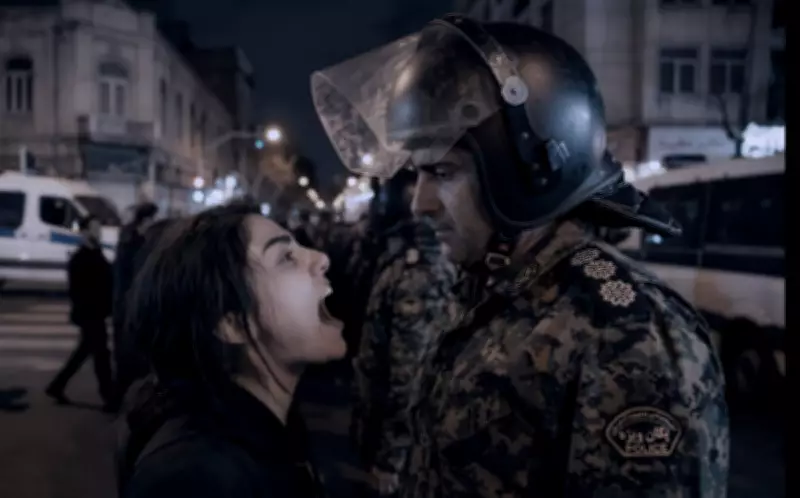
A groundbreaking 75-minute drama about the brutal crackdown on anti-government protesters in Iran is set to premiere at the Tribeca film festival in New York next week. Titled Dreams of Violets, the film is based on journalism, video footage, and eyewitness accounts. Iranian-British director Ash Koosha states, 'I would say 80% of it is a recreation of events that actually happened.' However, Dreams of Violets is a work of fiction, not a documentary, following a group of strangers caught up in the protests who meet by chance in an alleyway.
How Was the Film Made So Quickly?
Koosha managed to complete the film in less than six months by using artificial intelligence. Every image and character in Dreams of Violets is AI-generated. He explains that he created characters by describing their physical appearances, using people he has known as references. 'Because of the security issue, it would not be safe for the characters to even remotely resemble someone,' he says, referring to the dangers of depicting real individuals in Iran.
A First for Major Film Festivals
Dreams of Violets is the first fully AI live-action feature accepted at a major film festival. This follows the screening of AI action-adventure Hell Grind at Cannes last month, though not in the official selection, and the release of all-AI animated feature Where the Robots Grow in 2024. Koosha notes that gaining artistic and critical credibility has not been easy: 'A lot of the traditional festivals just don't want to touch AI. They don't want to even talk about it.'

Koosha's Background and Motivation
Born in Iran, Koosha has lived in London for nearly 20 years. His career began in Tehran, where he played in bands and acted, and he was imprisoned for two weeks for organizing a music festival. After moving to London, he continued making music and co-founded AI start-up Claigrid. In 2018, he developed an AI singer named Yona. He has also co-founded a studio, Fountain 0, to produce AI-generated films. Koosha says he had never been political until January this year, when he saw horrifying footage from Iran. 'This made me political. This is where I drew the line. I thought: you know what, I'm going to make the first film about this.'
The Filmmaking Process
The script was not AI-generated, but Koosha used the chatbot Claude to improve language and structure. He emphasizes the flexibility of AI: 'You just open another session. You don't have to worry that you're rewriting. You multiply your imagination until something hits the right spot.' He also composed the score and edited the film without AI. For future projects, Koosha plans to license real faces for characters, allowing actors to voice act and share in financial gains.
Cost and Accessibility
Koosha notes that traditional CGI would have cost millions, but he spent under $2,000. He believes AI can democratize the industry, enabling indie filmmakers to create studio-quality films at low cost. 'An indie film-maker mind is often a lot more fresh and creative than an industrial film-maker mind,' he says.
Reactions and Future Outlook
Koosha admits he generally dislikes AI films: 'So far, I hate anything made that is made with AI. It disgusts me.' However, he sees his work as using a tool to tell a story, not selling AI. He voice-acted all roles and used AI to modify voices. Koosha believes audiences will connect with AI characters, comparing them to animated figures like Rick from Rick and Morty or Pixar characters. He predicts that AI will create new jobs and reshape the industry, with mini-studios emerging and filmmakers becoming studios themselves.