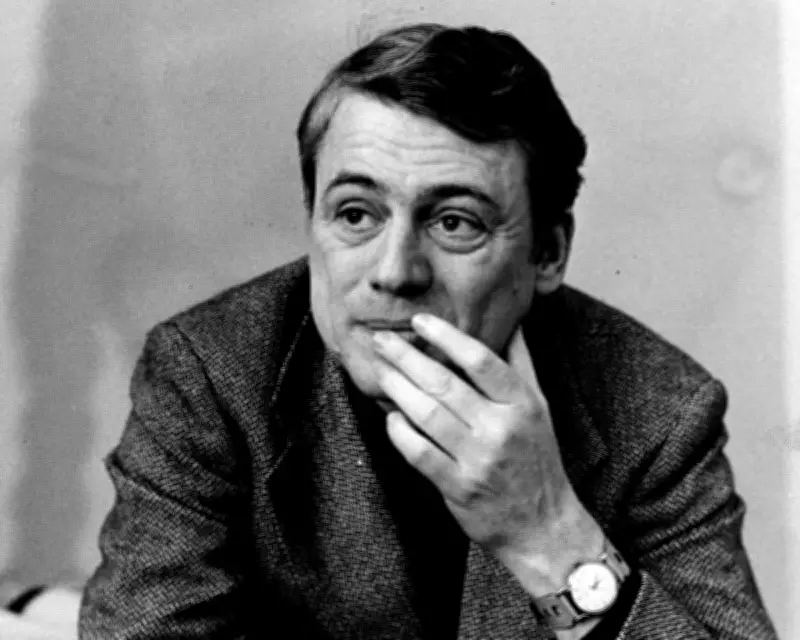
The German film industry and literary world are mourning the loss of a towering intellectual figure. Alexander Kluge, the acclaimed author and a pivotal film-maker within the New German Cinema movement, has died at the age of 94, as confirmed by his publisher. A committed pacifist and one of the final living torchbearers of the Frankfurt school of neo-Marxist cultural criticism, Kluge leaves behind a profound legacy of artistic innovation.
A Trailblazing Career in Film and Literature
Kluge, born in 1932 in Halberstadt, western Germany, narrowly survived the Allied bombing of his hometown on 8 April 1945. After the war, he pursued studies in law, history, and church music at Frankfurt University, where he was mentored by the renowned philosopher Theodor Adorno. Initially practising as a lawyer, Kluge felt an increasing pull towards literature and cinema, leading him to sign the groundbreaking Oberhausen Manifesto in 1962. This document called for the German film industry to break free from shallow tearjerkers and patriotic Heimatfilme, setting the stage for a cinematic revolution.
Cinematic Achievements and International Recognition
Kluge quickly established himself as a master of cinematic collages, directing intellectually rewarding, if sometimes oblique, filmic essays. His 1966 film Abschied von Gestern, released as Yesterday Girl in the United States, was among the first to emerge from the Oberhausen Manifesto. Telling the story of a Jewish woman struggling to settle in West Germany after fleeing from the east, the film employed a jarring style with discontinuous sound and a non-sequential narrative. It won the Silver Lion at the Venice Film Festival, marking the first such award for a German director after the Second World War.

Kluge solidified his reputation by winning the Golden Lion at Venice just two years later with Artists in the Big Top: Perplexed. His work as a former assistant to expressionist master Fritz Lang informed his unique directorial approach, blending narrative experimentation with deep philosophical inquiry.
Architect of New German Cinema
Beyond his own films, Kluge played a crucial organisational role in the rule-breaking New German Cinema movement. This movement brought forth better-known auteurs such as Rainer Werner Fassbinder and Werner Herzog, reshaping German film culture. Kluge managed a rare balancing act, serving as both a public intellectual and a commercially successful film producer. In 1987, he founded the production company DCTP, through which he produced a steady stream of arts, magazine, and interview programmes for German television, ensuring experimental film reached the small screen well into his later years.
Intellectual Legacy and Personal Convictions
Alongside philosopher Jürgen Habermas, who died earlier this month at 96, Kluge was one of the last prominent figures of the Frankfurt school, which applied neo-Marxist theory to cultural criticism. His wartime experiences profoundly shaped his worldview, making him a committed pacifist. In a 2022 radio interview, he stated he had been happy to see US troops march into his hometown in 1945, arguing that "there is nothing evil about capitulation if it ends the war." This perspective sparked controversy, with critics accusing him of muddling the historic lessons of aggressor nations versus those under attack.
Kluge's literary output was equally significant. In 2018, he collaborated with US author Ben Lerner on The Snows of Venice, a book described as a "poetic dialogue." Reflecting on his craft, Kluge told the Paris Review, "My language is not as beautiful as lyrics. Poets are diamond polishers. But there are also collectors of raw diamonds – I am a good archaeologist." This metaphor aptly captures his role as an excavator of cultural and historical truths through both film and prose.
Alexander Kluge's death marks the end of an era for German cinema and critical thought. His contributions as a film-maker, author, and intellectual ensure his influence will endure, inspiring future generations to challenge conventions and explore the depths of human experience through art.