Dhurandhar's Record-Breaking Success Reignites Bollywood Nationalism Debate
The unprecedented box office performance of the Hindi film Dhurandhar has intensified scrutiny around a growing wave of Bollywood productions that rely on patriotic spectacle and polarising narratives. Released in late 2025, this espionage thriller has become one of the most commercially successful Hindi films in history, grossing over Rs 10 billion (£81.6 million) worldwide within just three weeks.
The Plot That Blurs Fiction and Reality
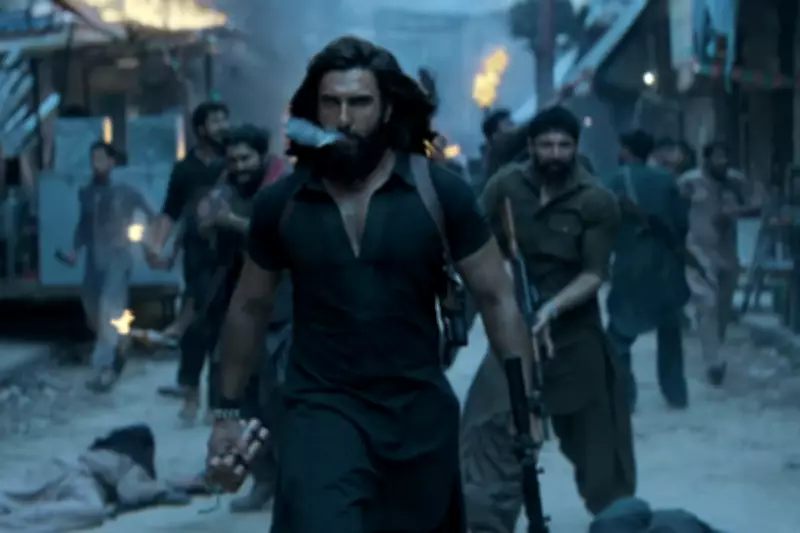
Directed by Aditya Dhar, Dhurandhar follows an Indian intelligence operative, portrayed by Ranveer Singh, who infiltrates Pakistan's criminal underworld to dismantle a terrorist network targeting India. The narrative cleverly blends fictional espionage with real historical events, including the 2001 attack on India's parliament and the 2008 Mumbai attacks, incorporating archival footage and authentic audio recordings for dramatic effect.
This Thursday marks the release of Dhurandhar: The Revenge, a sequel rushed into production less than four months after the original. The follow-up has already smashed records for advance bookings, with its trailer accumulating over 39 million YouTube views within 24 hours of release. Industry analysts suggest this sequel appears poised to cement hypermasculine nationalism as one of Bollywood's most reliable box-office formulas.

Controversial Narrative Construction
At the heart of the debate surrounding Dhurandhar is its narrative construction, which claims to be "inspired by true events" while dramatising intelligence operations and terrorist plots behind real-life tragedies. Critics argue the film selectively deploys genuine historical suffering to build a politically-charged story about national security and revenge.
One particularly contentious early sequence recreates the 1999 hijacking of an Indian passenger aircraft by militants linked to Pakistan-based groups. In this scene, the fictional Intelligence Bureau director, widely interpreted as inspired by incumbent national security adviser Ajit Doval, urges hostages to shout "Bharat Mata ki Jai" (Victory to Mother India). When passengers remain silent, a militant mocks them, declaring "Hindus are a cowardly nation"—a moment that also opens the sequel's trailer.
This scene establishes what critics describe as the film's central dynamic: portraying Pakistan-linked militants as brutal antagonists while presenting Hindus as victims of cross-border terrorism. For many viewers, this blend of history and mythmaking creates an immersive patriotic thriller. For detractors, it dangerously blurs boundaries between historical representation and political propaganda.
Subtle Communal Undertones and Political Echoes
The film contains numerous elements that critics argue carry subtle communal undertones. In one sequence, intelligence officials trace terrorist financing to counterfeit currency allegedly printed in Pakistan and smuggled into India through networks including butcher shops—a detail critics note carries significance since India's meat trade is largely operated by Muslims.
The storyline further suggests that demonetisation—the sudden withdrawal of high-value banknotes by Prime Minister Narendra Modi's government in 2016—dealt a decisive blow to these networks. In reality, this policy caused widespread economic disruption, with its effectiveness in combating tax evasion remaining hotly debated.
Critical Reception and Backlash
Media outlets have offered sharply divided assessments of the film. The Indian Express argues Dhurandhar pushes "a bigoted vision," while The Wire contends "the venom in Dhar's film is strategically spilled through the selective truths it wants to tell." Scroll describes it as a "techno-jingo gorefest," noting the deliberate violence serves as both stylistic choice and narrative strategy.

Political commentator Dhruv Rathee has characterised the production as "well-made propaganda," comparing it to Nazi-era propaganda films and arguing it's "more dangerous" because audiences might ignore factual inaccuracies when presented as gripping entertainment. Film critic Anupama Chopra describes it as "an exhausting, relentless and frenzied espionage thriller" driven by "too much testosterone, shrill nationalism and inflammatory anti-Pakistan narratives."
The controversy extends even to reactions against the film's critics. Reviewers who offered anything less than fulsome praise faced waves of trolling and abuse on social media, prompting the Film Critics Guild of India to issue a statement condemning "targeted attacks, harassment and hate" directed at its members.
A Growing Cinematic Trend
Dhurandhar represents the latest manifestation of a broader trend in Bollywood toward films rooted in historical grievances and national security themes. Recent prominent examples include Uri: The Surgical Strike (2019), The Kashmir Files (2022), The Kerala Story (2023), Article 370 (2024), and The Sabarmati Report (2024).
These productions have achieved remarkable commercial success, with Uri and The Kashmir Files each earning approximately Rs 3.42 billion (£27.6 million) worldwide, while The Kerala Story crossed Rs 3 billion (£24.2 million). The political establishment has frequently embraced these films, with Prime Minister Modi attending a special screening of The Sabarmati Report at parliament alongside senior cabinet ministers, while BJP-ruled states granted the film tax exemptions.
Director Dhar's Political Cinematic Journey
Few filmmakers embody this trend as clearly as Aditya Dhar himself, who rose to prominence with Uri: The Surgical Strike, a film dramatising airstrikes on alleged militant bases in Pakistan following the 2016 attack on an Indian military camp in Uri, Kashmir. The film became one of the year's biggest box-office successes, earned Dhar a National Film Award, and saw its catchphrase "How's the josh?" adopted by multiple BJP ministers during 2019 election campaign rallies.
Dhar subsequently co-wrote and produced Article 370, focusing on the Indian government's decision to revoke constitutional autonomy in Kashmir. Ahead of its release, Prime Minister Modi praised the movie at a campaign rally, suggesting it would "help people get correct information" about the policy.
Film scholar Ira Bhaskar noted two years ago that films like Dhurandhar were no longer merely tied to electoral cycles, predicting Bollywood would soon see "big-banner, big-budget films being made to serve propaganda purposes."
Whether viewed as pure entertainment or politically-motivated storytelling, Dhurandhar undeniably points to a pattern Bollywood has returned to repeatedly over the past decade: chest-thumping patriotism intertwined with religious polarisation remains a remarkably bankable cinematic combination.