Emerald Fennell's Wuthering Heights Adaptation Faces Scathing Review for Hollow Interpretation
Emerald Fennell's latest cinematic venture, an adaptation of Emily Brontë's classic 1847 novel Wuthering Heights, has been met with severe criticism, described as an astonishingly bad and limp rendition that resembles a Mills & Boon romance. The film, starring Margot Robbie and Jacob Elordi, is accused of stripping the novel of its emotional depth and provocative themes, reducing it to a marketable but empty spectacle.
Performances and Provocations Fall Flat
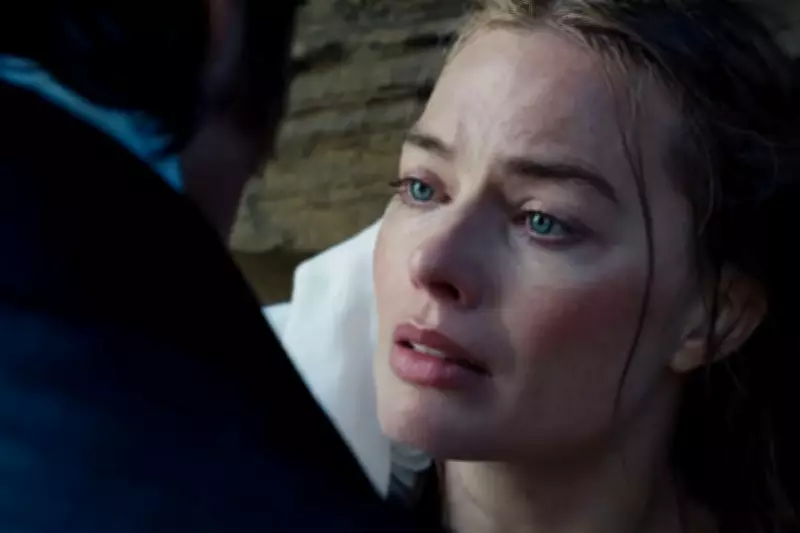
Margot Robbie and Jacob Elordi's portrayals of Cathy and Heathcliff are pushed almost to the border of pantomime, lacking the complexity required for such iconic characters. Fennell's direction and script have been lambasted for provocations that simplistically categorise the poor as sexual deviants and the rich as clueless prudes, failing to engage with the novel's nuanced social critiques. The film's attempt at sadomasochistic elements comes across as limp and joke-like, rather than genuinely disturbing or thought-provoking.
Gutting a Literary Masterpiece
Fennell's adaptation, stylised with quotation marks in its title, claims to capture her teenage reading experience but is criticised for using interpretation as a guise to gut one of literature's most impassioned works. By focusing only on the first half of the novel, a tradition since earlier film versions, the film loses the emotional violence and rage that define Brontë's original. Heathcliff is transformed from a vengeful, monstrous figure into a wet-eyed romantic mirage, while Cathy's social desperation is flattened into a clichéd love triangle narrative.

Flattened Narrative and Missed Opportunities
The script conflates characters like Hindley and Mr Earnshaw, played by Martin Clunes, simplifying the story into a tale of a poor maiden escaping her circumstances through marriage, rather than exploring the destructive codependence and themes of race and colonialism present in the book. With casting choices that ignore Heathcliff's ethnically ambiguous appearance, the film obliterates key aspects of ostracisation and social tension, making the world more suited to a fairytale than a Gothic masterwork.
Visual and Musical Elements
While the film features elaborate costumes by Jacqueline Durran and sets by Suzie Davies that reference cinephile classics, these elements are criticised as garish when juxtaposed with Brontë's thorny language. Linus Sandgren's soft cinematography adds to the tame atmosphere, though Charli xcx and Anthony Willis's musical contributions are noted for providing a sense of dread that is otherwise missing. Overall, the adaptation is seen as a hollow work that fails to disturb or expand the mind, instead serving as a distraction in a culture that has denigrated literature.
In conclusion, Fennell's loss may be Brontë's gain, as the novel remains singular and untarnished by this poorly executed film. Wuthering Heights is in cinemas from 13 February, but critics urge viewers to seek out the original text for a truly impactful experience.