New Film on Nazi Collaborator Sparks Heated Debate in France
Xavier Giannoli's latest cinematic offering, Les Rayons et les Ombres (Rays and Shadows), has ignited a fierce national conversation in France. The film delves into the complex and contentious story of Jean Luchaire, a press baron who transitioned from pacifism to active collaboration with the Nazis during World War II. Told through the postwar reflections of his daughter, Corinne Luchaire, a once-celebrated actress now grappling with her father's legacy, the narrative challenges viewers to confront uncomfortable truths about moral compromise and historical responsibility.
Controversial Portrayal of a Dark Era
Despite its imposing runtime exceeding three hours, Rays and Shadows attracted over 300,000 spectators in its opening week in mid-March. However, its reception has been sharply divided. Centre and right-leaning critics have praised the film as a masterpiece of historical nuance, while leftist publications like Libération and L'Humanité accuse it of relativising the actions of those who willingly aided the Nazi regime. The film controversially depicts Jean Luchaire not as a fervent ideologue but as a disillusioned and feckless figure whose personal weaknesses accelerated his descent into treachery.
Director Xavier Giannoli, who spent five years developing the script with screenwriters Jacques Fieschi and Yves Stavrides, explains his motivation: "I wanted to make this film to show all the traps that a human being can fall into," he says. "How suddenly your own little fears and cowardice can make history." Giannoli, whose father was a prominent journalist, has a longstanding interest in how media and affluent elites can be corrupted, a theme he previously explored in his adaptation of Balzac's Lost Illusions.

Star-Studded Cast and Historical Context
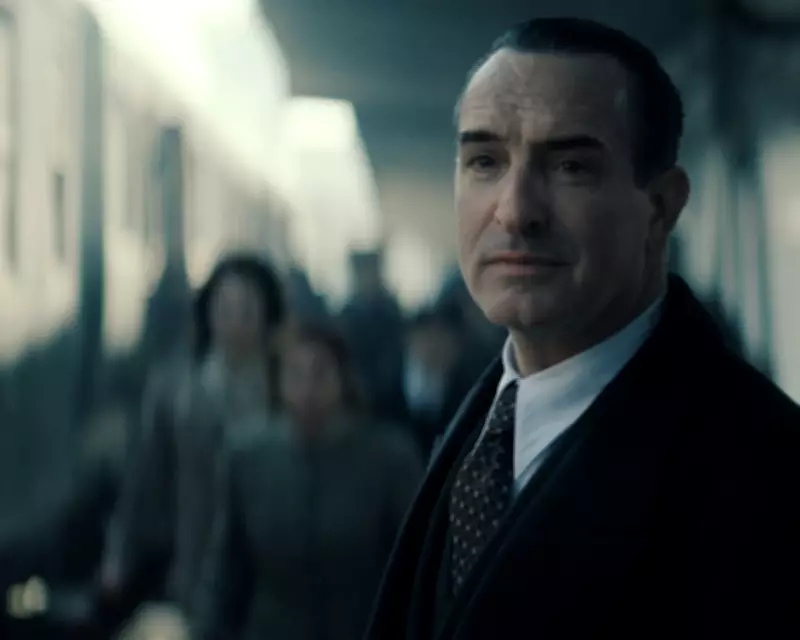
Jean Luchaire is portrayed by Oscar-winner Jean Dujardin, known for The Artist, a casting choice Giannoli deemed essential to capture the character's seductive charm. "Luchaire embodied a certain Parisianism," notes Fieschi, "He had a lot of mistresses and was part of this amoral fringe of society. If he had been played by someone with an ugly face and no charm it would not have corresponded to the reality." The film also features newcomer Nastya Golubeva Carax as Corinne Luchaire, whose performance highlights the personal toll of her father's actions.
The narrative delves into Luchaire's relationship with Otto Abetz, played by August Diehl, a Francophile who became German ambassador to France. Their friendship, rooted in shared pacifist ideals after World War I, evolves into a lethal propaganda alliance. Giannoli emphasizes, "There is no Jean Luchaire without Otto Abetz," noting Abetz's role in appointing Luchaire as press tsar and funding the collaborationist newspaper Les Nouveaux Temps.
Scrutiny and Historical Accuracy
The film vividly portrays the opulent and corrupt lifestyle of collaborationist elites, with scenes of lavish parties, drug-fuelled orgies, and extravagant meals. "We spent a lot of money with the food designer to find just the right caviar," Giannoli reveals, "There was no food at this time in France and it felt necessary to show how immoral and corrupt these elites had become."
However, historians have raised questions about the film's accuracy. Laurent Joly, an expert on the Vichy regime, argues that Luchaire's collaboration stemmed from amorality and venality rather than pacifism. "He was always a conman," Joly states, "That is the key to his path." Joly also critiques the depiction of Corinne as a victim, noting that her postwar suffering was less extreme than shown, and her memoirs have been embraced by far-right publishers.

Giannoli acknowledges the challenges of balancing fascination with indignation. Consulting historian Pascal Ory, he was advised that "nobody would forgive me if I told just one lie," but also that "neither would anybody forgive me if I told the truth." This delicate balance reflects the ongoing sensitivity of France's Vichy past, a topic once taboo in cinema, as seen in the backlash against Louis Malle's Lacombe, Lucien in 1974.
Les Rayons et les Ombres continues to provoke discussion as it plays in French cinemas, forcing audiences to reckon with the blurred lines between heroism and villainy in one of history's darkest chapters.