Iñárritu's Anti-AI Exhibition Revives Amores Perros Footage in LA Show
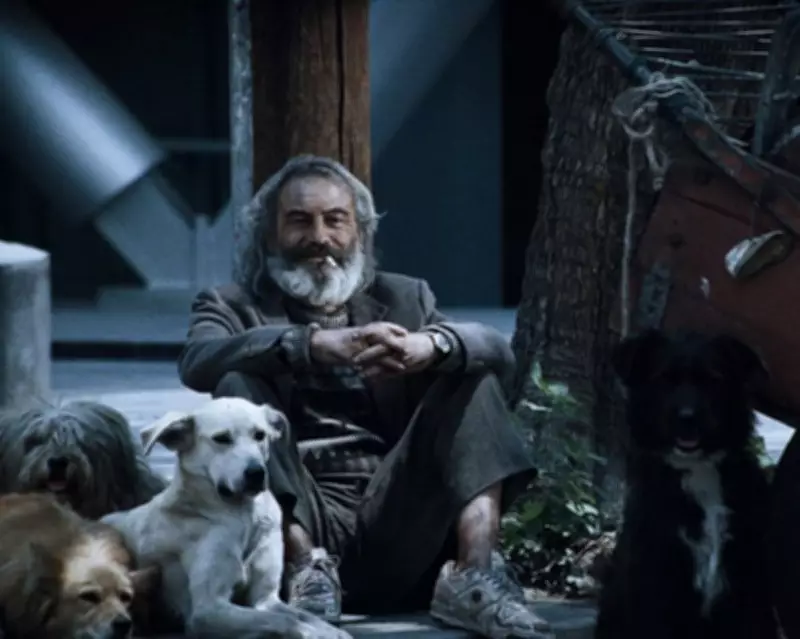
Oscar-winning Mexican director Alejandro González Iñárritu has launched a groundbreaking art exhibition that returns to his iconic 2000 debut film Amores Perros, describing it as an explicit "anti-AI exhibition". The installation, titled Sueño Perro, is currently on display at the Los Angeles County Museum of Art until 26 July, offering visitors an experiential journey through hundreds of hours of previously unseen footage.
A Seven-Year Creative Odyssey
Iñárritu spent seven years meticulously reviewing approximately 1 million feet of archived celluloid that never made it into the original film. This monumental archive was discovered preserved at Mexico's National Autonomous University (UNAM), a development the director described as miraculous. "I was really blown by that," Iñárritu revealed, crediting producers Mónica Lozano, Tita Lombardo and Martha Sosa for preserving the material.
The director explained his motivation: "I said to myself: 'Well, maybe I can rescue things that never did make it, and maybe they mean something.' That was a seven-year process, to discover if there was something or not." He noted that while the original film used about 18,000 feet of footage, the archive represented "a crazy amount of film" that captured his compulsive shooting style during production.

Breaking Free from Narrative Constraints
Sueño Perro represents a radical departure from conventional filmmaking, transforming cinematic fragments into what Iñárritu calls "light sculptures" and a "dream" experience. The installation liberates images from traditional storytelling structures, creating what the director describes as "a representation of how our memory works when we remember a film."
"It's when you are liberated from the narratives that we are so addicted to – plot twists and all that – when you liberate the images from that, the images have to say something," Iñárritu explained. "Not by serving any narrative, but by just being what I found. The way you remember a film is never complete, you always remember flickers, images, moments."
Philosophical Foundations and Influences
The exhibition draws inspiration from multiple artistic and philosophical sources:
- Latin American Boom writers including Carlos Fuentes, Gabriel García Márquez, Mario Vargas Llosa, and Julio Cortázar
- Akira Kurosawa's groundbreaking film Rashômon, which explores multiple perspectives on a single event
- The director's father, whom Iñárritu credits as a natural storyteller who inspired his narrative approach
Iñárritu elaborated on his philosophical approach: "One of the things that we have lost is that we have confused truth with reality. Reality does not give a damn about our truth or about our beliefs. Truth feels very personal, but truth is not reality. Reality is much more complex."
A Tactile, Anti-Technological Statement
The installation deliberately emphasizes physical, sensory experience over digital convenience. Visitors enter a confined space filled with smoke, light, and the characteristic sounds of Mexico City, where they encounter traditional film projectors operating at 24 frames per second.
"I think one of the very powerful things from this experiment is that you arrive to a place that is dark, and you confront these huge projectors that are dinosaurs, that are the magic lanterns, projecting shafts of light," Iñárritu described. "The physicality of it is a statement against AI. Suddenly, the people feel alive in that room."
The director expressed concern about artificial intelligence's impact on cinema: "Now, with AI, we are arriving at a limit, where I think our senses will be so lacking in information that it will affect our ability to really learn from what we see and hear in a holistic, wholesome way." He warned that AI might create a crisis where audiences "start doubting everything we see on the screen," making tactile experiences like Sueño Perro increasingly vital.

Parallel Creative Process with Hollywood Project
Iñárritu developed the installation while working on his upcoming Hollywood film Digger, starring Tom Cruise. He found the archival work provided a refreshing counterbalance to the pressures of big-budget filmmaking.
"There's so much pressure to finding the story, and that's what I think was liberating about doing the installations, it was almost like a game," he said. "It was very liberating to not have that financial pressure, and to be doing this in parallel. It was a great way to escape a little bit."
Regarding his experience working with Cruise, Iñárritu admitted to being "a little star struck," describing the collaboration as "another kind of intensity" that was "very fun" and "an exhilarating experience."
Enduring Legacy and Contemporary Relevance
The exhibition coincides with the 20th anniversary of Amores Perros, which recently received a Criterion Collection remaster. Iñárritu noted that revisiting his debut film revealed its enduring power: "The bite of these dogs was still really, really bad. It was fascinating to see that the film was still holding up so well."
Sueño Perro: A Film Installation by Alejandro G Iñárritu represents not just a return to the director's roots, but a profound statement about cinema's essence in an increasingly digital age. By transforming archival footage into sensory experience and explicitly positioning the work against artificial intelligence, Iñárritu offers both a nostalgic look backward and a provocative vision for cinema's future.