Podcast Delves Into Kennedy Family's Tragic History and Curse Origins
The latest installment of the Daily Mail's Queens, Kings and Dastardly Things podcast has concluded its three-part exploration of America's royal family, the Kennedys. Hosts Robert Hardman and Professor Kate Williams examine how this political dynasty, despite producing a President, an Attorney General, three Senators, numerous Congressmen, and several senior Ambassadors over eight decades, has been persistently shadowed by misfortune.
The Enduring Legend of the Kennedy Curse
Multiple high-profile tragedies have afflicted the Kennedy lineage, most infamously the assassination of President John F. Kennedy in Dallas during November 1963. However, Professor Williams reveals on the podcast that the origins of the so-called Kennedy curse did not commence with JFK's murder. Instead, she traces its popular conception to a later drowning incident on a small island off the Massachusetts coast.
The narrative of a family curse has been documented as far back as World War Two, when JFK's elder brother, Joe Kennedy Jr., perished after his aircraft exploded over England in 1944. More recently, in 2019, the death of 22-year-old Saoirse Kennedy Hill, granddaughter of Robert F. Kennedy, from an accidental drug overdose at the family compound in Hyannis Port, was similarly linked to this supposed hex.

The Chappaquiddick Incident: A Turning Point
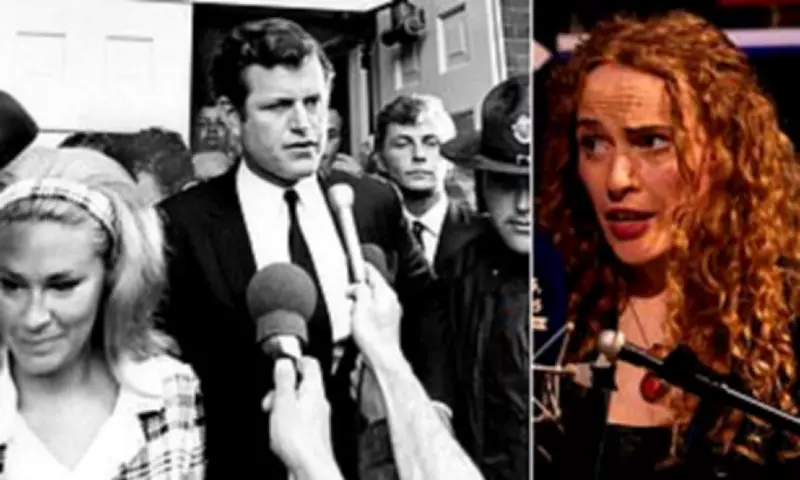
Six years following JFK's assassination, his youngest brother, Senator Edward 'Ted' Kennedy, attended a party on Chappaquiddick Island, near Martha's Vineyard. After drinking throughout the day, the 37-year-old Ted and his cousin Joe Gargan hosted a late-night gathering with six young women, all campaign workers from Bobby Kennedy's unsuccessful 1968 presidential campaign.
Around 11pm, Ted offered to drive 28-year-old Mary Jo Kopechne to a ferry terminal to catch the last boat off the island. Unaccustomed to driving himself due to family chauffeurs, and suspected by many to have been heavily intoxicated despite later denials, Ted Kennedy drove off an unlit bridge approximately thirty minutes into the journey. The vehicle landed upside down in eight feet of water.
A Failure to Act and Its Consequences
Senator Kennedy managed to extricate himself from the sinking car and swim to safety. Astonishingly, rather than attempting to rescue Mary Jo or alerting nearby residents, he returned to the party to inform his cousin of the accident. Joe Gargan urged immediate police notification, but Ted instead swam back to his mainland hotel, where he spent the night.
'It was not until after breakfast the next morning that Ted called anyone,' Robert Hardman recounted on the podcast. 'An eyewitness said they spoke to him at the hotel and he was making small talk about a sailing race.'
When communication finally occurred, it was not with authorities. 'Ted phoned his lawyer, his private secretary and a girlfriend, not his wife. He also called one of his fixers,' Professor Williams explained. 'Everyone panicked and they too did not call the police.'
The Aftermath and the Birth of a Curse Narrative
By 8:30am, local fishermen had discovered the submerged vehicle and notified the police. Mary Jo Kopechne's body was recovered shortly thereafter. A medical examination determined her time of death as no earlier than 12:30am, indicating that prompt action by Senator Kennedy might have saved her life.
At a subsequent press conference, Ted Kennedy pleaded innocence, citing shock for his failure to report the accident and claiming repeated diving attempts to rescue Mary Jo as the car sank. During a televised address, the Senator publicly pondered whether an 'awful curse' loomed over his family. The media seized upon this phrase, cementing the concept of the Kennedy curse in public consciousness.
'I have a problem with that,' Professor Williams told the podcast. 'JFK was blameless, Joe Kennedy Jr was blameless. Ted was not blameless. He left a woman to die and got away pretty much scot free.'

Senator Kennedy received a two-month suspended sentence for leaving the scene of an accident. He served no jail time, retained his Senate seat, and remained in office until his death in 2009. The Chappaquiddick tragedy, as explored in this podcast episode, stands as a pivotal moment that transformed family tragedy into the enduring legend of the Kennedy curse.