Method Man's Eye Trick: Eddie Otchere's Iconic Wu-Tang Clan Photograph
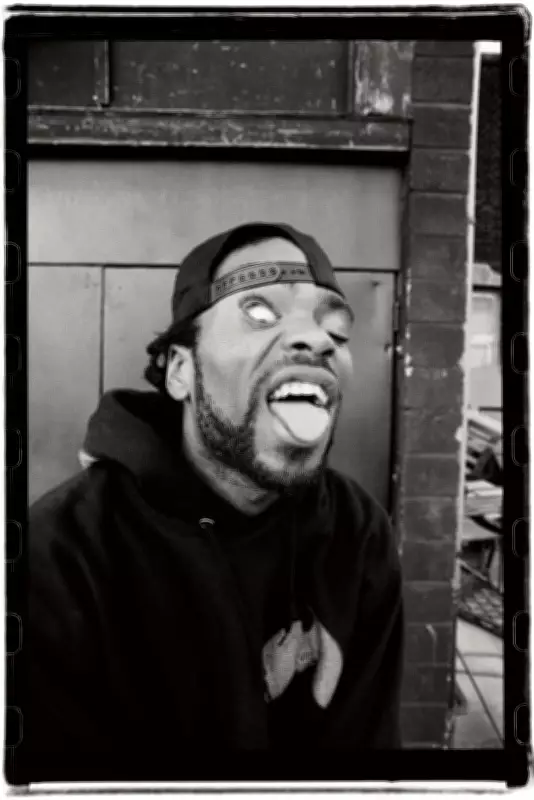
Even at the time, I knew that this photo was big. It wasn't just that the subject was great; the whole scene came together perfectly. This is the story behind Eddie Otchere's best photograph, featuring Method Man of Wu-Tang Clan turning his eyeball inside out on a scrubby bit of land in London.
A Fateful Encounter with Wu-Tang Clan
My journey into photography began at age 15 when a friend's grandad passed away, leaving behind a Praktica camera that we experimented with. I quickly caught the bug. In 1994, during my second year at university, I was a massive fan of Wu-Tang Clan. Hearing they were visiting their record label office in Putney, London, I rushed to the location.
Outside, I spotted a coach and could hear them inside, arguing and being rabble-rousers. As I turned the corner, I started photographing them on the street. They exuded incredible energy, but what truly made the moment was Popa Wu, an older mentor travelling with them. Realising that if you don't dare, you don't win, I asked if I could board the coach and shoot them. To my surprise, he agreed.

The Coach Ride and Deep Soul Music
This marked Wu-Tang Clan's first trip outside the United States. They were wild, urban kids from New York with a genius talent for storytelling. On the coach, they listened to profound soul music from Stax Records—the only mixtape they could all agree on. This music was far beyond any soul I had known before, and it has stayed with me ever since.
We stopped at Earl's Court in west London so they could get passport photos for their visas. I captured images there, including a charming shot of Method Man buying milk from a newsagent with an elderly woman behind him in the queue. Then, we headed to Kentish Town Forum for their evening performance.
The Moment of Magic with Method Man
After parking the coach, everyone disembarked and began mucking around on a scrubby patch of land near railway tracks. They started picking up stones and throwing them at passing trains, so I took a few shots. Suddenly, Method Man turned around and said, "Watch this, let me show my new trick."
He placed his cap strap over his eye, pulled it back, and made a face—turning his eyeball inside out. Instantly, I knew I had captured something special. That was it; he never returned to the shoot. But then Masta Killa chimed in, "Let me show you what I can do," and began climbing a building like Spider-Man. Ghostface Killah saw this and insisted he could do it better. They were like comic-book characters, reminiscent of the X-Men.
A Decade-Long Mission to Document Wu-Tang
This experience ignited a completist energy in me. I dreamed of getting headshots of all nine Wu-Tang Clan members, as RZA and Ol' Dirty Bastard weren't present that day. Starting at age 19, it took me 10 years to complete this mission, aiming to capture their personalities as reflections of superheroes.
Reflecting on that iconic shot, I doubt it would have worked as well in colour. It was a spontaneous moment that taught me the power of documenting culture rather than trying to create iconic portraits. For me, photography is about capturing a movement at a specific point in time, driven by pure passion without overthinking.
Eddie Otchere's Philosophy and Legacy
Born in London in 1974, my top tips for photographers include: "You're only as good as the camera you've got. The medium is the message. Change your camera, change your style." Other wisdom I live by: "Shoot first, ask questions later. Time is the master. Make prints—an archive in a cloud will evaporate. Keep it real."
My photography is featured in The Music Is Black: A British Story, opening at V&A East, London, on 18 April. This exhibition celebrates the rich history of black music in Britain, with my work serving as a testament to documenting pivotal cultural moments.