Orwell Documentary 2+2=5 Delves into Author's Timeless Impact on Truth and Power
Raoul Peck's documentary Orwell: 2+2=5 offers a compelling portrait of George Orwell, centering on his seminal work Nineteen Eighty-Four and its infamous scene where the state enforces the belief that two plus two equals five. This Orwellian concept of manipulated truth has become a pervasive meme in contemporary political discourse, particularly in debates over gender politics, though the film notably sidesteps these discussions, possibly deeming them less critical to its narrative. While the documentary is a serious and valuable exploration, it largely reinforces familiar ideas without delving deeply enough into more probing questions about Orwell himself.
Invigorating Prose and Physical Frailty
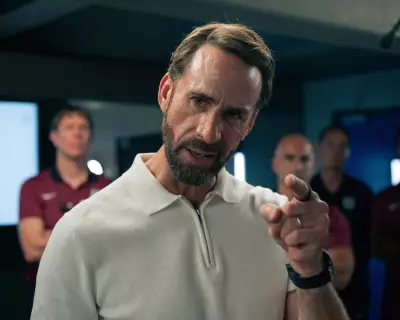
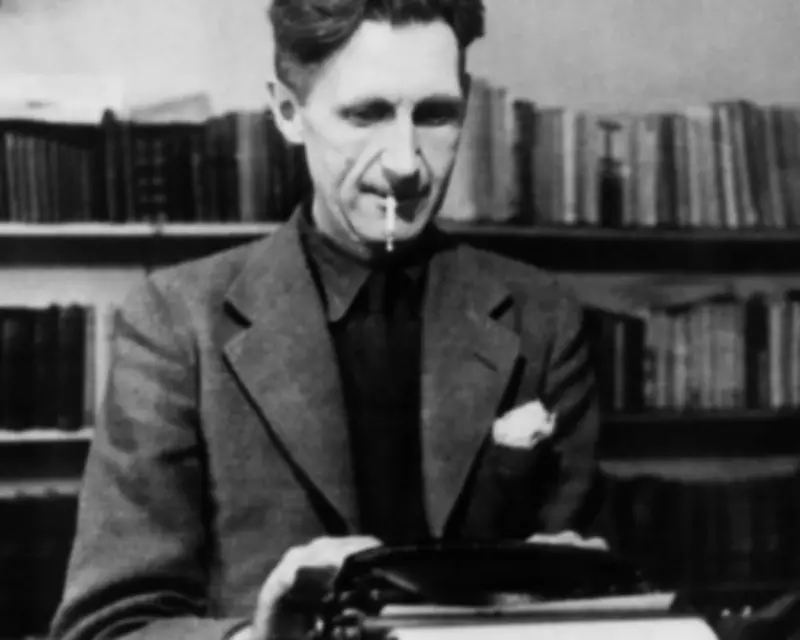
The film revitalizes audiences through Damian Lewis's powerful readings of Orwell's prose, drawn from published works, letters, and diaries. It highlights Orwell's physical frailty, emphasizing how he composed his masterwork while battling tuberculosis, a condition he described as influencing the writing process. This juxtaposition of his illness with the tyrannical regimes' obsession with physical fitness, as depicted in Winston Smith's exercises, adds a poignant layer. Peck suggests that Nineteen Eighty-Four might have been shaped more by Orwell's unregretted consequences of smoking, offering a nuanced take on his creative struggles.
Historical Context and Modern Parallels
Peck incorporates various film and television adaptations of Nineteen Eighty-Four, featuring actors like Peter Cushing and John Hurt, alongside footage of Jura, where Orwell retreated from London's political turmoil. Archival photos trace his childhood, his time as a policeman in Burma, and his subsequent disillusionment with colonialism and state-sanctioned cruelty. The documentary skillfully aligns this historical material with modern 4K video, drawing parallels to contemporary leaders such as Trump, Orban, Modi, Netanyahu, and Putin. It also underscores Orwell's prescient predictions about AI's role in propaganda and mass entertainment, highlighting how his insights remain alarmingly relevant today.

Political Insights and Unaddressed Complexities
An intriguing clip features Milan Kundera discussing his conversion to Orwell's view that totalitarian regimes politicize every aspect of life, a distinction from the idea that art should avoid politics. The film quotes Orwell on totalitarian regimes as theocracies but falls short by not extensively examining present-day theocracies, with only brief mentions of Israel, Isis, and Hamas. Additionally, it touches on Orwell's earlier antisemitic tendencies, citing his opposition to Sartre's Reflections on the Jewish Question and labeling antisemitism as weaponized Newspeak, though this claim lacks thorough substantiation.
Controversies and Enduring Genius
Orwell faced criticism from some on the left for writing Nineteen Eighty-Four, compounded by the revelation decades later that he provided British authorities with a list of 38 "crypto-communists" in 1949—a fact the documentary avoids. Despite these complexities, Peck argues that Orwell's genius for truth-telling remains uncompromised, suggesting that art and life may never fully align. Orwell: 2+2=5 is set for release in UK and Irish cinemas from 27 March, inviting viewers to reflect on the enduring power of Orwell's work in an era of renewed political challenges.