Underland Review: A Poetic Exploration of Life Deep Beneath the Earth's Surface
Rob Petit's ruminative essay-documentary Underland, adapted from Robert Macfarlane's bestselling book, burrows deep into the hidden realms beneath our feet. This film takes viewers on a journey through sinkholes, storm drains, and manmade laboratories miles underground, probing some of humanity's great unknowns with arresting questions and potent imagery.
Venturing into the Subterranean World
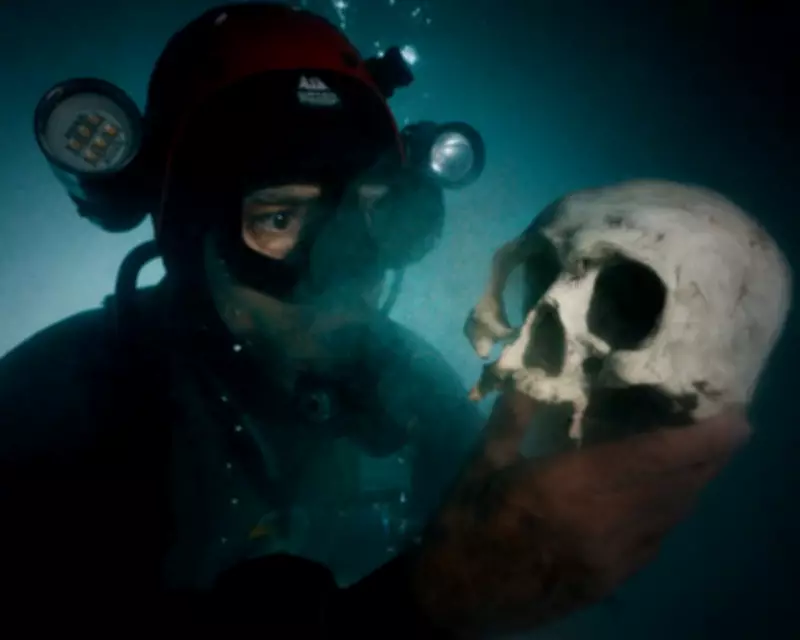
The documentary opens with Mexican archaeologist Fátima Tec Pool descending into a cenote, a freshwater sinkhole on the Yucatan peninsula. This natural formation serves as an entry point to a mysterious subterranean zone once revered by the Maya people as Xibalba, the underworld. Historically, explorers navigated these depths using only firelight, adding a layer of ancient mystique to the visuals.
In contrast, theoretical physicist Mariangela Lisanti conducts research on dark matter in an ultra-clean facility constructed miles below the Earth's surface in Canada. Her work highlights humanity's scientific pursuits in extreme environments, yet she acknowledges with minimal concern that these efforts may not yield results within her lifetime, subtly succumbing to the concept of deep time.

Urban Exploration and Human Stories
Urban explorer Bradley Garrett roams the dark and intimidating storm-drain tunnels beneath Las Vegas, uncovering evidence that people, driven by poverty, live in these underground spaces. This segment sheds light on social issues, juxtaposing natural wonders with human-made subterranean realities.
Throughout the film, Sandra Hüller reads portentous prose poetry about the "nether" in a faintly Americanised accent. While this adds a poetic layer, some viewers might feel the images could have spoken for themselves without this narration.
Thematic Depth and Disparate Ideas
Underland raises intriguing, if disparate, ideas about the underground. It explores the vast reaches of deep time inherent in natural caves like those in Yucatan, contrasting them with abandoned cold war bunkers where dusty newspapers from 1978 linger. The film perhaps fails to fully acknowledge the fundamental differences between these natural and human-made spaces.
The most disquieting scenes involve Lisanti's dark matter research, emphasizing the uncertainty and scale of scientific endeavors. These moments invite reflection on human persistence and the limits of knowledge in the face of geological and cosmic timelines.
Overall, Underland offers a unique cinematic experience that blends geology, anthropology, and philosophy. It is set to release in UK and Irish cinemas from 27 March, promising to captivate audiences with its deep dive into Earth's hidden layers.