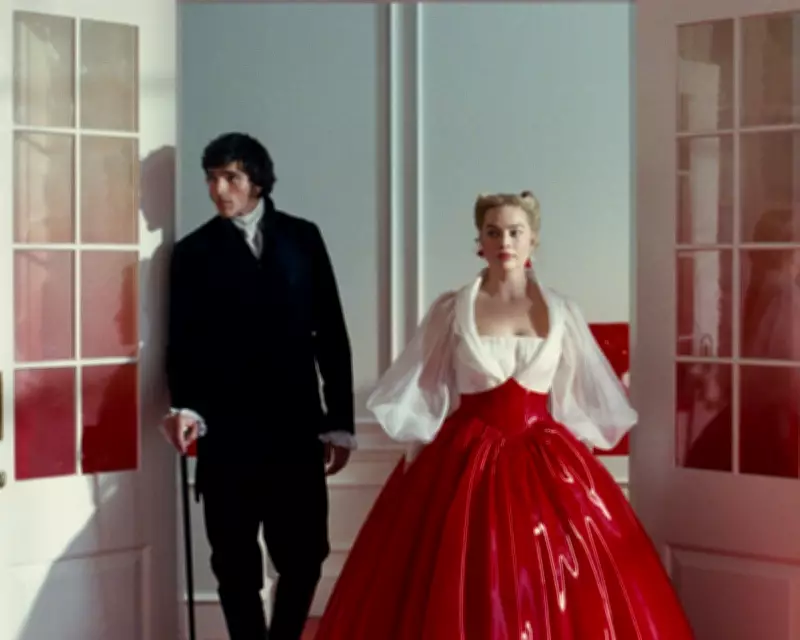
Wuthering Heights' Bold Costume Design Challenges Historical Accuracy Norms
Emerald Fennell's cinematic retelling of Emily Brontë's classic 1847 novel Wuthering Heights has arrived in theatres this weekend, bringing with it a costume design approach that has already generated significant controversy and conversation. Since the initial release of set photographs, the film's deliberate anachronisms in wardrobe have dominated discussions among critics and audiences alike.
A Deliberate Departure from Period Accuracy
Oscar-winning costume designer Jacqueline Durran, responsible for the film's distinctive looks, has openly acknowledged the intentional departure from historical authenticity. "We're not representing a moment in time at all," Durran revealed in an interview with Vogue magazine. Her creative process for protagonist Cathy's costumes drew inspiration from an eclectic mix of sources including avant-garde fashion designers Thierry Mugler and Alexander McQueen, traditional German milkmaid styles, and elements spanning Elizabethan, Georgian, Victorian, and contemporary fashion periods.
The resulting visual aesthetic represents what Durran describes as a distillation of these diverse influences into cohesive storytelling elements that serve director Emerald Fennell's narrative vision. This approach manifests most strikingly in Cathy's wedding dress, crafted from a material resembling cellophane that creates the visual metaphor of a woman gift-wrapped for her husband.

Part of a Broader Cinematic Movement
Wuthering Heights joins what appears to be a growing movement in contemporary filmmaking where costume designers prioritize creative expression and spectacle over strict historical fidelity. This trend has notable precedents including Sofia Coppola's 2006 film Marie Antoinette, where costume designer Milena Canonero famously included Converse sneakers in the young queen's wardrobe.
More recently, Yorgos Lanthimos's 2023 film Poor Things, set in the late Victorian era, featured Bafta-winning costume designer Holly Waddington's innovative use of modern materials like plastic and latex. Waddington described her approach as "playing with the period, not being slavish to it and playing with material qualities and pushing the boundaries of colours and textures."
The 'Bridgerton Effect' and Cultural Context
Theatre and film historian Keith Lodwick identifies what he terms the "Bridgerton effect" as a significant catalyst for this contemporary trend. Since its 2020 debut, the Netflix series has presented what Lodwick characterizes as "a fantasy version of what we might think Regency is about." He notes that timing plays a crucial role in the reception of such creative approaches, pointing out that Bridgerton arrived during a global pandemic when audiences particularly craved escapism.
Lodwick draws historical parallels to the 1940 film adaptation of Pride and Prejudice, which blended Regency, 1840s, and 1850s fashion elements into an indistinct but popular visual style that provided wartime audiences with much-needed fantasy and escape from the realities of World War II.
Perspectives from Costume Design Professionals
Not all experts view this trend as revolutionary. Helen Walter, a costume and visual historian at the Arts University Bournemouth, questions whether the shift toward anachronistic design represents as dramatic a departure as some commentators suggest. "Costume design often says much more about the people who are making it than the original setting," Walter observes. "It always says something about the time that it's being made."
Oscar-winning costume designer Sandy Powell, known for her work on Shakespeare in Love, acknowledges the practical limitations of achieving true historical accuracy. "All of the silhouettes were the correct period cuts for all the clothing, but you can't necessarily find period-accurate fabrics because they're just not made in the same way now," Powell explains. She recalls deliberately using art deco lace for an Elizabethan collar despite criticism, reasoning that "it looks good. And actually, this isn't a documentary."

Artistic Freedom Versus Historical Fidelity
Designers working within this creative framework emphasize that their choices ultimately serve the specific needs of each production. Powell describes her approach as doing "whatever feels right for the piece," noting that her upcoming work on The Bride! starring Jessie Buckley maintains period authenticity while incorporating anachronistic elements in how clothing is worn rather than in the garments themselves.
Waddington challenges the notion that modernized costumes necessarily help contemporary audiences connect with period stories. She views the opportunity to tackle historical material as a chance to provide audiences with what she describes as a "time travel" experience, bringing a distant era to life through imaginative interpretation rather than strict recreation.
Despite the current trend toward creative license, Waddington humorously acknowledges there are limits to her appetite for anachronism, quipping that she "would kill to do an Elizabethan drama where everyone has wooden teeth."
As Wuthering Heights reaches audiences, its controversial costumes continue to spark debate about the evolving relationship between historical accuracy and creative expression in cinematic costume design, reflecting broader cultural conversations about how we reinterpret and reimagine the past through contemporary artistic lenses.