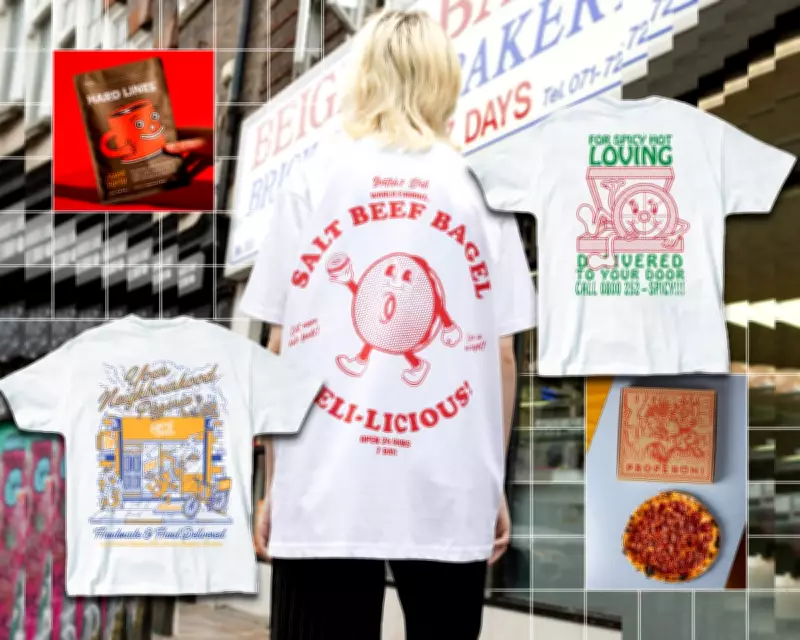
The Whimsical World of Rubber Hose Cartoon Branding
From a humanised bagel with tiny arms to a pizza clambering joyfully from its box, rubber hose cartoon characters are putting smiles on everyday products. This graphic design style, characterised by exaggerated facial expressions and flailing, jointless limbs, has become ubiquitous in branding for independent pizza shops, sandwich bars, natural wine venues, and even global fashion labels.
Origins and Evolution of a Playful Aesthetic
The rubber hose style dates back to 1920s and 1930s animation techniques, but its modern revival blends 1950s Americana, vintage ironic T-shirt designs from the early 2000s, and contemporary graffiti influences. It often features text in bubble fonts or the 1970s-inspired Hobo font, rendered in muted colours like washed-out orange, red, purple, green, or blue.
While not entirely new, this aesthetic gained momentum in the late 2010s and early 2020s, particularly among food and drink startups seeking an indie alternative to earlier cutesy branding trends. Yard Sale Pizza, launched in Hackney in 2014, exemplifies this movement with designs by Patrick Schmidt, a Welsh artist based in London.

Schmidt's work merges graffiti, tattoo art, and influences from underground comics and painters like Philip Guston. His creations, such as a distressed chilli named Juan carrying a pizza, have helped define the style's appeal.
Why Brands Embrace Cartoon Characters
The rubber hose style's playful nature offers a refreshing contrast in industries often marked by self-seriousness. It softens brand images, making abstract concepts more relatable through humanised visuals. For Schmidt, the appeal lies in its fun factor: "The way the world is, the economy and fucking weather ... When there's something at least a bit daft or makes you smile, I think that's why it's appealing."
This aesthetic has become shorthand for independent or indie-presenting businesses, signalling authenticity and a laid-back vibe. However, its reach extends beyond the UK, saturating markets in Europe, the US, and elsewhere. Karl Toomey, a Dublin-based designer, notes, "It's 100% saturated everywhere. You see it across everything."
Criticism and the Rise of Detractors
As rubber hose branding proliferates, it faces backlash for overuse and lack of originality. Designers like Ram Reyes argue against the "templification" of the style, where readily available templates on platforms like Canva or Adobe Express allow brands to create nearly identical images without custom design work. This undermines the homespun authenticity the look aims to convey.
Critics also point to its adoption by large brands and fast-fashion companies, which can strip the style of its indie roots. Toomey observes, "When you see big brands [and] fast fashion people that start using it as a kind of faux-subculture, it just doesn't mean anything."
Future Trends and Reactions
The ubiquity of rubber hose has sparked a search for new design directions. Emerging trends include "elemental folk," which incorporates hand-drawn elements and traditional crafts, and "naive style," featuring childlike drawings with wobbly lines and imperfections. These approaches react against mass-produced imagery, whether from AI, templates, or herd-like tendencies.
Despite these shifts, the cycle of trend adoption continues. Reyes highlights how even hand-drawn styles are quickly co-opted by AI and stock imagery, noting, "The machine will eat it." As branding evolves, the tension between authenticity and commercialisation remains central to the conversation.
In summary, rubber hose cartoon branding has captivated consumers with its nostalgic whimsy, but its widespread use prompts debates about creativity and originality in design. As the style matures, new aesthetic movements are emerging, yet the allure of playful characters endures in a complex market landscape.