Searows' Maritime-Inspired Sophomore Album Captivates Gen Z Audiences
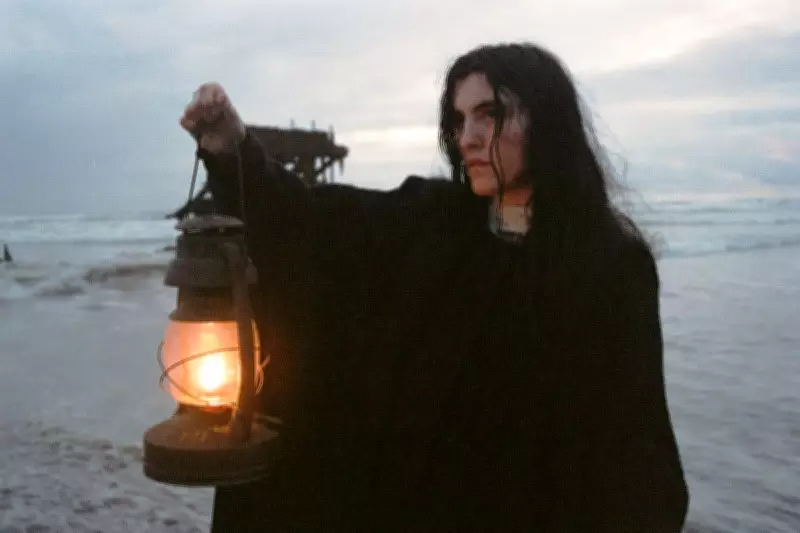
In a distinctive departure from the confessional style typical of many Gen Z songwriters, indie musician Alec Duckart – performing under the stage name Searows – finds creative inspiration in unconventional sources: fish guts, shipwrecks, and the profound theme of death. "Bones and whales and the ocean in general," the 26-year-old Oregon native explains. "The violent, monster type of ocean has always been really fascinating and terrifying to me." This dark maritime thread is intricately woven throughout his remarkable second album, Death in the Business of Whaling, released to critical acclaim.
Rising Fame and Artistic Evolution
Duckart's latest project arrives on the heels of a significant surge in popularity, having opened for prominent pop stars such as Gracie Abrams, Ethel Cain, and Matt Maltese on their recent tours. Initially gaining online fame as a teenager during the pandemic, his gossamer voice and candid, poetic lyrics – reminiscent of artists like Sufjan Stevens or Arlo Parks – first captivated audiences on TikTok. From his childhood bedroom, he uploaded songs that resonated deeply, building a devoted following.
His 2022 debut Guard Dog and 2024 EP End of the World already showcased his ability to evoke strong emotional responses, akin to those seen at a Bon Iver concert. At his album release show in January, fans were moved to open weeping during his performance. While past comparisons have linked his lush vocals to Phoebe Bridgers' genre-defining style, Death in the Business of Whaling marks a confident and polished evolution into his own unique sound.

Inspiration from Literature and Personal Experience
The album's title is borrowed directly from Herman Melville's classic novel Moby-Dick, though Duckart admits he has never read the book. Instead, his connection stems from acting in a school production of the novel, an early experience that helped him overcome shyness and perform for an audience. This theatrical background subtly influences the album's thematic depth.
Moving beyond his earlier vulnerable lyrics, Duckart ventures into uncharted territory with DITBW, exploring themes of memory, regret, and the inevitability of death through character-driven narratives and world-building. "I think I felt stuck in confessional storytelling," he reveals during an interview in a New York diner. "I didn't know how I could keep writing about the same things over and over. It has to turn into something else – that's how the memory of those things works."
Professional Growth and Collaborative Efforts
This album represents a significant step in Duckart's career, as it is the first he recorded entirely in a professional studio. He traveled to Washington state to collaborate with producer Trevor Spencer, known for his work with Father John Misty and Fleet Foxes, near Seattle. Relinquishing control over his works-in-progress was an "incredible and scary" meditation for Duckart, who had previously been wary of outside input. "And also made it so that I couldn't obsess over whatever we did, which was really good for me," he adds.
Personal Reflections and Influences
Before committing to music full-time, Duckart worked at a retirement home, where he formed close relationships with individuals in their final years. This experience profoundly shaped his perspectives on death, ageing, and purpose, leading him to occasionally question whether his songwriting career is as meaningful as his previous role. "It just felt very rewarding in a way that... It's hard, because sometimes music feels like it's so isolated," he reflects.
Growing up in the rainy forests near Oregon's coastline, listening to artists like Gillian Welch and Neko Case, Duckart's music naturally carries a somber, nostalgic quality. Tracks like "Junie," inspired by his high-school guidance counsellor, and the closing song "Geese," which references Mary Oliver's poem "Wild Geese," exemplify this emotional depth. Duckart wrote "Geese" in response to the poem's opening line: "You do not have to be good."

"I didn't understand the first line of that poem for so long," he admits. "I knew what she was saying, but I just thought, 'That doesn't apply. I do have to be good, actually. I don't know what else to be.'" He elaborates on the struggle with moral purity, stating, "I think that when I live with the fear of not being morally pure or good all the time, whatever that means, it has only really led me to not being anything. It fully stops me in every aspect of life. Like, I just get frozen in not wanting to be bad, or something nuanced, anything morally grey." He concludes thoughtfully, "Ultimately, you have to do something. You can't do nothing."
Death in the Business of Whaling is currently available, and Searows is touring across Europe and the UK, with the North American leg commencing on 23 April.