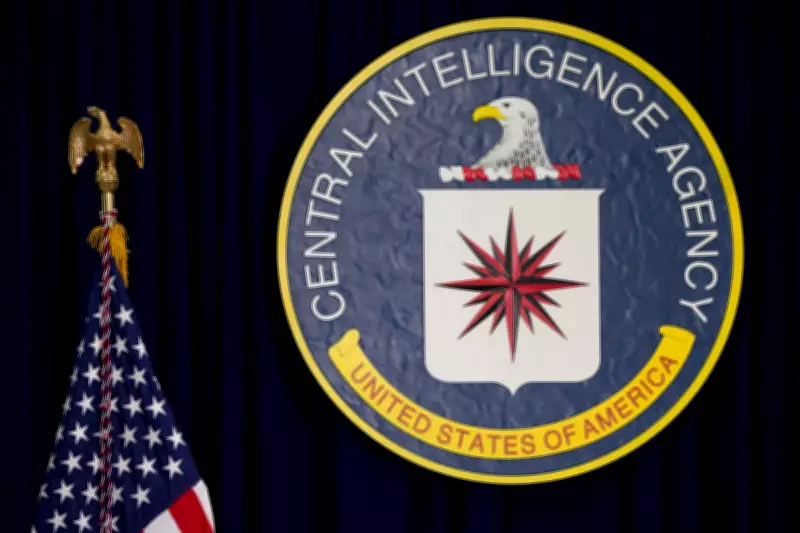
CIA World Factbook Abruptly Terminated by Trump Administration
The Trump administration has officially shut down the CIA World Factbook, a free public reference that served as an educational staple for generations. This sudden closure has ignited widespread lamentation over the demise of a trusted source that millions relied upon to verify basic facts about countries, cultures, and global statistics.
A Generational Educational Staple Vanishes
For anyone who attended school since the Nixon administration, the CIA World Factbook was a familiar and authoritative resource. Whether accessed via floppy disk, CD-ROM, or later online, it provided a comprehensive map and reference manual of Planet Earth that garnered near-universal agreement. Students used it for social studies projects, Model United Nations preparations, or simply to satisfy personal curiosity about distant lands.
Readers could unfold its detailed maps and discover cultural nuances, such as how a thumbs-up gesture—friendly in some regions—is considered an obscene insult in parts of the Middle East, Europe, and Argentina. For over six decades, the Factbook and its readers shared this knowledge, curated by some of the world's most skilled intelligence-gatherers who contributed thousands of photographs and maintained the database online at no charge.

Geopolitical and Philosophical Foundations
The Factbook's origins trace back to the Japanese surprise attack on Pearl Harbor in 1941, an intelligence failure that prompted a more coordinated approach to gathering information on America's adversaries. This led to the creation of the Joint Army Navy Intelligence Studies, the nation's first interdepartmental basic intelligence program. By 1946, experts like George S. Pettee argued that peace required intelligence on all countries, not just enemies.
When the CIA was established in 1947, it assumed responsibility for collecting basic intelligence on other nations. The Cold War underscored the need for a consolidated source, culminating in the unclassified Factbook's debut in 1971 and its public release in 1975. The CIA stated, "We share these facts with the people of all nations in the belief that knowledge of the truth underpins the functioning of free societies."
Timing and Public Image Considerations
The Factbook's public launch coincided with congressional investigations into intelligence agency abuses, including the CIA's own "Family Jewels" report detailing illegal activities like spying on American activists and assassination plots. While never officially confirmed, releasing the Factbook during this period likely helped rehabilitate the CIA's image by showcasing transparency and educational value.
Renamed The World Factbook in 1981 and moving online in 1997, it became a reliable research tool often recommended in academic settings. The CIA described it as "a tremendous culmination of efforts from some of our country's brightest analytic minds," highlighting its role in demonstrating American intelligence capabilities to adversaries like the former Soviet Union and conferring legitimacy upon nations included within its pages.
Abrupt Closure and Global Reaction
On February 4, the Trump administration abruptly shuttered the Factbook, with the CIA framing the move as progress for an agency whose core mission has evolved. This decision triggered a wave of grief from Factbook enthusiasts worldwide, many of whom mourned an America that once valued knowledge for its own sake. Others perceived darker motives under a presidency known for promoting "alternative facts."
News of the closure spread rapidly across international media and social platforms like Reddit, where users urgently shared archived versions and sought alternative unbiased sources. Isabel Altamirano, a chemistry librarian assistant professor at Auburn University, noted that while similar information exists elsewhere, "it'll be harder to find." She immediately removed the Factbook from her students' resource lists, emphasizing its unique convenience as a consolidated reference.

Criticism and Historical Context
Some analysts argue that the Factbook, compiled by an agency with secret agendas, was never truly unbiased. Binoy Kampmark, a professor at Royal Melbourne Institute of Technology, suggested that mourning its loss might be "misplaced," as compilers "aren't, nor can they be expected to be, neutral." He proposed preserving it as a historical document instead.
Indeed, the final publication from February 4 is already outdated; for instance, it still lists Ayatollah Ali Khamenei as Iran's head of government, despite reports of his death in March. As the world continues to change, the absence of the Factbook leaves a void in documenting these shifts, with the CIA's farewell message—"Stay curious"—serving as a poignant reminder of the challenges in discerning truth amid the internet and artificial intelligence's frequent inaccuracies.