As the first Friday the 13th of 2026 approaches, this date remains deeply ingrained in popular culture as a harbinger of misfortune and ill omens. This year will see a triple dose of such dates, with the 13th falling on a Friday in February, March, and November, amplifying anxieties for the superstitious. But where does this widespread belief in the unluckiness of Friday the 13th truly originate? The history is a tapestry woven from religious narratives and medieval persecution.
The Biblical Roots of the Number 13
The superstition is widely believed to stem from the Last Supper, where Jesus Christ and his twelve disciples gathered on Maundy Thursday, the night before his crucifixion on Good Friday. This event links the number 13 to Judas Iscariot, the betrayer of Christ, casting it as imperfect and ominous compared to the number 12, which symbolizes completeness, such as the months in a year or the tribes of Israel. The association of Friday with bad luck further compounds this, as it was the day of Christ's crucifixion, creating a potent combination of day and date that has resonated through centuries.
The Knights Templar and a Fateful Friday
Another pivotal moment in this superstition's history dates back to Friday, October 13, 1307, when King Philip IV of France ordered the arrest of hundreds of Knights Templar. These Catholic crusaders were apprehended under pressure from Pope Clement V, based on allegations from an excommunicated former member. The claims accused new recruits of being forced to spit on the cross, deny Christ, and engage in homosexual acts during initiation ceremonies—allegations that were likely entirely fabricated.

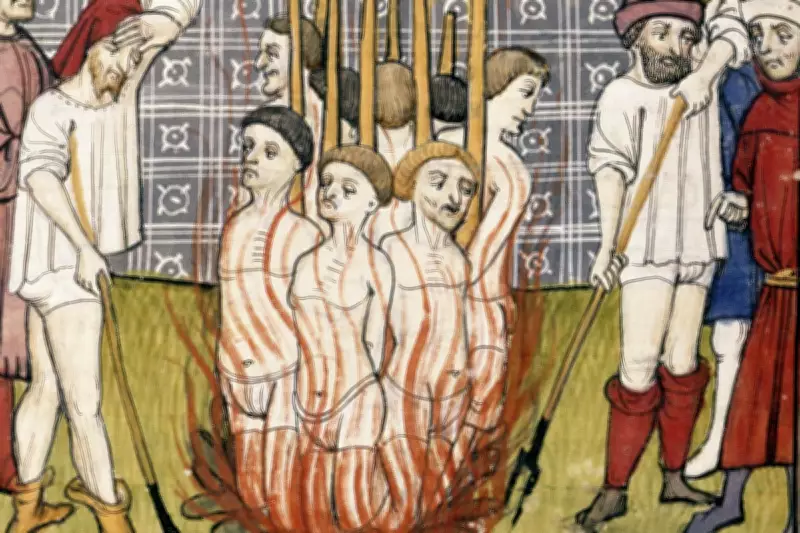
This persecution served as a convenient pretext for King Philip IV, who sought to eliminate the wealthy order and absolve himself of debts owed to them following wars with England. Charged with moral and financial corruption, as well as worshipping false idols—often after confessions extracted under torture—many knights were later burned at the stake in Paris.
The Curse of Jacques de Molay
The order's Grand Master, Jacques de Molay, faced execution by burning in front of Notre Dame Cathedral. Legend has it that he cried out a curse on his persecutors, declaring, "God knows who is wrong and has sinned. Soon a calamity will occur to those who have condemned us to death." According to tradition, the events initiated by the knights' arrest cemented every subsequent Friday the 13th as a day of bad luck, with De Molay's hex echoing through the ages and embedding itself in folklore.
Global Variations and Other Superstitions
An irrational fear of Friday the 13th is known as paraskevidekatriaphobia, a term derived from Greek words meaning "Friday," "thirteen," and "fear." However, this superstition is not universal. In Spanish-speaking countries and Greece, Tuesday the 13th is considered unlucky, while in Italy, it is Friday the 17th that evokes fear. These variations highlight how cultural contexts shape perceptions of luck and misfortune.
Other well-known indicators of bad luck include a black cat crossing your path, breaking a mirror, walking under a ladder, opening an umbrella indoors, and uttering the name of Shakespeare's "Scottish play" (Macbeth) in a theatre. These beliefs, like the fear of Friday the 13th, often stem from historical events, religious teachings, or societal norms that have been passed down through generations.
As we navigate the triple occurrence of Friday the 13th in 2026, understanding its origins offers a fascinating glimpse into how ancient stories and medieval tragedies continue to influence modern superstitions, reminding us of the enduring power of folklore in shaping human behavior and beliefs.