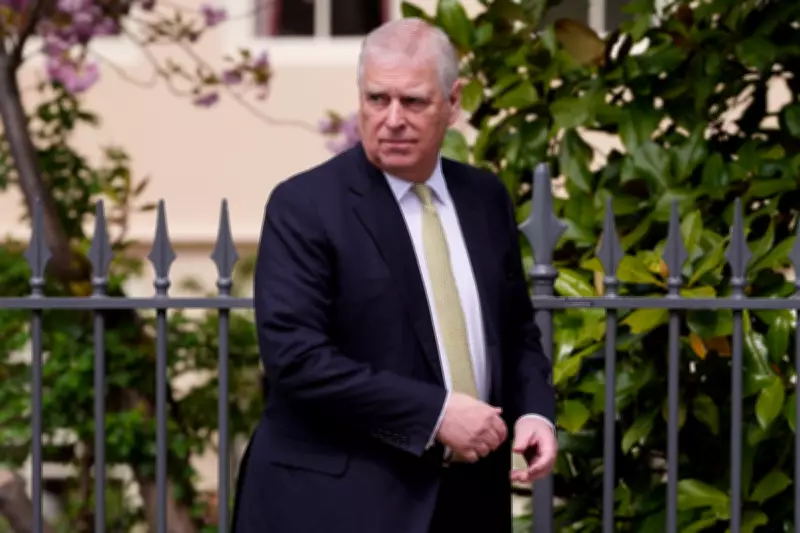
Royal Crisis: Andrew's Arrest Reignites Historic Windsor Scandals
The British monarchy has experienced numerous controversies throughout its long history, with the institution constantly navigating public sentiment while maintaining prestige without political power. The recent detention of Andrew Mountbatten-Windsor on suspicion of misconduct in public office has brought royal disgrace back into sharp focus.
Andrew was taken into custody on Thursday following the release of millions of pages of documents related to convicted paedophile financier Jeffrey Epstein. This development comes after years of scandal surrounding the former prince, who had already been stripped of his princely title and his spacious residence by his brother, King Charles.
Historical Precedents of Royal Disgrace
According to royal expert George Gross of King's College London, the most recent parallel to Andrew losing his titles occurred through the 1917 Titles Deprivation Act. This legislation saw various members of loosely affiliated royals, dukes, and peers losing their titles for siding with Germany during the First World War.

The interconnected nature of European royal families created particular complications for Britain's heavily German monarchy, especially after Queen Victoria married Prince Albert of Saxe-Coburg and Gotha. When Britain and Germany entered conflict in 1914, some extended royal family members found themselves on opposing sides.
King George V responded by changing the family name from Saxe-Coburg and Gotha to Windsor in 1917 and initiating legislation to remove titles from princes and lords who had borne arms against Britain or its allies. Prince Ernest Augustus, Duke of Cumberland and Teviotdale, became a primary target as both a U.K. royal and prince of Hanover, losing his title under the 1917 act when it was enacted in 1919.
The Abdication Crisis
The relationship between Edward, Prince of Wales, and American socialite Wallis Simpson evolved from a royal headache into a full constitutional crisis. Simpson's twice-divorced status created fundamental problems since Edward, as heir to the throne, was destined to become ceremonial head of the Church of England, which prohibited divorced individuals from remarrying in church.
When Edward became King Edward VIII following his father's death in early 1936, he continued insisting on marrying Simpson despite strong opposition from the British government. Forced to choose between royal duty and personal passion, he abdicated the throne in December 1936, famously declaring in a radio broadcast that he couldn't discharge his kingly duties without the woman he loved.
This abdication dramatically redirected the monarchy's course, with Edward's younger brother ascending as King George VI, followed by his daughter Queen Elizabeth II, and eventually her son King Charles III. Each subsequent monarch reinforced the principle that duty must be the monarch's primary attribute, a quality many believed Edward had fundamentally lacked.
Princess Diana's Tragic Death
The shocking death of Princess Diana in a Paris car crash in 1997 at age thirty-six sent global shockwaves and left her family, including sons William and Harry, then fifteen and twelve respectively, in profound mourning. The overwhelming public response caught the royal family unprepared, with floral tributes accumulating outside Buckingham Palace gates for the princess who had been ostracized following her 1992 divorce from Charles.
While the queen remained at Balmoral in Scotland with her family during their summer holiday, maintaining private grief and routine, public pressure mounted for royal acknowledgment. Prime Minister Tony Blair perfectly captured the national mood by calling Diana "the people's princess" and advising the queen to make a public display of grief.
Following newspaper headlines urging "Speak to us Ma'am" and "Show us you care," the queen delivered a live televised address on the eve of Diana's funeral, speaking "as your queen and as a grandmother" to acknowledge national grief, praise Diana, and promise to cherish her memory.

Modern Royal Rifts
Before the Epstein scandal resurfaced last year, Andrew had been attempting to regain family favor, possibly benefiting indirectly from the ongoing drama surrounding Prince Harry. Harry became estranged from his father and older brother Prince William after stepping down from working royal duties and moving to California with his wife Meghan in 2020.
The couple aired grievances through a tell-all interview with Oprah Winfrey and a revealing Netflix series, while Harry further fueled tensions by revealing personal conversations in his memoir "Spare." Harry also broke royal protocol by pursuing legal solutions to his problems, becoming the first senior royal to testify in court in over a century during his successful phone hacking lawsuit against the Daily Mirror.
Although his failed legal effort to restore police protection was seen as attacking his father's government, the court rejection provided opportunity for reconciliation. Father and son shared tea at Clarence House in September for their first meeting in over a year, though the encounter lasted less than sixty minutes.
King Charles has arguably taken the most significant step of his reign by attempting to insulate the monarchy from further Andrew-related scandals connected to Epstein. However, this latest arrest has revived public attention on the ongoing saga, reminding observers that the House of Windsor has faced multiple existential crises throughout the past century, with each testing the institution's resilience and adaptability to changing public expectations.