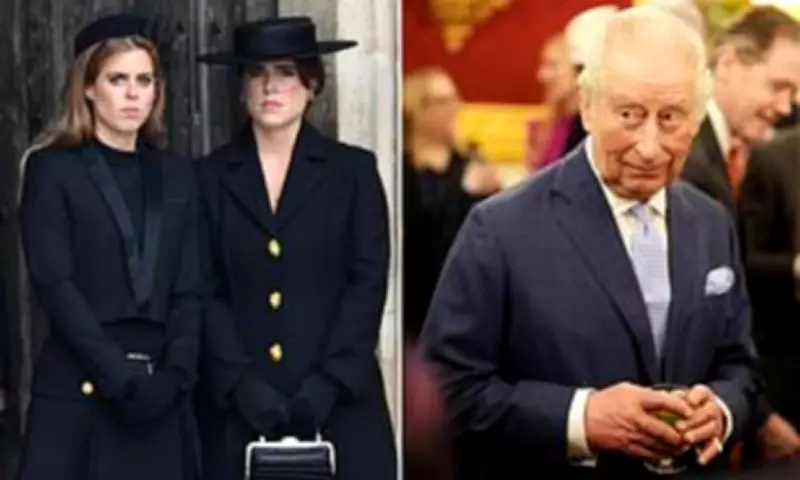
King Charles III is reportedly grappling with a deeply personal moral dilemma behind the scenes of the monarchy, as the ongoing fallout from the Jeffrey Epstein revelations continues to cast a shadow over the Royal Family. The King's nieces, Princess Beatrice and Princess Eugenie, are facing daily reminders of their father Prince Andrew's controversial actions and associations, raising questions about the monarch's duty to support them through this turbulent period.
Divergent Stances Within the Family
Princess Beatrice and Princess Eugenie, daughters of Prince Andrew and Sarah Ferguson, have reportedly taken different approaches to their father's situation. While both have maintained a degree of public discretion, insiders suggest their private responses to the Epstein scandal have varied, reflecting the complex emotional landscape within the family.
The King's Potential Role
This situation presents King Charles with a significant conundrum. As head of the family and monarch, does he have a responsibility to guide his young nieces through this challenging chapter? Or should he maintain the distance he has shown toward Prince Andrew, leaving Beatrice and Eugenie to navigate the fallout independently?

The question strikes at the heart of royal protocol versus family obligation. The King has already demonstrated a willingness to make difficult decisions regarding his brother's royal status, but the situation with his nieces presents different considerations entirely.
Daily Reminders of Controversy
For Princess Beatrice, 35, and Princess Eugenie, 34, the Epstein revelations represent more than distant scandal. They face constant public reminders of their father's association with the convicted sex offender, creating what palace insiders describe as "an ongoing personal challenge" that affects both their public roles and private lives.
Unlike their father, who has been largely removed from public royal duties, both princesses maintain active public profiles through charitable work and occasional royal engagements, making their position particularly delicate.
Behind the Palace Walls
According to royal experts, the King's approach to this situation reflects broader questions about how the modern monarchy handles internal family crises while maintaining public dignity. The dilemma extends beyond simple family support to considerations of public perception, institutional reputation, and the long-term stability of the monarchy itself.
Some observers suggest the King may be weighing whether active intervention could be seen as taking sides in a family matter, while others argue that as the senior family member and monarch, he has both a moral and practical responsibility to provide guidance during such challenging times.
The Wider Royal Context
This situation unfolds against the backdrop of a monarchy still navigating its post-Elizabethan era. King Charles has shown himself willing to make difficult decisions about family members' roles, but the case of his nieces presents unique challenges that blend personal relationships with public responsibilities.
The princesses' positions are further complicated by their status as non-working royals who nevertheless remain in the public eye, creating a gray area where traditional royal protocols may not provide clear guidance.
As the Epstein revelations continue to generate headlines and public discussion, the King's handling of this delicate family matter will likely be watched closely by both royal observers and the public, testing his ability to balance compassion with the demands of his position as monarch.