Royals and Celebrities Urged to Guard Conversations Amid Lip-Reading Trend
Royal advisers and celebrity agents are issuing stark warnings to public figures to be vigilant about their words when in public, as a growing lip-reading phenomenon allows private exchanges to be decoded and shared online within seconds. This trend has recently embroiled Prince William and other high-profile individuals, highlighting the erosion of privacy in the digital age.
Royal Household Irritated by Viral Videos
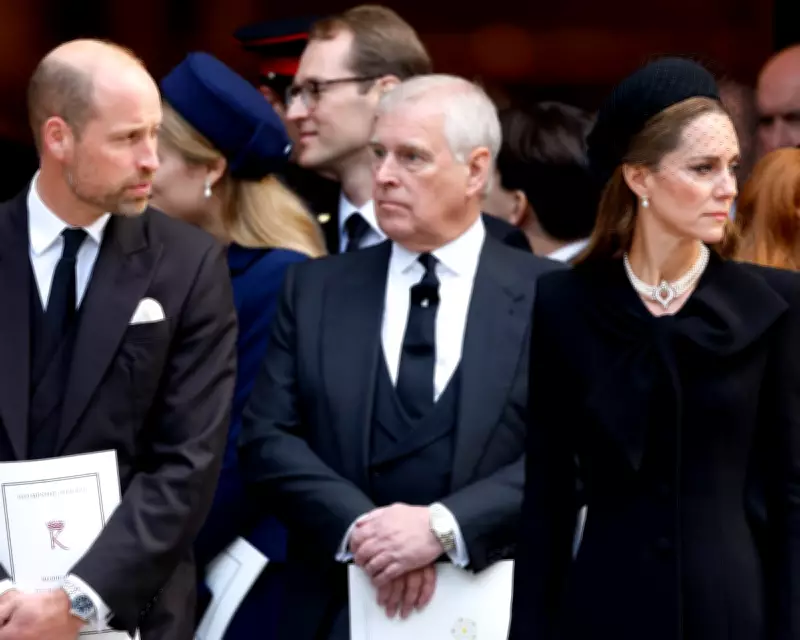
Prince William found himself at the centre of controversy after a video of him speaking to Andrew Mountbatten-Windsor was translated by an expert lip-reader for a forthcoming Channel 5 documentary, Lip-Reading the Royals. According to the lip-reader, Mountbatten-Windsor attempted to apologise to his nephew, saying, "I've learnt from what I've done, but before I forget, and if I can, I'd like to ask you if you can forgive?" The video allegedly shows Prince William responding with silence. Mountbatten-Windsor relinquished his royal titles in October following revelations about his links to Jeffrey Epstein, the late financier and child sexual abuse offender.
The documentary also features King Charles apparently exclaiming "fuck me" while entering his royal carriage and Princess Anne allegedly gossiping about the Duchess of Sussex. A royal source expressed frustration, stating, "As with many high-profile individuals, members of the royal family are aware of the unfortunate and growing trend for lip-readers to be used, with varying degrees of inaccuracy, to snoop on conversations that anyone would have a right to be considered private."

Advisers Highlight Social Media Amplification
Dickie Arbiter, former press secretary for Queen Elizabeth II, noted that royals are being cautioned about unguarded moments that could be captured by TV cameras or mobile phones. "One was always aware of it, and even in my time there were experts who claimed he could read lips," he said. "Sometimes, they came out with some outrageous things. Often the member of the royal household in question wouldn't remember if that is indeed what they said, as when they are on a walkabout they speak to so many people."
Arbiter emphasised that the rise of social media has exacerbated the issue, calling it a "cesspit" where clips spread rapidly regardless of accuracy. He recalled advising royals to keep conversations appropriate during public walkabouts, citing an instance at Prince William and Catherine's wedding where Catherine clearly asked, "Are you happy?" as they departed in a carriage.
Paddy Harverson, former communications director to King Charles, remarked that lip-reading was not a significant concern during his tenure over a decade ago, underscoring how the phenomenon has evolved with technological advancements.
Celebrity Events Targeted by Lip-Readers
Beyond royal circles, celebrity events like the Golden Globes have become hotspots for lip-reading exploits. Although stars are not miked, videos from these gatherings are ripe for translation and sharing on platforms such as TikTok. A recent video with 1 million views purportedly shows reality TV star Kylie Jenner complaining to actor Jennifer Lawrence about someone coughing nearby, fearing it could make her ill.
More contentious examples include a 2024 video where singer Selena Gomez allegedly expressed frustration after being denied a photo with Timothée Chalamet by his partner, Jenner. Other viral moments involve Olivia Rodrigo discussing text messages at a Lakers game and Ben Affleck and Jennifer Lopez appearing to argue at glitzy events before their 2025 divorce.
Agents Adapt Advice for Modern Risks
Celebrity agents are proactively counselling clients to assume that any public utterance could be filmed and lip-read. Andy May, director of JHM media agency, explained, "Yes, we are absolutely talking to our clients about this, and have been for some time. The nature of the advice has simply evolved with the times."

He contrasted past guidelines with current realities: "Twenty years ago, the golden rule was straightforward: be careful around microphones and broadcast cameras. That covered most of the risk. Today, the advice is categorically different – assume the cameras are always rolling. Every phone in every sports stadium and every post-match walkway is a potential broadcast. As is everyday life, even when 'off duty'. Everyone is a content creator now, and all footage invariably finds an audience."
May added, "In an ideal world, a talent agent would never need to teach a client to be a good person. But understandably, everyone has an off day, and the difference now is that an off day can travel around the world in minutes."
This shift underscores the broader challenges faced by public figures in maintaining privacy, as lip-reading videos continue to blur the lines between public and private life, driven by the pervasive reach of social media.