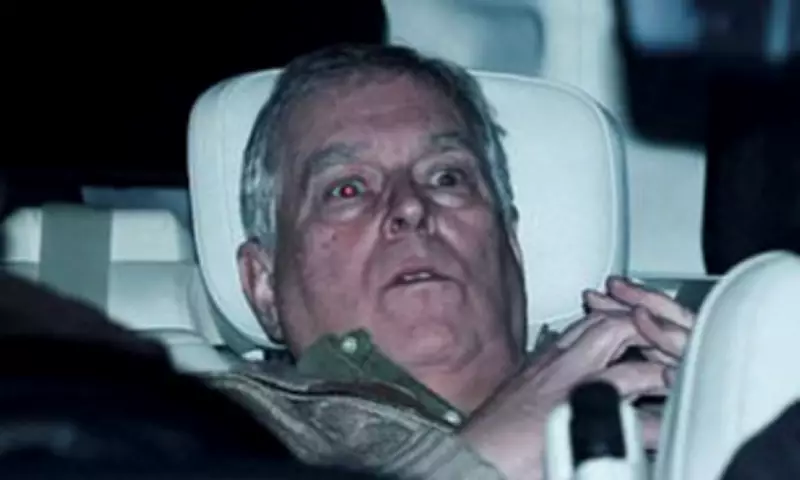
New Zealand's Prime Minister Christopher Luxon has declared his government would support any plans to remove Prince Andrew from the line of royal succession, as British ministers reportedly consider legislative action following the former Duke of York's dramatic arrest.
Commonwealth Support for Succession Change
A spokesperson for Mr Luxon confirmed that New Zealand would back any United Kingdom government proposal to remove Andrew Mountbatten-Windsor from the order of succession. This announcement came as Australian Prime Minister Anthony Albanese formally wrote to his British counterpart, confirming his government's agreement with any such proposal.
In his letter, Mr Albanese stated: 'In light of recent events concerning Andrew Mountbatten-Windsor, I am writing to confirm that my government would agree to any proposal to remove him from the line of royal succession.' He emphasized that Australians take the grave allegations seriously and that the law must take its full course.

Police Investigation and Government Response
The former Duke of York was arrested on Thursday on suspicion of misconduct in public office, with police conducting raids at his properties in Sandringham, Norfolk and Windsor, Berkshire. Andrew was released under investigation after eleven hours of questioning, with searches continuing at his former Royal Lodge home in Windsor.
British government officials have indicated that any proposals regarding Andrew's position in the succession would come after the police investigation concludes. A spokesperson for Prime Minister Sir Keir Starmer confirmed receipt of the Australian letter and stated the government is considering whether further steps are required regarding Andrew Mountbatten-Windsor.
'We are not ruling anything out,' the spokesperson said, while noting it would be inappropriate to comment further during the ongoing police investigation. Australia remains the only other Commonwealth realm to have formally indicated support for removing Andrew from succession so far.
Royal Family Reaction and Allegations
King Charles issued an unprecedented statement following his brother's arrest, expressing 'deepest concern' about the suspicion of misconduct in public office. The monarch emphasized that 'the law must take its course' and pledged the royal family's full cooperation with authorities.
The Prince and Princess of Wales are understood to support the King's statement regarding the arrest of William's uncle. Meanwhile, new allegations have emerged regarding Andrew's conduct during his tenure as the UK's trade envoy between 2001 and 2011.
Expense Claims and Whitehall Response
A retired civil servant has claimed that Andrew charged taxpayers for massages while working as trade envoy, with the expenses allegedly approved despite initial objections. The former staff member told the BBC he had refused to pay for the massage but was overruled by senior officials.
A former senior Whitehall official who oversaw finances during Andrew's tenure said he had seen similar expenses for the royal's trips and expressed 'absolutely no doubt' about the massage claims. The Department for Business and Trade declined to comment on the allegations.
Conservative leader Kemi Badenoch, a former business secretary, called for full transparency regarding departmental files on Andrew if they relate to allegations of misconduct. 'All the files should be released and investigated,' she stated, while acknowledging that trade envoys typically hold low-level roles intended to open doors diplomatically.
Succession Position and Political Pressure
Prince Andrew currently stands eighth in line to the throne, behind Prince William and his three children, and Prince Harry and his two children. The growing international pressure from Commonwealth realms adds significant weight to calls for his removal from succession.
Mrs Badenoch also addressed calls from Conservative colleague Tom Tugendhat for a special parliamentary committee to investigate Andrew and Lord Peter Mandelson's links to convicted paedophile financier Jeffrey Epstein. She emphasized the importance of allowing the police investigation to run its course while maintaining parliamentary oversight of government accountability.

The developments represent one of the most serious challenges to the royal succession in modern history, with international allies joining domestic voices calling for action following Andrew's arrest and the serious allegations against him.