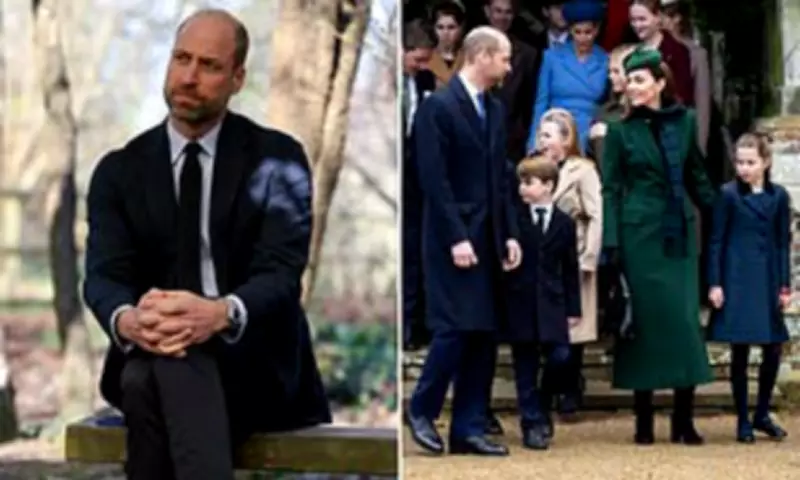
The Prince of Wales has made a significant public declaration regarding his personal faith and commitment to the Church of England, in a move designed to clarify his position as future king and Supreme Governor of the Church. William's devotion to Christianity has been subject to persistent questioning, particularly as he does not attend church regularly and appears less devout than his father, King Charles, or the late Queen Elizabeth II.
A Clear Statement of Faith
Days before attending the Archbishop of Canterbury's enthronement ceremony, William has for the first time explicitly expressed his desire to establish "a strong and meaningful bond with the Church and its leadership." A source close to the prince told The Sunday Times: "This week is an opportunity to be very clear in people's minds, when he walks into Canterbury Cathedral, of where he stands."
The insider elaborated: "For him, it is a drawing of a line in the sand of where he's at, and it's really important that the question over his commitment to the Church is cleared up. His feeling is, 'I might not be at church every day, but I believe in it, I want to support it, and this is an important aspect of my role and the next role, and I will take it seriously, in my own way.'"

Protocol and Participation
The Prince will attend the installation of Dame Sarah Mullally on Wednesday alongside the Princess of Wales, representing the King in accordance with royal protocol which dictates that the heir, rather than the monarch, attends such ceremonies. An aide to William explained: "The Prince of Wales's commitment to the Church of England is sometimes quieter than people expect, and for that reason it is not always fully understood. Those who know him well recognise that his connection to the Church, and to the sense of duty that comes with it, runs deep and is grounded in something personal and sincere."
Historical Context and Personal Practice
William, who was baptised as an infant and confirmed into the Anglican faith at age fourteen in 1997, reportedly attends only a "handful" of services annually. These typically coincide with official engagements, special occasions in the Christian calendar such as Christmas and Easter, or family events like weddings and christenings. Royal biographer Robert Hardman noted that William "does not share the King's sense of the spiritual, let alone the late Queen's unshakeable devotion to the Anglican church."
Hardman further addressed speculation that the Princess of Wales's cancer diagnosis had created religious differences between the couple, with Kate reportedly becoming more interested in faith since her diagnosis. However, he wrote that William was unlikely to "suddenly become a regular worshipper or feign enthusiasm for something that he does not feel personally."
Broader Implications for the Monarchy
This revelation comes amid speculation that William could potentially become the first British monarch in five centuries to break official ties with the Church of England by declining the title of Supreme Governor when he ascends to the throne. The prince feels he is no different from the average Briton in not being a regular worshipper, which has fueled discussions about whether he might reconsider this formal role that monarchs have held since Henry VIII's reign.
The timing of William's faith declaration is particularly noteworthy as Christianity faces challenges from public apathy, especially among younger generations. Recent Church Statistics reports indicate that UK church membership has plummeted from approximately thirty percent of the population a generation ago to significantly lower figures today.
Contrasting Royal Devotions
The late Queen Elizabeth II was a devout Christian who attended church weekly and maintained a profound sense of religious duty throughout her reign. King Charles, despite his well-documented interest in other faiths including Islam, has consistently been a regular churchgoer. William's approach represents a more private, less frequent engagement with formal worship while maintaining a personal connection to the institution he is destined to lead.

William's affirmation of his "quiet faith" serves to address both public curiosity and institutional concerns about the future relationship between the monarchy and the Church of England, establishing his personal approach to this centuries-old constitutional and spiritual responsibility.