Royal Family Faces Unprecedented Crisis as Andrew's Arrest Places Future on William and Kate
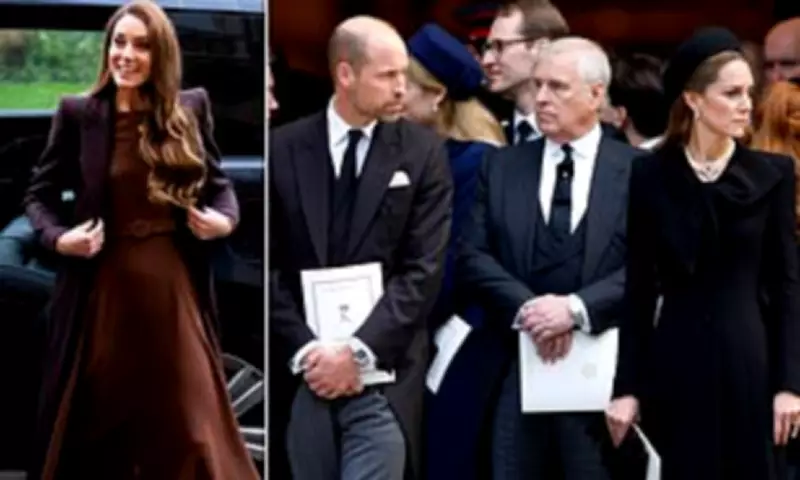
The Prince and Princess of Wales now shoulder the monumental responsibility of rescuing the British monarchy, with experts declaring the pressure "falls squarely" upon them to restore the institution's integrity following the dramatic arrest of Prince Andrew. The detention of King Charles's younger brother on his 66th birthday, on suspicion of misconduct in public office, represents the most severe crisis to confront the royal family in modern history.
Future Monarchs Must Chart New Course for Troubled Institution
As the definitive future of the monarchy, William and Kate must urgently articulate their vision for the institution over the coming half-century, aiming to salvage its reputation in the wake of the Jeffrey Epstein scandal. Allegations concerning Andrew's connections to Epstein have haunted the family for years, culminating with the release of files from his estate by the US Department of Justice. Some documents appear to show the eighth-in-line to the throne sharing sensitive information during his tenure as a trade envoy.
With the former prince's approval rating plummeting to a record low of three percent due to his association with the convicted paedophile, crisis consultant Mark Borkowski asserts that William and Kate confront the daunting task of somehow "establishing the integrity of the royal family." Borkowski elaborated: "Really, what do William and Kate do? What does their generation do with the crown, with all its soft power, its affairs of state? It's beginning to feel a little bit like a European monarchy."

He emphasized: "The pressure on William to communicate what the royal family is going to be over the next 50 years falls squarely on his shoulders. The heavy weight of this burden on the royal family's reputation lies with William and Kate and what they're going to do."
Public Approval Ratings Highlight Stark Contrast
The Prince and Princess of Wales, recognized as Andrew's most significant critics behind closed doors, clarified this week their support for the King's statement that "the law must take its course" regarding William's uncle. This unprecedented declaration, issued just two hours after Thames Valley Police confirmed Andrew's arrest, marked a swift and uncharacteristic response in royal family history.
The couple have remained in lockstep with King Charles's decisions to distance the monarchy from Andrew, beginning with Charles stripping his brother of titles last year. The King expressed his "deepest concern" and pledged his "wholehearted support and co-operation" to police, stating clearly: "the law must take its course."
Public opinion reveals a dramatic contrast: Princess Kate maintains a robust net approval rating of 74 percent according to latest polling, while Andrew languishes at three percent. Prince William leads the family with 77 percent approval. A new poll this week indicates 82 percent of Britons believe Andrew should be removed from the line of succession, with merely six percent supporting his retention.
Monarchy Faces Mounting Scrutiny and Parliamentary Pressure
Although neither William nor Kate have directly addressed recent events, they reportedly fully endorsed the King's statement. William has previously indicated "change is on my agenda" when he ascends the throne, but he may need to subject himself and the monarchy to greater scrutiny as traditional attitudes toward the royal family diminish.
As they guide the monarchy forward, public opinion becomes paramount, with its authority fundamentally rooted in the support and goodwill of ordinary citizens. The centuries-old deference toward monarchy members, who inhabit palaces, enjoy chauffeur-driven transport, and possess personal fortunes, has sustained them—but Andrew's arrest and potential prosecution threaten this foundation.
Worryingly for King Charles, while two in five believe he has managed the crisis well, one in three consider his handling poor, and 58 percent assert the family overall reacted too slowly to revelations about Andrew's relationship with Epstein.

Investigation Details and Political Repercussions
Andrew Bowie, a senior Conservative MP, suggested it would be "the decent thing" for Andrew to voluntarily relinquish his place in the line of succession. He noted Parliament would be "well within its rights" to act if Andrew is found guilty, though emphasized no charges have been filed yet.
Broadcaster David Dimbleby remarked that some royal family members "behave like people who are spoiled by entitlement," though praised Princess Anne as "a paragon of virtue." Labour peer Lord Foulkes indicated growing expectations for increased scrutiny, having contacted MP Liam Byrne to examine Andrew's work as a trade envoy, though acknowledged police investigation complications.
The former Duke of York was detained after an early morning raid on his Sandringham home, appearing visibly shocked upon leaving Aylsham Police Station in Norfolk after over eleven hours in custody. Thames Valley Police officers searched Wood Farm and Royal Lodge in Windsor, with searches continuing until Monday.
Trade Envoy Role Under Microscope
Detectives are investigating Andrew's conduct as UK trade envoy, following emails in the Epstein Files suggesting he may have shared confidential information with his paedophile friend. These include reports of official visits to Hong Kong, Vietnam, and Singapore, and a confidential brief on investment opportunities in Afghanistan's Helmand Province reconstruction.
After twenty-two years in the Royal Navy, Andrew became the UK's special representative for international trade and investment in 2001, stepping down in 2011 amid the Epstein controversy. Experts suggest property searches may enable detectives to broaden investigations into sexual offence claims, though Andrew has consistently denied any wrongdoing regarding his Epstein relationship or sexual allegations.
The prolonged controversy ensures the monarchy will face escalating questions, with William and Kate's leadership becoming increasingly critical for institutional survival and public trust restoration.