Michael Jackson Biopic Faces Backlash as Ghoulish and Soulless Cash Grab
Clarisse Loughrey, Tuesday 21 April 2026 13:22 BST
The Michael Jackson movie biopic, titled Michael, has been condemned as a ghoulish and soulless cash grab in a scathing review. This family-backed film portrays the King of Pop as a well-intentioned saint who single-handedly ends gang violence and cares for sick children, sparking controversy over its sanitised depiction.
Estate-Approved Biopics Blur Line Between Cinema and Merchandise
You can blame Bohemian Rhapsody, the visually and spiritually ugly Queen film that won four Oscars and earned $910 million worldwide, for the recent surge in soulless, estate-approved musician biopics. With Bob Marley: One Love (2024), Back to Black (2024), and Whitney Houston: I Wanna Dance with Somebody (2022), the line between "cinema" and "merchandise" has come close to being obliterated.

The draw of Michael, produced by Graham King of Bohemian Rhapsody fame, isn't the desire to understand Jackson as a person or artist, or to grapple with his legacy as a pivotal 20th-century cultural figure. Instead, it exists to be consumed as an act of allegiance, as proof of fandom. It resists story in favour of content, ensuring fans see what they expect, such as the "Thriller" video or "Bad" performed live at Wembley in 1988.
Ghoulish Approach to a Complex Figure
While this mentality isn't unique, applying it to a figure as profoundly complex as Jackson feels particularly ghoulish. Michael ends in 1988, six years before the singer reached an out-of-court settlement with Evan Chandler, who accused him of sexually abusing his 13-year-old son Jordan, and 17 years before Jackson was acquitted of child sexual abuse in a criminal trial.
King secured the rights to produce Michael mere months after the release of Dan Reed's documentary Leaving Neverland, in which Wade Robson and James Safechuck accused Jackson of child sexual abuse. The Hollywood Reporter claimed the film originally depicted Jordan Chandler, but after production wrapped, it emerged that the settlement included a clause prohibiting his portrayal. The Jackson estate reportedly funded reshoots directly.
Uncanny Impersonation and Lack of Emotion
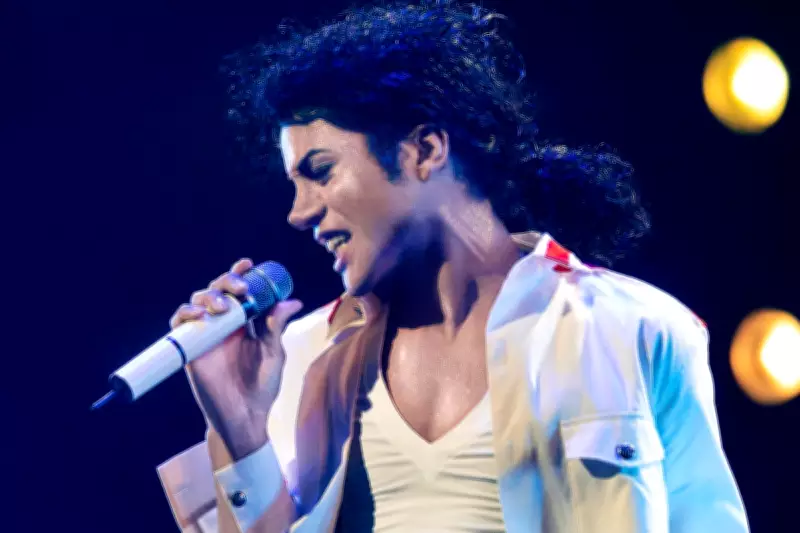
Jackson is played by his nephew, Jaafar Jackson, whose resemblance to the late singer is uncanny at times, as is his impersonation in speech, singing, dancing, and smiling. Jaafar's vocals are mixed with Jackson's original recordings. However, emotion is a rarity, and director Antoine Fuqua shoots musical performances from such a distance that it's impossible to sense Jackson's feelings or thoughts for half the film.
A final card states "his story continues" for a planned sequel, but the film includes multiple sequences of the singer visiting sick children in hospital and heavy references to the Neverland Ranch. Yet, answering how Michael depicts Jackson in context of the allegations is surprisingly hard, as writer John Logan and Fuqua seem to lack a clear concept of him as a character.
Problematic Depictions of Trauma and Legacy
There's an uneasy tension in the origins of The Jackson 5, where young Jackson, played by Juliano Krue Valdi, gleefully performs at his father Joe's behest, only to return to a home ruled by violent abuse. But the film doesn't acknowledge this tension so much as replicate it, turning long-term trauma into a borderline punchline. We're invited to laugh at Jackson asking managers to fire his father or confiding in his pet chimpanzee Bubbles, depicted with nightmarish CGI.
Colman Domingo, usually nuanced, plays Joe Jackson like a slack-jawed cartoon villain, with piled-up contact lenses and prosthetics. If Michael aims to smooth out Jackson's legacy, it does so by eradicating intent or agency, reducing him to a nebulous dreamer destined to "spread love and heal." Apart from scenes where Jackson stares at Peter Pan and mourns his appearance, the script ignores his identity and relationship with Black culture.

Omissions and Shoddy Storytelling
Quincy Jones, played by Kendrick Sampson, is sidelined in favour of manager John Branca, played by Miles Teller, who is now co-executor of Jackson's estate and a producer on the film. Diana Ross, integral to The Jackson 5's rise, is absent. Jackson's decision to cast rival gang members in the "Beat It" video is so shoddily depicted, it implies he ended gang violence single-handed with a cool jacket flick. MTV's bias against Black artists is solved with one quick phone call by a CBS executive played by Mike Myers.
All Michael does is recreate, in mechanical style, the most famous visuals of Jackson's career. It's certainly easier that way. Why bother to depict a human being when you can simply turn them into a product?
Directed by Antoine Fuqua, starring Jaafar Jackson, Nia Long, Laura Harrier, Juliano Krue Valdi, Miles Teller, and Colman Domingo. Cert 12A, 127 minutes. Michael is in cinemas from 22 April.