Amazonian Robusta: A Bitter Brew Turned Climate-Resilient Treasure
In the heart of the Amazon rainforest, a remarkable transformation is underway as Indigenous communities nurture robusta coffee plantations, once seen as inferior, into a beacon of resilience against the escalating climate crisis. This shift not only supports local families but also champions forest preservation, offering a sustainable model for global coffee production.
From Colonial Legacy to Environmental Stewardship
When the Paiter Suruí community expelled invaders from their land in 1981, they faced a pivotal choice: destroy the coffee plantations left by colonisers or preserve them. Many viewed these trees as symbols of violence and death, while others felt compassion, unable to uproot them. Over four decades later, the surviving estates have become vital assets, fostering both livelihoods and ecological balance.
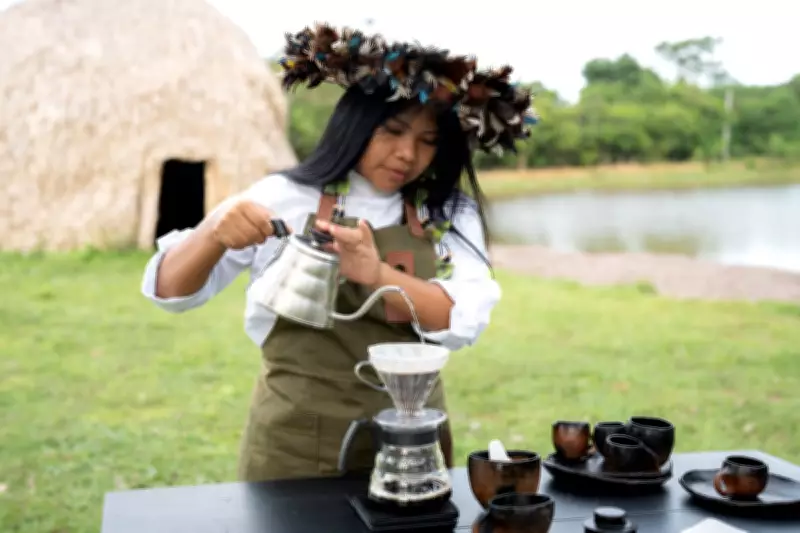
Celeste Paytxayeb Suruí, a renowned Indigenous barista and coffee producer from Rondônia, Brazil, explains, "Today, we use coffee as a way to preserve the forest." Her award-winning fine coffee, dubbed "Amazonian robusta," is cultivated by nearly 140 Suruí families on small plantations within the Sete de Setembro Indigenous territory. The region's abundant rainfall and consistent heat mimic the Congo basin, ideal for robusta's growth.

Redefining Robusta: Quality and Climate Adaptation
Historically, robusta has been dismissed as a bitter, lower-grade coffee, often blended into cheap products compared to its tastier arabica cousin. However, researchers are actively rebranding it, proving that robusta can yield a superior brew. This effort extends beyond taste to climate adaptation, as robusta thrives in higher temperatures than arabica, making it crucial for meeting rising global demand.
Robusta's share of global coffee production has surged from 28% in the early 1990s to 44% in 2023. Yet, the climate crisis poses severe threats to all coffee varieties. A Climate Central report reveals that Brazil, the world's largest producer, now endures 70 more hot days annually, stressing plants and reducing yields. While robusta is more heat-tolerant, it remains vulnerable to droughts, as seen in Rondônia in 2024 when Celeste's production plummeted by 40%.
Innovation and Sustainability in Coffee Farming
Experts and farmers worldwide are innovating to breed more resilient plants capable of withstanding extreme temperatures, droughts, and pests. In Brazil, Embrapa, the federal agricultural research corporation, has boosted robusta productivity fivefold over two decades. They are now testing 64 new crossings for enhanced heat tolerance and flavour, while emphasising proper harvest and post-harvest care to elevate quality.
Enrique Alves, an Embrapa agronomist, notes, "If you harvest ripe beans, and wash and dry them appropriately, the quality increases exponentially." This approach benefits 10,000 small family farms in Rondônia's "Forests of Rondônia" region, where about 10% produce fine robusta on average plots of 3.3 hectares.
Balancing Growth with Forest Protection
Coffee plants thrive near forests, which provide humidity, stable temperatures, pollinators, and natural pest control. However, past government policies encouraged deforestation for cattle ranching, leaving 45% of the region as pasture. In contrast, the Suruí have reforested their territory since 2004 under a 50-year environmental management plan.
Families like the Bentos near Cacoal exemplify sustainability, using water-saving irrigation, planting trees, raising bees, and rotating crops. Deigson Bento shares, "You can have a 5,000-reais monthly income for a family on only two hectares of coffee." Yet, concerns persist that higher coffee prices might spur large plantations, risking deforestation and undermining small-scale efforts.

A Call for Collective Action and Market Shift
Neidinha Suruí of the Kanindé association warns that robusta cultivation must be strategic to avoid deforestation, highlighting the need for government subsidies and consumer awareness. Celeste Paytxayeb Suruí, who markets Indigenous-produced coffee, urges, "When we talk about the Amazon, people think about the forest, but don't think about the people who are inside the forest. They need to be valued as well as their work and their stories."
Scientists like Carlos Nobre advocate for a market shift towards forest products, noting that non-timber goods represent only 0.4% of Brazil's GDP despite its rich biodiversity. Globally, initiatives like World Coffee Research's robusta network in six countries aim to test varieties under diverse climates, ensuring adaptability. Fabiana Mesquita de Carvalho, a neuroscientist, compares robusta to red wine and arabica to white wine, emphasising distinct tasting profiles.
Ultimately, the future of robusta hinges on broader recognition and protection of forests. As Paytxayeb Suruí concludes, "If only the Indigenous people do their part, things won't change. We need collective action to make a difference. The forest is the mother not only of Indigenous people, but of everyone."