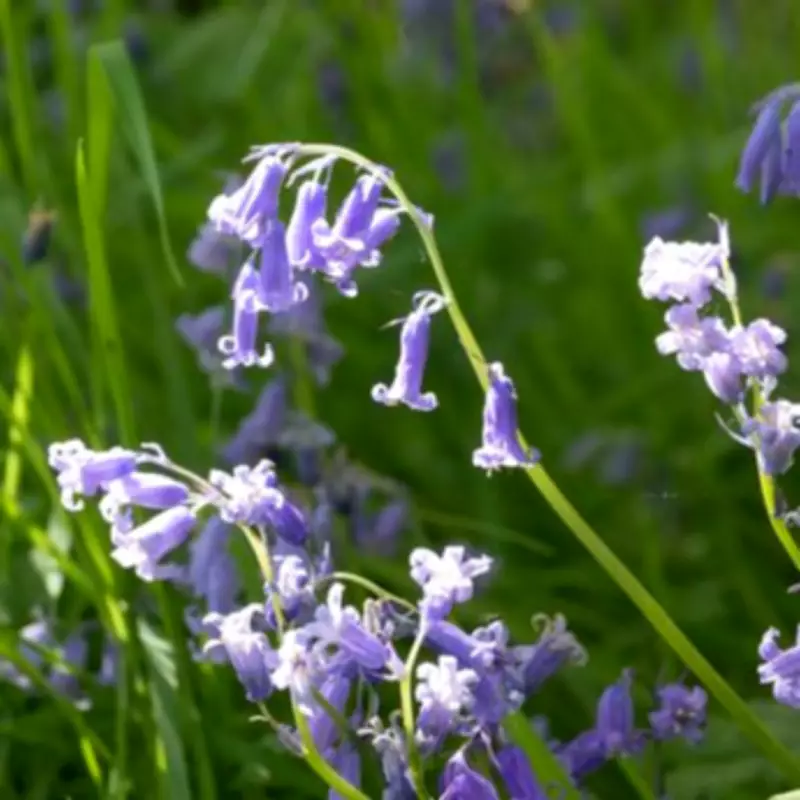
Gardeners Urged to Identify Bluebell Type This April to Protect Native Species
A leading horticulturist has issued an urgent call to gardeners across the United Kingdom, advising anyone with bluebells growing in their outdoor spaces to conduct one critical check immediately during the month of April. This timely action is essential to safeguard native English bluebell populations from invasive competitors.
Distinguishing Between English and Spanish Bluebells
Denise Hope, widely recognised as Mud and Bloom in gardening circles, has highlighted the vital differences between native English bluebells and their Spanish counterparts. In a recent social media video, Hope explained that while bluebells are celebrated as magical heralds of spring in British woodlands, not all varieties are indigenous to the UK landscape.
English bluebells exhibit several distinctive characteristics. They typically feature a drooping stem with flowers that bloom predominantly on one side. The blossoms display a rich, deep blue hue accompanied by cream-white pollen and emit a delightful sweet fragrance that is synonymous with springtime walks.

Spanish bluebells, by contrast, present a markedly different appearance. These plants stand more erect with flowers emerging on all sides of the stem. Their colouration is generally a paler shade of blue, often taking on a conical shape. Crucially, Spanish bluebells lack any discernible scent and produce pollen that appears pale blue rather than cream-white.
Why This Distinction Matters for Gardeners
The necessity of identifying bluebell types extends beyond mere botanical curiosity. According to the Royal Horticultural Society, Spanish bluebells are classified as invasive species that propagate rapidly through both seed dispersal and bulb offsets. These aggressive growth patterns allow them to form dense clumps that can overwhelm smaller plants and disrupt local ecosystems.
Hope emphasises that bluebell colonies require considerable time to establish themselves, typically taking between five to seven years to progress from seed to flowering plant. Furthermore, these delicate flowers can take years to recover from damage caused by foot traffic or leaf crushing, which impairs their ability to photosynthesise and obtain essential nutrients.
Native English bluebells receive additional protection under the Wildlife and Countryside Act 1981, which prohibits the digging up of plants or bulbs in natural countryside settings. This legal protection underscores their ecological significance and vulnerability.
Ecological Concerns and Practical Guidance
The RHS has issued specific warnings regarding the proximity of gardens to wild native bluebell populations. In regions close to woodlands or natural habitats, planting Spanish or hybrid bluebell varieties is strongly discouraged. The primary concern involves competition for resources and the risk of hybridisation, where pollinators transfer pollen between species, potentially diluting the genetic integrity of native English bluebells.
In Northern Ireland and the Republic of Ireland, Spanish bluebell is formally listed as an invasive non-native species, reflecting the serious threat it poses to local biodiversity. Gardeners situated near wild populations are advised to avoid cultivating Spanish varieties altogether to prevent ecological contamination.
Effective Removal Strategies for Invasive Bluebells
For gardeners who discover Spanish bluebells on their property, several practical methods exist for eradication:
- Excavating entire clumps of plants to remove bulbs completely
- Using a garden fork to extract individual plants carefully
- Consistently mowing lawns where bluebells appear during spring and summer months to weaken bulbs and prevent flowering
The RHS cautions that areas with substantial bluebell infestations may require several years of diligent digging, forking, or regular mowing to achieve complete eradication. This persistent approach is necessary to stop self-seeding and ultimately destroy invasive populations entirely.
As April progresses, gardeners are encouraged to examine their bluebells closely, identify their specific variety, and take appropriate action to protect Britain's cherished native flowers for future generations to enjoy.