Centerville's Downtown Revival: How a South Dakota Town Became a Statewide Model
Nestled in eastern South Dakota, approximately forty miles southwest of Sioux Falls, the town of Centerville has long been celebrated for its rich agricultural heritage, vibrant Fourth of July festivities, and a beloved local bakery famous for its distinctive "zebra donuts." However, this community of around nine hundred residents has recently earned a new and significant distinction: emerging as a pioneering leader in downtown redevelopment across the state.
A Strategic Response to Decline
The successful initiative to reverse the trend of deteriorating Main Street districts, a common challenge in small South Dakota towns, has been propelled by forward-thinking local leadership and a robust entrepreneurial spirit among business owners. At the heart of Centerville's transformation lies the implementation of a stringent vacant building ordinance, which has since become a replicable model for municipalities statewide.
"Vacancies in the central business district are a detriment to your city," emphasized Jared Hybertson, Centerville's economic development coordinator. "I frequently hear from other communities seeking guidance, as this is a pervasive issue across South Dakota."

A decade ago, Centerville's compact downtown, spanning just a few square blocks, contained fourteen empty storefronts. Some properties were sporadically used as rentals, others served as storage for debris or remnants of past enterprises, and several were simply deteriorating toward condemnation. This visual representation of decline was unappealing to potential visitors, new residents, and prospective business investors.
"I was deeply frustrated by the number of vacant buildings," Hybertson recalled. "Perception is critical for a small town; you are either growing or dying, with little middle ground."
The Ordinance That Sparked Change
In 2017, the Centerville City Council enacted the vacant buildings ordinance, establishing a registration system, mandatory building inspections, warning letters, potential fines, and eventual financial penalties to incentivize property owners to either rehabilitate or sell their structures, thereby creating opportunities for new ventures.
Empowered by this regulatory framework, Hybertson, alongside dedicated local officials and business leaders, has orchestrated a remarkable downtown turnaround. Over the past decade, the Centerville Development Corporation has actively purchased and either renovated or demolished nearly a dozen dilapidated or abandoned buildings, many of which now host thriving new businesses.
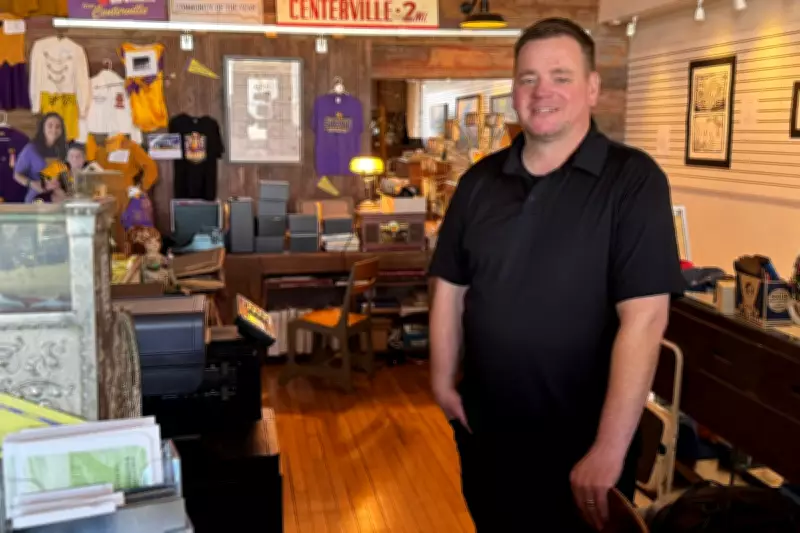
Recent additions to Centerville's downtown landscape include a women's clothing boutique, a salon, a tattoo parlor, a discount retail store, two restaurant locations, and a historic building transformed into a combined museum, art gallery, and visitors center. Future redevelopment projects are already planned, featuring loft housing and an event center.
These new enterprises have elevated Centerville into a destination for visitors, bolstered the local economy, and contributed to increased sales tax revenues. "It has truly been a joint citywide effort," Hybertson noted. "The ordinance provides us with the necessary leverage to encourage property owners to take action with their properties."
A Blueprint for Rural Revitalization
Many rural communities in South Dakota have experienced population and economic declines in recent decades. Paula Jensen, a vice president of the community development organization Dakota Resources, explained that cities with numerous vacant downtown buildings often suffer from a perception of general decline, which can deter visitors, new residents, and potential businesses.
"We understand the eventual outcome if we neglect this issue," Jensen stated. While she acknowledged that small-town downtowns are unlikely to return to the bustling hubs of decades past, attracting new commercial, retail, and service businesses can stimulate overall community growth.

"This isn't about reverting to the 1950s, when everyone gathered in town to sell agricultural goods," she said. "The core purpose of maintaining Main Streets is to place business owners in those buildings, rejuvenating downtowns and restoring them as lively centers."
Jensen emphasized that downtown revitalization is a long-term commitment requiring sustained effort, where replacing vacant storefronts is merely one component. "It's not just about beautifying Main Street with flowers," she clarified. "It involves a deliberate decision to incrementally improve the area, demonstrating a long-term dedication that encourages business establishment."
To disseminate successful strategies, Dakota Resources invited Hybertson to present Centerville's vacant building ordinance at a community meeting in Murdo last autumn, sharing this replicable model with leaders from across the state.
Balancing Enforcement with Empathy
While the ordinance provides a mechanism to address vacancies, Hybertson highlighted that achieving property sales or redevelopment demands considerable patience and negotiation. City officials employ the ordinance as a tool, tempered by genuine kindness and a willingness to communicate and compromise with property owners—a strategy akin to an iron fist in a velvet glove.
"It's fundamentally about fostering relationships and building trust, as many owners are uncertain about what to do with their buildings," Hybertson explained.
The conversion of an aging historic building into the museum and community center exemplifies this approach. After extensive discussions with Hybertson, the Sioux Falls-based owner agreed to sell the property for six thousand dollars. With approximately one hundred thousand dollars in grants and an equal contribution from the development corporation, the renovated building now serves as a central gathering place and tourist attraction.
"It generates positive energy, as a vibrant downtown enhances community pride," Hybertson remarked.
Challenges and Replication Efforts
Other towns are following Centerville's lead, though implementing policies that impact private property rights can be contentious in South Dakota. "It can become tricky and controversial regarding property rights," Hybertson acknowledged, noting that effectiveness requires patience, resilience, and sometimes fortunate timing.
Even after improvements, sustaining profitable businesses in small towns remains challenging, as evidenced by the recent closures of a Mexican restaurant and a coffee shop in Centerville. "Sometimes it feels like one step forward and two steps back," he admitted.
For instance, the city of Hurley, a town of three hundred eighty-five people located thirty miles southeast of Sioux Falls, contacted Hybertson and enacted a vacant building ordinance in October 2024. However, city finance officer Marcy Hillman reported that the policy has not yet been implemented due to limited resources.
"Many South Dakota towns face similar situations," Hillman said. "Our council aims to revitalize downtown, but it's challenging without dedicated personnel."
Community Spirit and Entrepreneurial Success
Christen Cunningham exemplifies the benefits of repurposing existing downtown buildings. After relocating from Colorado to her family's hometown, she purchased a building formerly used by local historian Sherree Dee Schmiedt to store historical artifacts, transforming it into Christen & Company, a thriving women's clothing boutique.
While her storefront wasn't directly impacted by the vacant building policy, Cunningham attributes her success to the community-wide effort to energize downtown. "It creates opportunities," she said. "People still express amazement that this boutique operates in Centerville."
Cunningham plans to renovate the boutique's second floor into short-term rentals and has purchased the adjacent former bowling alley, potentially converting it into additional retail space or an event hall. Her daughter has also moved to Centerville, operating a beauty salon nearby.
"I appreciate the personal connections here," Cunningham shared. "By focusing on redevelopment and repurposing structures, Centerville honors its past while fostering a promising future."
"The greatest blessing is the relationships we're building," she concluded. "We're not merely selling clothes; our mission is to make women feel valued and seen, ensuring they leave feeling better than when they arrived."