Colombia's Coffee Paradox: Bountiful Harvests, Withering Workforce
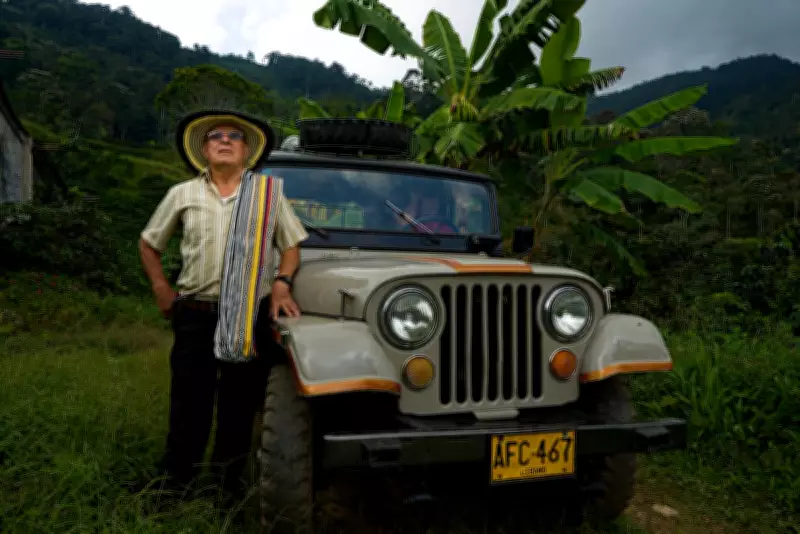
In the lush, mountainous region of Tolima, Colombia, the Pérez Arrubla family—Rodrigo, his wife, and children Mary and Rodrigo Jr.—cultivate coffee on steep Andean slopes near Líbano. As fourth-generation farmers, they have witnessed a historic harvest in 2025, driven by surging global coffee prices that reached record highs for the second consecutive year. This boom, however, masks a deepening crisis: crops left to rot due to an acute shortage of labour, exacerbated by climate change and rural depopulation.
Global Factors Fuel Price Surge, But Farmers Reap Little
Severe US tariffs on Brazil and Vietnam, the world's largest coffee producers, combined with poor harvests in those countries, have propelled prices upward. Both nations suffered from the El Niño phenomenon, characterised by dry spells intensified by the climate crisis. Ironically, these same conditions favoured Colombia's high-altitude coffee-growing areas, yet the anticipated prosperity has been undermined by systemic challenges.
Colombian coffee is not immune to climate impacts. Since the 1980s, average mountain temperatures have risen by about 1.2°C, and sunlight hours have decreased by roughly 19%. Farmers report increased droughts, heavier rains, and more pests and diseases. Studies predict that from 2041 to 2060, yields may decline by 8% in lower altitudes but rise by 16% at higher elevations, prompting shifts in cultivation practices.

Labour Shortages and Rural Abandonment
The scramble for coffee pickers has become desperate. While no nationwide estimates exist for unpicked harvests in 2025, complaints of labour shortages are widespread. The Pérez Arrubla family lost 10% of their crop due to a lack of workers. Mary Pérez Arrubla recounts, "We could not stop. All week, every week, for two-and-a-half months, we picked coffee. I had to gather the coffee from the ground. It seemed that there was more of it lying on the floor than still on the branches."
Over a generation, the number of people in Colombia's coffee industry has shrunk by a quarter, with the proportion aged over 60 more than doubling, according to the national Coffee Growers Federation. Decades of conflict have driven millions from the countryside to cities, fleeing violence from guerrilla groups, paramilitaries, drug cartels, and the state. Even in less affected areas, youths migrate due to wage gaps, with rural workers traditionally earning less than urban counterparts.
Wilder Gomez, the family's farm manager, illustrates the struggle: "It's brutal. It's hard to find people." At harvest peaks, he starts at 6am in Líbano's town square, often failing to hire the needed 30 workers. Those hired frequently move between farms seeking better opportunities, despite increased wages.
Innovation Out of Reach for Smallholders
Countries like Brazil have mechanised harvesting with large machines, but Colombia's mountainous terrain makes this impractical. Yinson Javier Díaz, an agronomist with the growers' federation, explains, "Brazil's flat fields and distinct seasons let machines work. But our mountains? Every slope is different." Additionally, machines cannot distinguish between ripe and unripe cherries, leading to waste in Colombia's varied ripening cycles.
Technological solutions exist, such as eco-friendly mills that reduce water and labour, AI-powered sorting machines, and precision drones. However, less than 5% of farmers can afford these innovations, with mills starting at 22 million Colombian pesos (£4,150). Smallholders, who own an average of 1.4 hectares each, dominate Colombia's coffee landscape, contrasting with Brazil's larger, industrialised estates.
Speciality Coffee: A Niche Hope with Risks
Experts suggest focusing on speciality coffees, differentiated by origin or fermentation, similar to wines or tequilas. This strategy emphasises quality over quantity, allowing farmers to thrive on smaller plots. The Pérez Arrubla siblings experiment with exotic blends on two hectares, with Mary noting, "It's artisanal. And that makes it more expensive, more valuable, than the bitter coffee grown in Brazil."

Yet, speciality coffee carries risks: longer blooming times, smaller harvests, and susceptibility to diseases like coffee leaf rust. Few farmers can access brokers for this niche market, and the federation does not pay premiums for speciality beans. Díaz warns, "The irony is that speciality coffees, which pay 300 to 400% more, are especially susceptible to roya. Many coffee growers fall in love with the price without understanding the risks."
Uncertain Future for a Cultural Icon
With rural abandonment and innovation unattainable for most smallholders, Colombia's coffee culture faces uncertainty. Families with minimal land can barely survive on commercial beans, while industrialisation would threaten the livelihoods of 560,000 families. Jacqueline Mazza, a professor at Johns Hopkins University, advocates for small-scale, specialised production combined with complementary crops and tourism, but notes this requires strategic investment and organisation.
Mary observes a shift in domestic consumption, with more Colombians willing to pay premiums for speciality coffee, seeing it as support for farmers. However, the path forward demands collective action and adaptation to preserve a UNESCO-recognised industry at the crossroads of climate, economy, and tradition.