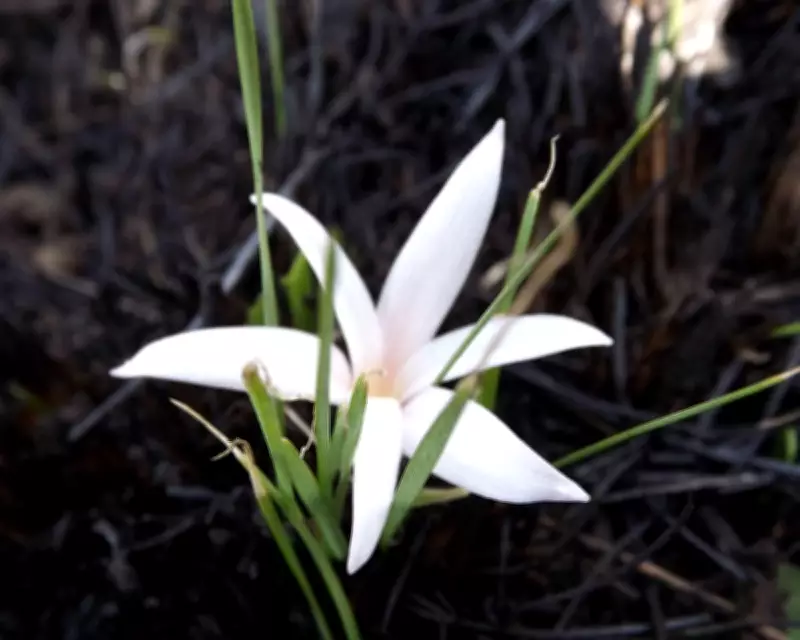
The Natal crocus, a remarkable plant native to South Africa, has evolved a sophisticated reproductive strategy that relies on a unique combination of natural fire, bees, and ants. This fire-dependent species, scientifically known as Apodolirion buchananii, showcases nature's ingenuity in ensuring survival through deception and collaboration.
Fire as a Catalyst for Blooming
In its native grasslands, the Natal crocus remains dormant until natural fires sweep through the landscape. Shortly after a fire breaks out, the plant produces a gloriously bright white flower that emerges from the ground before its leaves appear in early spring. This timing is crucial, as the flower stands out like a beacon among the blackened grass, making it highly visible to pollinators.
Attracting Bee Pollinators
The flower's vivid appearance is complemented by an irresistible sweet scent that wafts through the air, specifically designed to lure bee pollinators. This scent, combined with the visual contrast against the charred environment, ensures that bees are drawn to the crocus, facilitating pollination and the initial step in its reproductive cycle.

Underground Fruit Development
After successful pollination, the developing fruits of the Natal crocus remain underground for approximately six months. This subterranean phase protects the seeds until they are fully mature and ready for dispersal, shielding them from potential predators and environmental hazards.
Ant Deception for Seed Dispersal
The most astonishing aspect of the Natal crocus's reproduction is its method of seed dispersal, which involves tricking ants. The seeds produce a scent that mimics ant larvae, fooling ants into believing they are rescuing their own offspring. The ants collect the seeds and carry them to their nests, where they care for them as if they were genuine larvae.
This deception ensures that the seeds are transported to safe locations, where they can germinate into seedlings. Presumably, the ants experience a surprise when the "larvae" eventually sprout, but by then, the plant has secured its next generation.
Ecological Implications
The Natal crocus's reliance on fire highlights the importance of natural fire cycles in grassland ecosystems. Its ability to co-opt bees and ants demonstrates complex interspecies interactions that drive biodiversity. This plant serves as a fascinating example of how species adapt to their environments through innovative reproductive strategies.
Understanding such mechanisms can inform conservation efforts, particularly in regions where fire suppression or habitat loss threatens fire-dependent flora. The Natal crocus's story underscores the intricate balance of nature and the need to preserve these delicate ecological relationships.