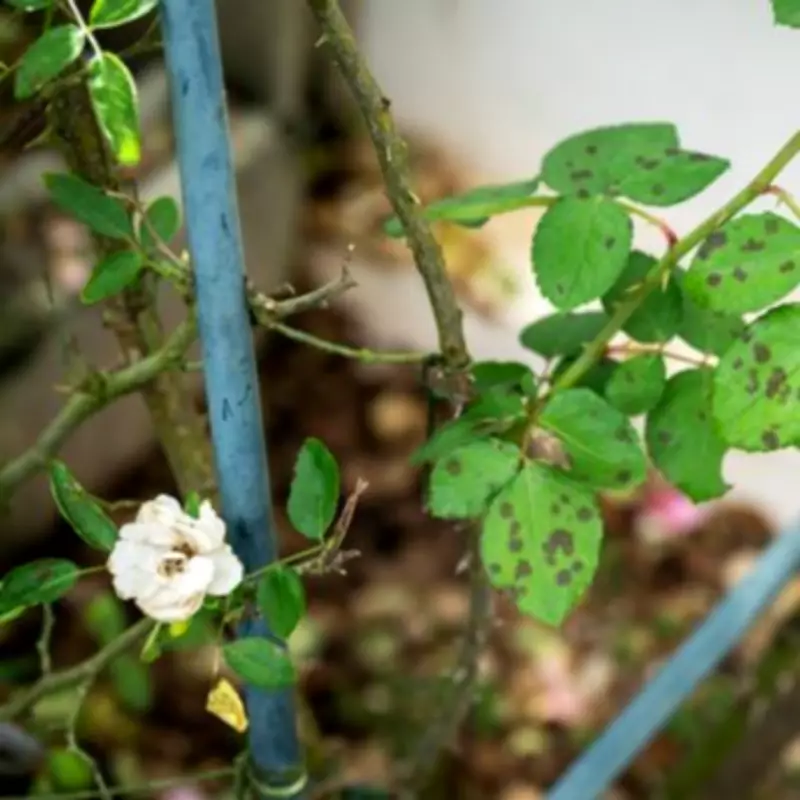
Roses hold a cherished position at the heart of countless British gardens, representing a treasured asset for enthusiastic gardeners. It is profoundly disheartening to witness these stunning blooms lose their splendour to the pervasive fungal disease known as black spot.
Understanding the Black Spot Problem
Diplocarpon rosae, the fungus responsible for black spot, creates unsightly black spots on rose foliage, followed by yellowing and premature leaf fall. This widespread issue recurs annually for many gardeners, often leaving them feeling helpless in their attempts to resolve it. While chemical treatments and rigorous pruning methods have been extensively recommended, a remarkably straightforward and natural approach is gaining significant traction online.
The Simple, Eco-Friendly Solution
This method is simple to adopt, environmentally sound, and supported by a growing community of home gardeners. Sophie, a gardening expert who shares advice under the username @lookinsidemygarden, recently revealed an uncomplicated way to safeguard rose plants naturally.

"When the salvia warms up, they produce sulphur, which is a natural fungicide," Sophie explained. According to her, merely underplanting roses with salvia can protect them from the damaging impact of black spot disease.
Proven Results and Practical Techniques
"Last year, all of my roses were underplanted with salvia, and I didn't have any black spots," she reported. Underplanting involves positioning smaller, typically low-growing perennial plants beneath taller trees or shrubs, creating a protective and aesthetically pleasing ground cover.
Not only is this technique successful in disease prevention, but salvia is also a resilient plant in its own right that complements other garden blooms beautifully. "Although many salvias will survive the winter, sometimes they don't make it, but the good news is it's really easy to take cuttings from salvia so that you will never be without them," Sophie added.
Ensuring Year-Round Protection
These cuttings can be overwintered in a greenhouse, guaranteeing a consistent year-round supply. Once spring arrives, gardeners can effortlessly propagate more plants, providing ongoing, natural protection for their prized roses.
Inquisitive followers sought further clarification in the comments of Sophie's video, with one asking: "Does it matter which Salvia?" Sophie responded definitively: "It's the greggii or microphylla."
Enthusiastic Community Response
The gardening community reacted with great enthusiasm to this natural tip. One user declared: "I may declare my everlasting love for this tip, or just say thank you." Another commented: "I love roses, but whatever I try, two or three always have black spot. Probably have to wait for next year now, but thank you so much, in anticipation."
This method offers a sustainable, effective alternative for gardeners seeking to maintain healthy, vibrant roses without resorting to harsh chemicals, blending practical horticulture with natural plant science.