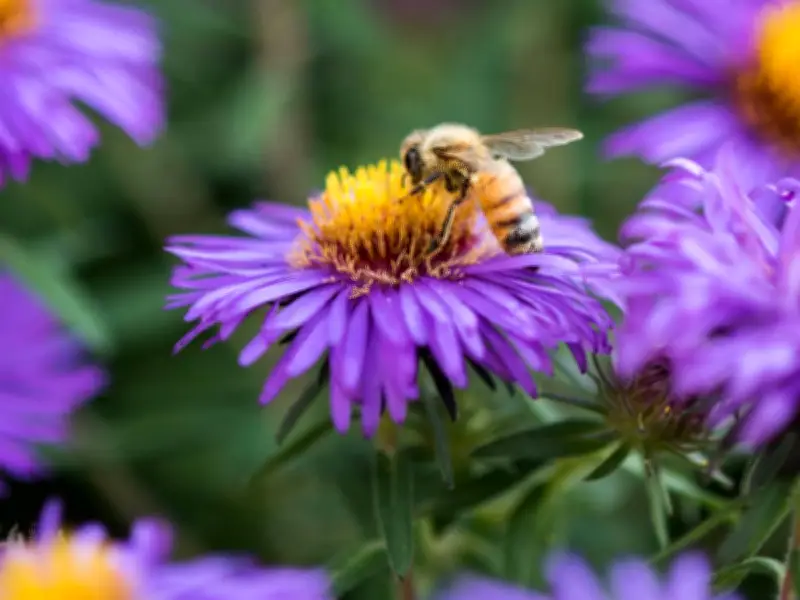
Planting lavender in July is an effective way to attract bees to your garden, according to the Royal Horticultural Society (RHS). Bees are essential pollinators for many food crops and wildflowers, but UK bee populations have declined by around a third over the past 30 years.
Why Lavender Attracts Bees
Bees are drawn to lavender because its vivid blooms are highly visible to their UV-sensitive vision, and the plant emits a powerful scent that signals a nectar source. Bumblebees, in particular, have a strong affinity for lavender. The plant provides abundant, readily available nectar over an extended period, meeting bees' dietary needs.
How to Propagate Lavender in July
In a TikTok video, RHS Horticulturist Paul Atkinson demonstrated how to take semi-ripe cuttings from lavender. "So with lavenders, we're looking to take semi-ripe cuttings. So using a sharp knife, we're going to cut just below a leaf node," he explained. "This is actually where we have a lot of rooting hormones, which is going to help the cutting to take root."

He then fills a plant pot with soil, taps it down to compact it, and scrapes away excess. Several lavender cuttings are inserted into the pot with adequate spacing. "So now our cuttings are inserted, we'll water those in," he said. "And that will help the compost settle around the cutting."
Caring for Cuttings
Atkinson recommends placing the pot in an enclosed space, covering it with a plastic bag secured with an elastic band. "So to care for your cuttings, you want to take the bag off on a regular basis, and that just replenishes the air around them, and stops any rotting off," he added. Roots typically develop within four to six weeks, and individual potting is recommended after about eight weeks.
By taking cuttings in July, they will be ready for individual planting in early autumn, allowing roots to establish before winter. This simple step can help create a vital haven for pollinators including bumblebees, honeybees, wasps, drone flies, ladybirds, and beetles.