Rio's Banana Growers Champion Agroforestry to Protect World's Largest Urban Forest
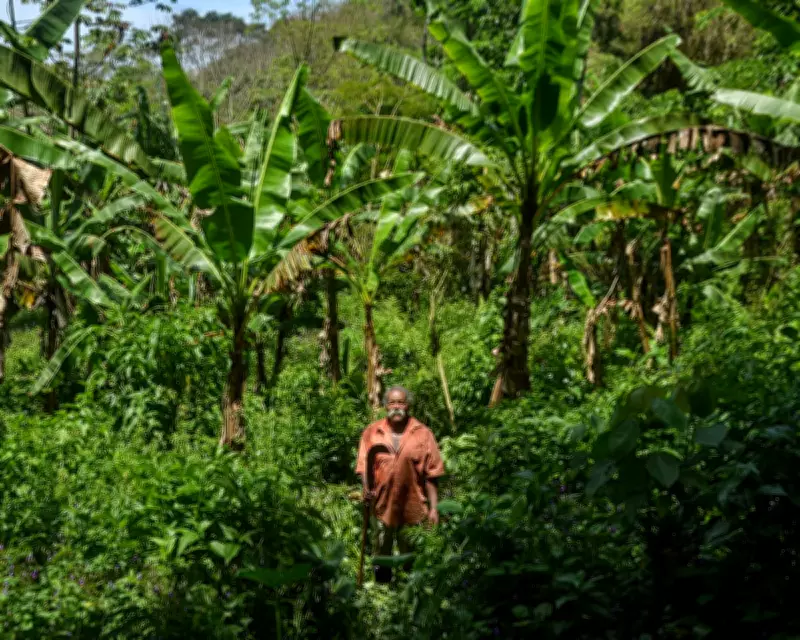
In the heart of Rio de Janeiro, the rhythmic sound of scythes wielded by brothers Jorge and Ubirajara Cardia echoes through the hills of Vargem Grande, a community in the city's south-west zone. As Quilombola descendants from the Cafundá Astrogilda community, they harvest bananas using ancestral methods, selecting bunches of prata, maçã, and Cavendish varieties weekly. With mules as their companions, they traverse 5km along forest paths originally carved by Indigenous Tupinambá peoples and enslaved African workers, delivering their organic crop to local markets.
Agroforestry: A Model for Conservation and Community Resilience
The abundant banana groves cultivated by quilombola communities and traditional farmers are integral to the Pedra Branca state park, a designated conservation area. This agroforestry system, which integrates trees, shrubs, and crops, has evolved over generations into a sustainable practice that restores and preserves biodiversity. Part of Unesco's Atlantic Forest Biosphere Reserve, the park spans 17 Rio neighbourhoods and is recognised as the world's largest urban forest, covering 12,500 hectares.
Jorge Cardia describes the system as "agriculture of life," emphasising its low-maintenance approach: "In agroforestry, the management of banana crops demands less work, and we save time as we only need to prune the banana plant. Then, nature, with its own rhythm, does all the rest." Originally from south-east Asia, bananas were introduced to Brazil by Portuguese colonisers in the 16th century. Today, in Pedra Branca, banana plants interweave with native species like embaúba and jabuticaba, creating a vibrant green tapestry that thrives without monoculture practices.

Challenges and Recognition for Traditional Farmers
When Pedra Branca state park was established in 1974, its environmental management plan initially prohibited farming and the planting of exotic species, including bananas, with authorities aiming to relocate residents. However, communities remained, and over time, the ecosystem adapted, with shade-tolerant species flourishing alongside sun-loving banana plants. This coexistence has positioned banana growers as essential caretakers of the forest, despite historical tensions with public authorities.
Annelise Fernandez, an environmental sciences professor at the Rural Federal University of Rio de Janeiro, notes: "Parks are generally created in a very unilateral way, causing forced eviction and deterritorialising the communities. A more effective solution is to reconcile land rights and environmental conservation." In 2010, the State Institute of the Environment recognised traditional farmers as conservation agents, and in November 2023, President Luiz Inácio Lula da Silva issued a decree supporting quilombola communities' land rights and cultural practices.
Threats from Urbanisation and the Fight for Preservation
Despite these advancements, banana growers face significant challenges from real estate speculation around Pedra Branca. New middle-class condominiums in urbanised areas pressure the forest, draining water resources and threatening Atlantic Forest remnants. Luz Stella Rodríguez Cáceres, an anthropology and geography specialist from Rio de Janeiro Federal University, warns: "If you ask me what's most harmful to the forest, [I'd say] it's the real estate speculation surrounding the park, draining its water resources. The condos literally canalise the park's rivers."
To safeguard these communities, Rodríguez Cáceres advocates for their inclusion in the FAO's Globally Important Agricultural Heritage Systems (GIAHS), which would grant recognition as income-generating guardians of the forest. Sarah Rubia Nunes, who manages AgroVargem, an organisation of small-scale farmers, underscores the resistance embodied by agroecology: "Agro-ecological family farming is resisting the delusional expansion of agribusiness and monoculture." During the pandemic, these farmers ensured food security for the city, highlighting the resilience of sustainable practices.

According to the Food and Agriculture Organization of the UN, agroforestry systems can achieve up to 80% of the biodiversity of natural forests, improving soil health, water management, and climate change mitigation. As Rio's banana growers continue their legacy, they not only preserve a critical urban forest but also champion a model of agriculture that harmonises human livelihood with ecological stewardship.