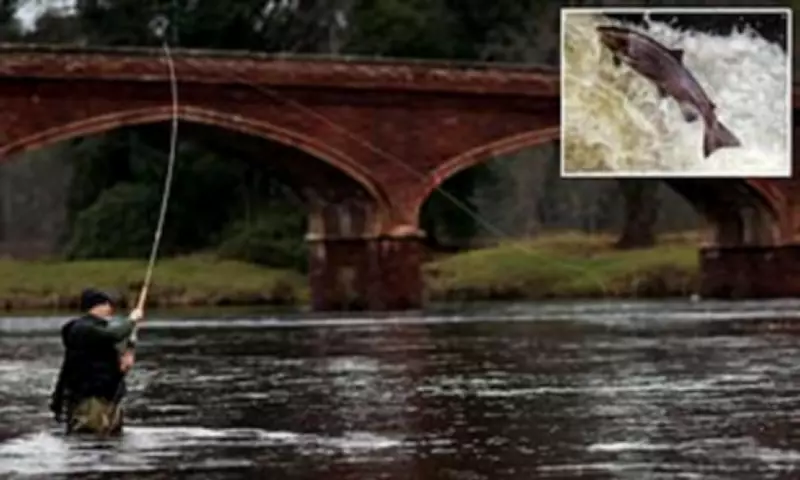
Scotland's esteemed status as a premier global destination for salmon fishing is now under severe threat, as the number of fish caught in the nation's rivers has plummeted to an unprecedented low. For the first time since records began in 1952, fewer than 30,000 wild salmon were landed in Scotland last year, marking the lowest figure ever documented.
Catastrophic Decline Sparks Extinction Fears
Experts are sounding the alarm, describing the situation as a 'catastrophic decline' for Scotland's 'king of fish' and warning that the species faces the imminent threat of extinction. This record low catch has reignited intense debates over the causes behind the sharp drop in salmon numbers, with blame being directed at multiple factors including climate change, overfishing, deteriorating river conditions, and the expansion of fish farming operations.
Alarming Statistics Reveal Rapid Downturn
Official figures from the Scottish Government reveal that in 2025, a total of 28,933 wild salmon were caught, a stark contrast to the previous low of 35,693 recorded in 2021. This dramatic downturn has occurred within just a decade and a half, with the highest ever salmon catch recorded as recently as 2010 when 111,405 fish were landed. The rapid decline highlights a troubling trend that has accelerated in recent years.

Economic Impact on Angling Sector
Beyond the ecological disaster, this decline poses a significant threat to Scotland's sport angling sector, which has previously been estimated to be worth over £100 million annually. Nick Underdown, Scotland director of the charity WildFish, emphasized that falling salmon numbers jeopardize a vital part of the economy, noting that anglers 'will simply not return if salmon disappear.' He attributed part of last year's record low catch to high temperatures and reduced rainfall, but stressed that the figures underscore an alarming long-term trend.
Underdown stated: 'Salmon numbers are facing catastrophic decline. Everyone in fisheries management and salmon conservation is acutely conscious of it. There is a real risk of salmon going extinct under our watch.'
Conservation Measures and Industry Disputes
In response to the crisis, Scotland has implemented several measures aimed at bolstering salmon populations, including a mandatory catch-and-release policy in areas where stocks are no longer deemed sustainable. However, WildFish argues that the single largest threat to wild salmon stems from the growing number of salmon farms, which they claim act as reservoirs for disease and sea lice infestations that can harm migrating salmon.
These assertions are strongly contested by Scottish Salmon, the representative body for the fish farming industry, which denies such claims. Meanwhile, the Scottish Government's Rural Affairs Secretary Mairi Gougeon affirmed ongoing efforts, stating: 'We're working closely with partners to drive the protection and recovery of this iconic species.'
The situation remains critical, with the future of Scotland's wild salmon hanging in the balance as stakeholders grapple with complex environmental and economic challenges.