Vermont Silent Retreat Owner Forced to Relocate as Logging Shatters Peace
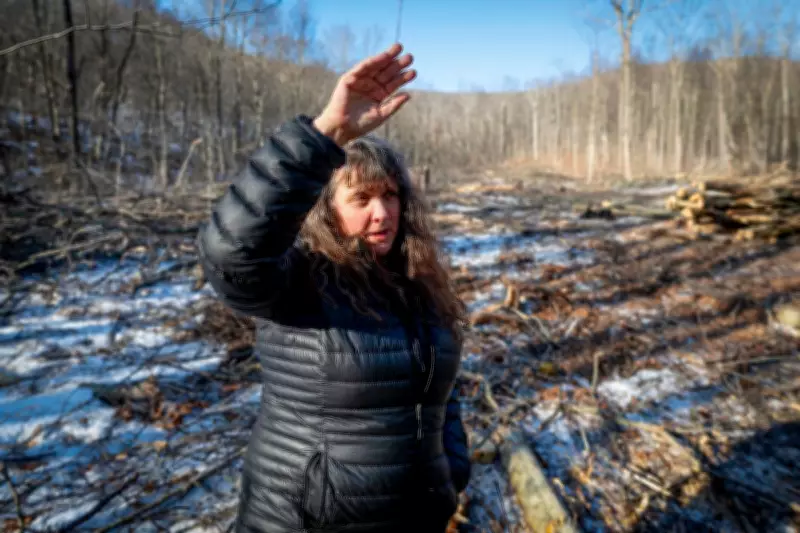
Tracey Forest, owner of the Spirit Hollow silent retreat in Vermont, faced a "big shocker" in late November when loud grinding and beeping from logging machinery erupted near her property. The noise, from a fleet of trucks with giant claws and saws heading toward the Green Mountain National Forest, forced her to relocate retreat programs after guests were upset by the sound of falling trees.
"To place such a giant, loud factory operation right at our border — it seems unconscionable to us," said Forest, whose given name is Tracey Forest. She described seeing a large number of felled trees, with only a few left standing in clearings littered with branches and debris.
Early Successional Habitat Project Sparks Division
The logging on Grass Mountain is part of a 15-year U.S. Forest Service plan called the Early Successional Habitat Creation Project. Approved in 2019, it aims to create young forests by allowing logging on over 14,000 acres in the southern portion of the Green Mountain National Forest. The project uses various forestry methods, including clearcutting in patches, to promote habitat for wildlife like songbirds and game birds.

This initiative rekindles an ongoing debate in Vermont between forest conservationists, who advocate for rewilding, and loggers, foresters, and state biologists who argue active forest management benefits long-term forest health. Both sides believe their methods improve the forest's overall health, with the future of Vermont's prized natural resources at stake.
Condition-Based Management Raises Legal Concerns
In implementing the project, the Forest Service used a new approach called "Condition-Based Management," which allows changes to elements after a decision without public feedback. This method has faced legal challenges in other states, with environmental activists and lawyers worrying it violates cornerstone environmental review laws by limiting public input.
Vermont lawyer Andrew Cliburn noted the approach could circumvent "burdensome and lengthy environmental review" under the National Environmental Policy Act, especially as the Forest Service faces pressure to increase logging. "Democracy slows things down on purpose," he remarked. However, the Forest Service maintains on its website that condition-based management "is a method to meet NEPA's requirements, not to avoid or shortcut them."
Ruffed Grouse Society Supports Logging Efforts
On the other side of the debate, the Ruffed Grouse Society—a hunting and conservation group—has partnered with the Forest Service to push forward early successional habitat projects. In 2019, they entered an agreement to restore habitats for ruffed grouse and woodcock on National Forest System lands.
Amelia Napper, Vermont public lands forester for the Ruffed Grouse Society, called the concerns at Spirit Hollow a "short-term pain." She expects residents will later delight in the sounds of birds and the landscape's beauty once the timber sale is completed. The logging on Grass Mountain involves roughly 110 acres, with logs sold to a Vermont-based logger to fund tree planting and stream restoration.
Conservationists Criticize Selective Benefits
Critics like Zack Porter, executive director of Standing Trees, argue the project is "destroying the livelihoods of Vermonters" and targets important landscapes. He criticized the Forest Service's partnership with hunting groups, saying they aim to increase logging on public lands.
John Terborgh, a professor at Duke University, noted that while game birds benefit, many species would thrive if public lands were spared from logging. "My sympathies are wholly with nature and not with the destruction of nature," he said, adding that logging can "do great damage to the rest of the biodiversity."
Michael Kellett of Restore: The North Woods called it "picking winners and losers," with losers being wildlife that prefer big trees and interior forests, and winners being a few species that don't need help.

Public Engagement and Transparency Issues
Forest said she missed public notices for the project in 2019 and 2023, only learning about it from foresters in 2024. She wasn't notified for the 2025 comment period and found out about the operation when machinery arrived. By then, the federal contract was finalized, preventing accommodation of Spirit Hollow's calendar or reimbursement for relocation costs.
Organizations like the Vermont Natural Resources Council and Vermont Audubon objected to the project, partly due to the condition-based management approach limiting public engagement. After persistent concerns, the Forest Service scaled back proposed road construction from 75 to 25 miles of temporary roads and assured that condition-based management would not be used on the Green Mountain National Forest in the future.
Jamey Fidel of Vermont Audubon emphasized the importance of maintaining public engagement, noting that securing this assurance was crucial for future projects.