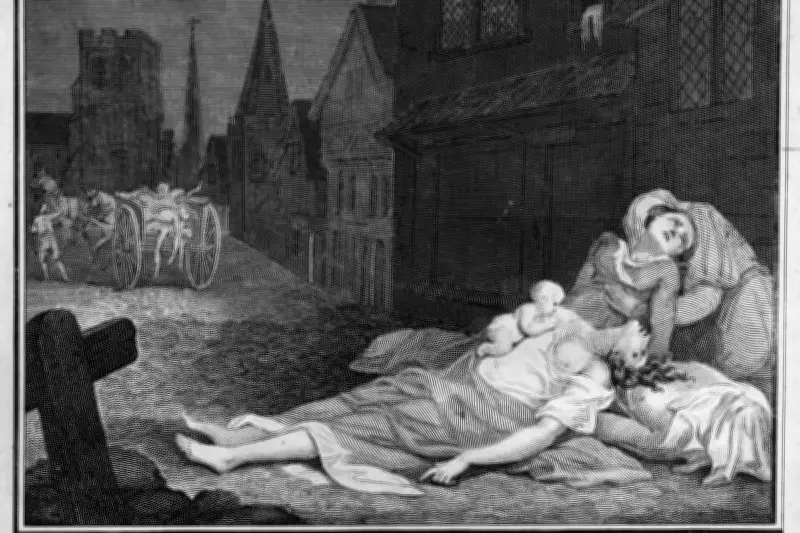
Black Death Caused Plant Diversity Collapse, Not Rewilding, Study Finds
Scientists have revealed that the catastrophic Black Death pandemic, which wiped out nearly half of Europe's population between 1347 and 1353, led to a surprising decline in plant diversity across the continent. This groundbreaking discovery challenges long-held assumptions about the environmental benefits of large-scale human population decline.
Reversing Historical Assumptions
Until now, researchers widely believed that the sudden loss of life during the medieval plague resulted in environmental benefits through what was considered a massive historical "rewilding" event. The conventional wisdom suggested that as farms, villages, and fields were abandoned due to population collapse, nature would naturally recover and biodiversity would flourish without human interference.
However, a comprehensive new analysis of fossil pollen records from across Europe tells a dramatically different story. "As farmland was abandoned, traditional land management practices ceased, and forests spread," explained Jonathan Gordon, an author of the study published in the prestigious journal Ecology Letters. "Rather than driving an increase in plant biodiversity, biodiversity plummeted."

Detailed Analysis Reveals Surprising Patterns
Dr. Gordon from the University of York's Leverhulme Centre for Anthropocene Biodiversity and his colleagues conducted meticulous research examining plant diversity in the centuries before and after the Black Death. Their findings reveal that biodiversity declined significantly during the 150 years following the pandemic, contradicting previous assumptions about the relationship between human activity and ecosystem health.
The research demonstrates that many plant species valued today actually depend on long-term human disturbance, including traditional farming practices, grazing activities, and land clearance methods that had developed over centuries. When these practices suddenly ceased due to population collapse, the ecosystems they had helped shape began to deteriorate rather than improve.
Implications for Modern Conservation
These findings have profound implications for contemporary conservation strategies, particularly challenging the popular "rewilding" movement that often promotes withdrawing human activity from landscapes to enable nature recovery. The study suggests that simply removing people does not automatically lead to healthier or more diverse ecosystems.
"Our work offers a more nuanced perspective on the relationship between humans and nature," said Chris Thomas, another author of the study. The research indicates that biodiversity and human land use do not have to be in constant conflict. "In many cases, they actually depend on one another," Dr. Thomas emphasized.
A New Approach to Biodiversity Management
Scientists are now calling for a "patchwork approach" to maintain the diverse types of biodiversity that have characterized European ecosystems over the last several millennia. This strategy involves maintaining a mosaic of different landscape elements including crops, woodlands, pastures, ponds, and lakes coexisting within the same geographical area.
"It is true that humans can go too far, and we have seen that with extensive crop monocultures and overgrazed landscapes," acknowledged Dr. Gordon. "But we have models where a good balance has been achieved between humans and biodiversity."
The researcher pointed to several successful historical examples, including the Iberian dehesas and montados, Alpine pastures, and Hungarian Tanya systems, demonstrating that harmonious coexistence between human activity and biodiversity is not only possible but has been achieved in various European contexts throughout history.
This research fundamentally challenges the idea that the richest ecosystems are found exclusively in landscapes untouched by humans, suggesting instead that sustainable human management may be crucial for maintaining biodiversity in many contexts.