Climate Change Fuels Surge in Deadly Dengue Outbreaks, Study Reveals
A groundbreaking new study has issued a stark warning: climate change is actively driving deadly disease outbreaks across the globe. An international team of researchers has traced a direct connection between a devastating cyclone that struck Peru in 2023 and an unprecedented spike in dengue fever cases, highlighting the immediate health impacts of a warming planet.
Cyclone Triggers Tenfold Increase in Dengue Cases
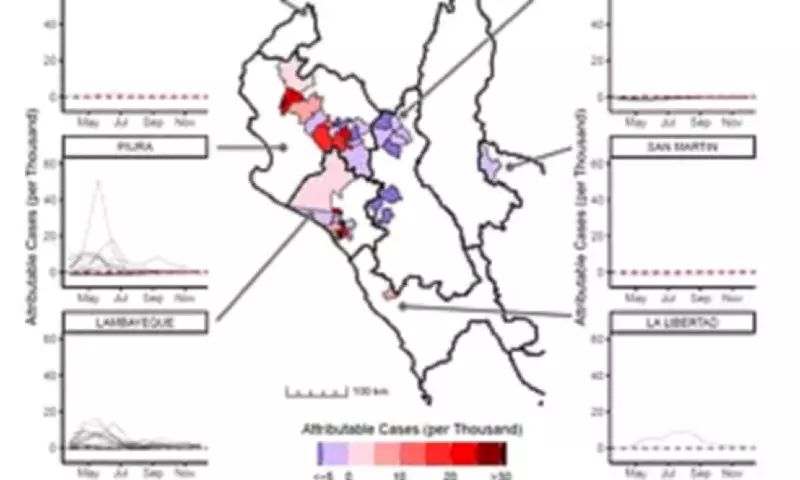
The research focused on the aftermath of a cyclone and coastal El Niño weather pattern that hit Peru in March 2023, bringing extreme rainfall and heat to typically arid regions. In the wake of the storm, normally dry areas experienced a dengue fever outbreak ten times larger than usual. To quantify the storm's role, scientists simulated scenarios without this extreme weather event. Their models revealed that 60 per cent of dengue cases in the hardest-hit districts were directly caused by the extreme rainfall and warm temperatures, equating to an additional 22,000 individuals afflicted by this life-threatening disease.
Lead author Mallory Harris, a postdoctoral scholar at the University of Maryland, emphasised: 'Health impacts of climate change aren't something we're waiting for, they're happening right now.' This study, published in the journal One Earth, marks the first time researchers have precisely measured the impact of a specific storm on dengue transmission, attributing it to climate-driven factors.

How Extreme Weather Creates Perfect Breeding Grounds
Dengue fever, a mosquito-borne viral infection, affects millions annually worldwide, according to the World Health Organisation. It can cause symptoms ranging from fever and rashes to severe haemorrhage and shock. The cyclone in Peru created ideal conditions for the Aedes aegypti and Aedes albopictus mosquitoes that spread the disease:
- Heavy rain and flooding disrupted water and sanitation infrastructure, forming stagnant pools for mosquito breeding.
- Warm weather accelerated mosquito breeding cycles, increasing bites and infections.
- This led to massive outbreaks in warmer regions, while cooler areas remained unaffected.
Senior author Dr Erin Mordecai of Stanford University noted: 'While we often observe large dengue outbreaks following extreme weather events, this is the first time scientists have been able to pinpoint the role of climate change and precisely measure the impact of a particular storm on dengue.'
Climate Change Triples Risk of Outbreak Conditions
The study further demonstrates that climate change is making such outbreaks more likely. Analysis of climate simulations comparing rainfall from 1965 to 2014 with pre-industrial levels showed that extreme rainfall in northwestern Peru is now 31 per cent more probable due to human-induced climate change. When combined with rising temperatures, the likelihood of weather conditions similar to those in 2023 has nearly tripled.
Dr Harris added: 'As extreme weather events become more frequent with climate change, we need to think strategically and act decisively to prevent mosquito-borne epidemics.' This urgency is compounded by research indicating dengue fever could soon reach Britain as global temperatures climb.
Dengue Fever Threatens to Spread to Britain
Alarmingly, the study follows recent warnings that dengue fever is heading to Britain amid rising UK temperatures. Scientists from the University of Montpellier predict that warming climates could turn Europe into a suitable habitat for the Asian tiger mosquito, which spreads dengue. Their models suggest outbreaks could occur in cities including London, Vienna, Strasburg, and Frankfurt within just a few years.
The mosquito's northward spread in France has accelerated from about 6 km per year in 2006 to 20 km per year in 2024, indicating it could thrive in northern France by 2035 and potentially reach London shortly thereafter. This underscores the expanding geographic range of dengue, with cases already appearing in US states like Texas, California, and Florida, regions historically free of the disease.
Understanding Dengue Fever
Dengue is a viral infection primarily spread by mosquitoes in tropical and subtropical regions. Symptoms typically include:

- Fever and severe headache
- Pain behind the eyes and muscle aches
- Nausea, vomiting, and widespread rash
While most cases are mild and resolve within a week, severe dengue can lead to life-threatening complications such as haemorrhage, organ failure, and shock, particularly in elderly or immunocompromised individuals. There is no specific cure; treatment focuses on symptom relief through painkillers, hydration, and rest. In severe cases, medical interventions like blood transfusions and oxygen therapy may be necessary.
This research serves as a critical reminder that the consequences of climate change are not distant threats but present realities, demanding immediate action to mitigate health risks worldwide.