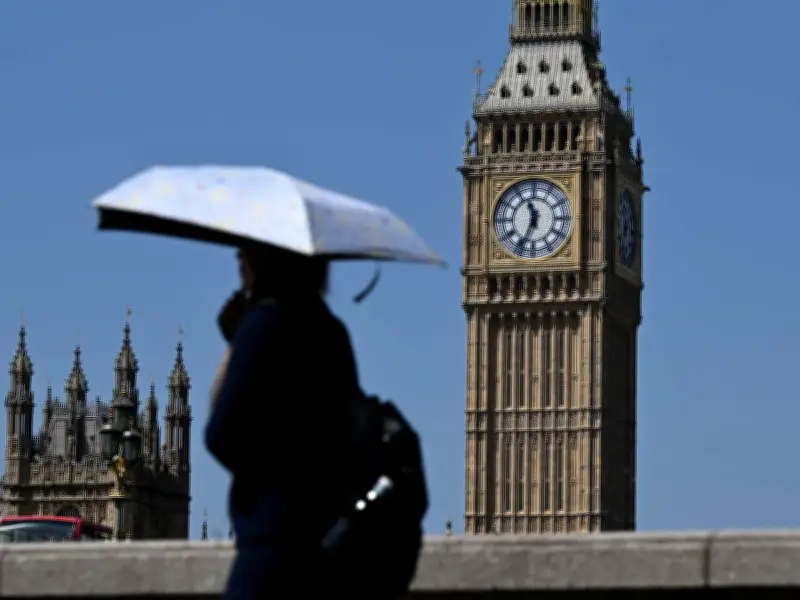
A climate event focused on the critical need to improve extreme heat governance was cancelled on Wednesday due to extreme heat itself. The conference, titled “Extreme Heat: Improving Governance and Strengthening Action Around the World”, was scheduled to take place at the Shaw Library at the London School of Economics (LSE) as part of Climate Action Week. It was hosted by LSE’s Grantham Research Institute in partnership with the Zurich Climate Resilience Alliance.
Red Weather Warning Forces Cancellation
The Met Office issued a red weather warning for extreme heat covering London from 9am on Wednesday to 9pm on Thursday. A “heat-dome” settling over western Europe could bring temperatures of nearly 40°C by Wednesday, with this latest heatwave expected to surpass the UK record for June – 35.6°C set in Hampshire in 1976. Organisers decided to cancel the event, stating they did not want to subject attendees to “very unpleasant indoor conditions” and “hot journeys to the venue”.
“The event venue, like most buildings in London, does not have any cooling mechanisms in place, and we cannot risk the wellbeing of speakers or guests by subjecting everyone to very unpleasant indoor conditions in addition to hot journeys to the venue,” wrote the Zurich Climate Resilience Alliance in a social media post on Tuesday. “Our apologies to everyone who was planning to attend the event. Thank you for your understanding – and if you are in London, please stay safe.”

Expert Warnings on Climate Change
Professor Fredi Otto, professor of climate science at Imperial College London, told a media briefing that heatwaves will occur more often and with even higher temperatures “as long as emissions continue”. She said “our homes, infrastructure, and economy are not built to cope with these conditions”, adding: “The UK has been built for a climate that just doesn’t exist.” Prof Otto noted: “Temperatures above 35 degrees used to be extremely rare in the UK. They have now occurred in seven out of the last 12 years, and this sustained surge in extreme heat would not have happened without human-caused climate change.”
Dr David Dawson, associate professor in sustainable and resilient cities at the University of Leeds, said heatwaves are going to become “more frequent and longer”, adding that 92 per cent of UK homes could overheat by the 2050s.
Met Office Report Findings
A Met Office report published in May found that there is an 86 per cent chance that at least one year between 2026 and 2030 will be hotter than 2024, currently the planet’s warmest year on record. It also found that there is a 91 per cent chance that global temperatures will temporarily exceed 1.5°C above pre-industrial levels in at least one of the next five years.
The climate crisis is also making other extreme weather events such as floods, droughts and storms increasingly common across the world. If global warming exceeds 1.5°C – the target limit set by the Paris Agreement – the risk of severe climate impacts rises sharply, including ecosystem damage, species extinction, more extreme weather, food and water insecurity, heat-related deaths, and the loss of ancient ice sheets in Greenland and Antarctica, which would cause sea levels to rise dramatically.