Coral Reefs Nearing Extinction: 2026 Must Mark a Turning Point
Renowned actor and environmental advocate Jason Momoa has issued a stark warning: coral reefs are on the brink of extinction, and the year 2026 must serve as a critical turning point for their survival. Drawing from his Hawaiian heritage, Momoa emphasizes that reefs are not merely scenic wonders but integral to culture, food security, and coastal protection.
The Dire State of Coral Reefs
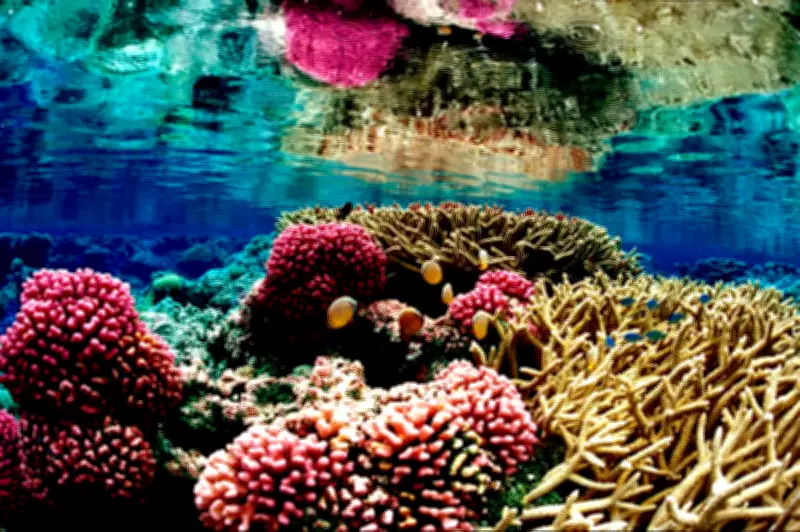
Our planet has recently endured the most extensive coral bleaching event ever recorded, spanning 33 months into 2025. Scientific projections indicate that at 1.5 degrees Celsius of global warming, up to 90% of coral reefs could vanish. This threshold is alarmingly close, not a distant future scenario.
Even if global climate targets are miraculously achieved, reefs continue to suffer from plastic pollution, coastal development, agricultural runoff, and overfishing. These fragile ecosystems, when weakened, expose coastlines to intensified storms and rising sea levels, jeopardizing homes, livelihoods, and cultural heritage. The unique underwater biodiversity found in reefs faces irreversible loss.

A Call to Action Rooted in Responsibility
Momoa invokes the Hawaiian concept of kuleana, a generational responsibility to care for the environment. He argues that this duty extends to every individual worldwide, as protecting nature equates to safeguarding ourselves. Practical examples offer glimmers of hope, such as community-led restoration efforts in French Polynesia and strategic investments through the UN Environment Programme and the Global Fund for Coral Reefs.
These initiatives demonstrate that even modest funding can foster sustainable livelihoods, enhance marine conservation, and support resilient rebuilding after extreme weather events. However, Momoa stresses that time is a luxury we lack; climate change and unsustainable practices are accelerating, demanding swifter responses.
The Crucial Year Ahead
The coming months represent a defining moment for coral reefs. A wave of major global gatherings, from events in Kenya and New Zealand to the Global Coral Reef Summit, alongside emerging scientific research, is poised to elevate reefs to the forefront of environmental discourse. Momoa urges that this attention must translate into immediate, collective action.
He calls for an end to blame-shifting, emphasizing that responsibility lies with all sectors—governments, businesses, communities, and individuals. Proven strategies include reducing climate footprints, curbing plastic pollution, protecting key species, practicing responsible underwater conduct, supporting reef-positive enterprises, and advocating for legislative and financial commitments.
Momoa concludes that 2026 can become a turning point not through mere pledges but via tangible behavioral changes. Coral reefs cannot await perfect solutions; they require urgent, responsible stewardship, embodying the spirit of kuleana to ensure they endure for future generations.