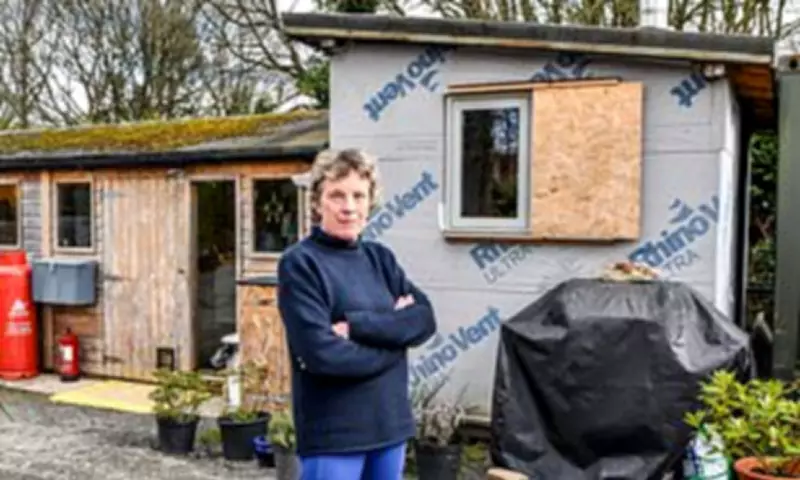
Couple Endures Four-Year Shed Living Due to River Pollution Restrictions
A couple from Herefordshire has been compelled to reside in their garden shed for the past four years after their aspirations to construct an eco-friendly dream home were thwarted by pollution concerns in a river located 12 miles away. Jane Coyle, aged 64, and her husband Anthony, 67, initially submitted planning applications for a three-bedroom sustainable property in the village of Edwyn Ralph, Herefordshire, back in 2020.
The Lugg Moratorium Halts Construction Plans
The project was abruptly paused due to the council's implementation of the Lugg Moratorium, a prohibition on new building developments around the nearby River Lugg aimed at preventing further nutrient pollution. This left the couple stranded in a compact 6-meter by 3-meter garden shed adjacent to the intended site of their 250-square-meter house, awaiting official approval.
Officials at Herefordshire County Council declined to grant planning permission for the £370,000 property until last year, leaving the structure unfinished. The Coyles are now participants in what is described as the largest environmental lawsuit in United Kingdom history, representing approximately 4,000 individuals across a wide area impacted by river contamination.

Financial and Personal Struggles
Mr. and Mrs. Coyle sold their six-bedroom farmhouse in nearby Ross-on-Wye prior to purchasing the plot of land for £120,000 in 2018. They had budgeted an additional £250,000 to build their permanent residence on the picturesque woodland site before work was unexpectedly suspended.
"We fully support protecting watercourses, but we have been stuck living in our shed through no real fault of our own," Mrs. Coyle stated. "We purchased the land from an individual who had obtained permission for a four-bedroom bungalow in 2018 and submitted our design for planning approval in 2020."
The moratorium was established in 2019 to curb additional phosphate pollution in the River Lugg, following recordings of elevated nutrient levels in the water. However, the mother-of-three, employed in property sales, claimed they were unaware of the ban and were not informed by council representatives.
Extended Delays and Additional Costs
"We were assured by our planning officer that the process would take about eight weeks, and we knew nothing of this moratorium in September 2020," she explained. "Since 2020, we have been in limbo, unable to commence construction. We initially moved into a static caravan on the site and then transitioned to the garden shed in 2022."
The couple has been unable to erect a Christmas tree since before the pandemic and must store most of their possessions in an external storage unit. They eventually received planning permission last year after acquiring several thousand pounds worth of phosphate credits, a scheme designed to mitigate environmental impacts by funding wetlands projects.
"We still owe £7,000 for these phosphate credits before building can start," Mrs. Coyle noted. "The delays have resulted in astronomical extra costs, and we continually apologize to neighbors for the site's appearance."
Involvement in Major Environmental Lawsuit
Legal firm Leigh Day has filed a claim at the High Court on behalf of around 4,000 people affected by extensive river pollution. The lawsuit targets poultry producer Avara Foods Limited, its subsidiary Freemans of Newent Limited, and utility company Welsh Water, alleging negligence, public and private nuisance, and trespass.
The legal action asserts that chicken farms contribute 66 percent of nutrient pollution in the river, while new developments account for less than one percent. Pollution from high levels of phosphorous, nitrogen, and bacteria has reportedly caused algal blooms, strong odors, and fatalities among fish and wildlife.
Oliver Holland, partner at Leigh Day, commented: "The concerns of people impacted by the Lugg Moratorium are something we echo, and with the legal claim we will look to hold those allegedly responsible to account."

Broader Environmental and Community Impact
The Lugg Moratorium alone has obstructed the development of approximately 2,000 homes in the region. The legal case encompasses individuals residing or working near the rivers Lugg, Wye, and Usk, or using them for recreational activities such as swimming and canoeing.
Wildlife filmmaker and lead claimant Justine Evans described witnessing a "stark decline" in the River Wye's condition, with once-clear waters turning murky and slimy. Former Olympic swimmer Roland Lee, who relocated to the area for open-water swimming, now advises against entering the river.
Environmental campaigners previously lost a high-profile lawsuit against the British government regarding pollution in the Wye in 2024. Since then, ministers in Westminster and Cardiff Bay have established a joint £1 million fund to investigate contamination sources.
Responses from Involved Companies
A Welsh Water spokesperson highlighted that as a not-for-profit entity, regulated service charges limit infrastructure investment funds. They noted delivering £70 million in improvements along the Wye River over the past five years and £33 million for the River Usk, but mentioned increased pollution from other sectors has diminished overall water quality enhancements.
An Avara Foods spokesperson asserted the company has "done more than any other poultry business to respond to concerns" and supports efforts to understand river health complexities. They stated no scientific studies identify Avara or its supply chain as a primary cause of the river's condition, emphasizing that individual farmers manage nutrient use in compliance with regulations.
Herefordshire County Council has been approached for further commentary on the situation.