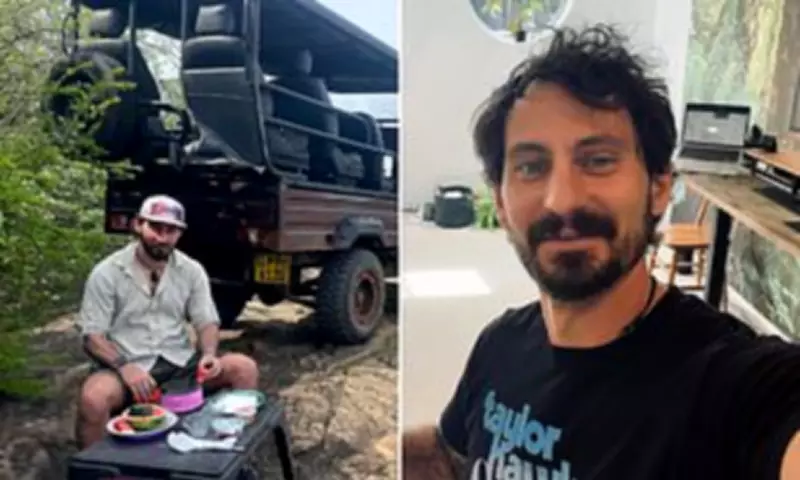
In moments of crisis, knowing what to do and acting swiftly can be the difference between life and death. Conversely, making a critical error during such high-pressure situations can prove extremely dangerous, even fatal. This stark reality is the daily expertise of Ollie Law, a 35-year-old crisis management professional who travels the globe with his wife, Hannah, operating a program called Fixinc.
The Vital Mistake That Could Cost Lives
Law is part of a critical response team that assists businesses and organizations during and after natural disasters and other emergencies. With years of experience witnessing life-threatening scenarios, he identifies one crucial mistake people frequently make during catastrophes. Speaking to the Daily Mail, Law explained that the worst action in an emergency is assuming how others will behave or what they will do.
"What I've learned from all of this is one simple thing: people don't do what you think they'll do," he stated. "We're trained to manage high-pressure situations, and I'm proud of how our entire team at Fixinc has learned to operate in extremely tense scenarios, whether that's natural disasters, cyber incidents or even events involving war. But the training doesn't make you immune to it. It just means you know how to keep going."

Overcoming the "Croc Brain" Instinct
Law emphasized that in frightening, life-threatening situations, individuals often act on instinct. He recommends pausing to think before making decisions, introducing the concept of the "croc brain" – the initial instinctive reaction to a threat.
"Once you learn to recognize when you're in it and how to control it, any situation becomes just a small puzzle to solve rather than a crisis," he continued.
From Earthquakes to Tsunamis: Real-World Experience
Law's company, Fixinc, helps businesses and organizations recover from emergencies ranging from natural disasters and cyberattacks to pandemics and geopolitical shifts. "We help them analyze potential threats, put plans and processes in place and test their response so they can sleep a little easier knowing they're more prepared today than they were yesterday," he said.
His client base spans universities, stadiums, office complexes, banks, government agencies, emergency services, shopping centers, data centers, and various private and public sector organizations. "We're a people-first business. The plans and systems only work if the humans behind them know what to do when things go wrong," Law noted.
Admitting his job is "incredibly stressful," Law recounted being on the ground during New Zealand's 2010 and 2011 earthquakes in Christchurch, helping businesses coordinate responses, relocate staff, and establish a common operating picture for inter-agency communication.
"The aftershock sequence lasted months, and each new event triggered fresh responses from people who were already exhausted, traumatized or had left the city entirely," he recalled. "That experience fundamentally shaped how I think about inter-agency communication and influenced everything I've built since."
He also flew to Tōhoku, Japan, shortly after the 2011 tsunami to assist survivors in rebuilding. "Few people have seen destruction on that scale," he reflected. "What stayed with me most was the silence. With nearly 20,000 people dead, everything becomes very still. The Japanese remained incredibly composed and professional throughout, which was both humbling and heartbreaking."
A Transformed Relationship with Risk
Exposure to such devastation has "fundamentally changed" Law and altered his "relationship with risk." While he is more cautious than before, he experiences far less anxiety due to his planning and preparation skills.
"Nothing truly surprises me anymore. It's a bit like stoicism. You expect things to go wrong, and you deal with them if and when they come," he said. "It's almost as if I walk everywhere looking behind me while still enjoying the moment."

The Minimalist Lifestyle for Maximum Preparedness
One key to Law's preparedness is his minimalist approach. He and his wife have no permanent residence, as he travels full-time to assist clients, carrying only one bag of belongings.
"We've become true minimalists, not as an aesthetic choice but because we've learned how little you actually need," he explained. "There are times when you need to move quickly. During events that turn dangerous, whether that's a natural disaster or rising geopolitical tensions, you have to be ready to pack and leave at short notice. Having bags you can carry and move with fast isn't just a preference, it's a necessity."
He humorously observed, "I laugh when I see young travelers with enormous backpacks full of things they'll never need. When you've had to evacuate, you learn to travel differently."
Finding Calm Amidst Chaos
Despite the intensity of his work, Law expressed gratitude for the lessons it has imparted. "We've learned to enjoy the very small things, like sitting in a city park we've never been to before and just watching the locals go about their day," he concluded.
"We've learned how to stay calm. We've learned how to slow time down and make it feel more meaningful. I rarely know what day of the week it is. I work when I need to work, and the rest of the time I explore. That might sound chaotic, but it's actually the opposite. You become far more present."