Crocodile Attacks Surge in Kenya as Lake Turkana Expands, Claiming Lives
Ng’ikalei Loito was emerging from the warm waters of Lake Turkana on a sunny afternoon, having just finished swimming with her two sisters-in-law, when she suddenly felt the crushing force of a crocodile’s bite on her legs. In excruciating pain, she instinctively clung to a partially submerged tree and screamed for help as the predator tried to drag her under.
Her thoughts raced to her five children, wondering who would care for them if she died. "When a crocodile attacks, it feels like death is certain," she recalled. As shouting villagers waded into the water, the crocodile eventually released Loito’s legs, which were bloody and badly mangled. She was carried out and taken to a hospital three hours away in a police vehicle.
Expanding Lake Forces Predators Closer to Communities
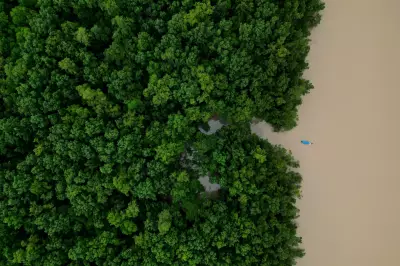
Attacks on people living along Lake Turkana in north-west Kenya have become increasingly common in recent years. Rising water levels are shifting the habitats of Nile crocodiles—predators that can grow up to six metres long and weigh 900kg—closer to human settlements. The attack on Loito occurred in December 2024 in Lowarengak town near the Ethiopian border.

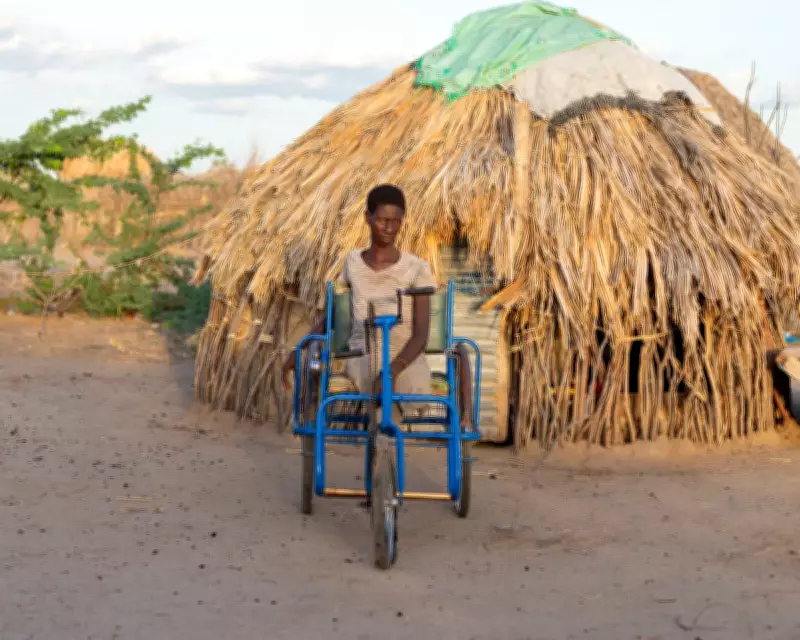
Medics plastered one leg and applied an external fixator to the other, but by the next afternoon, both legs were turning green with only one toe responsive. They made the difficult decision to amputate. "The legs were completely destroyed," the 33-year-old said in an interview at her home in Kalokol town, her tricycle parked nearby.
Loito, who once cooked and sold mandazi to support her family, now depends on assistance from her mother and relatives. "My life has totally changed. I am not able to do anything now," she lamented.
Climate Crisis and Tectonic Shifts Drive Lake Expansion
Lake Turkana, the world’s largest permanent desert lake and largest alkaline lake, is one of eight major lakes along the Kenyan part of the Rift Valley. A 2021 government report found that the lake’s total surface area had expanded by about 10% over the previous decade.
Researchers attribute the rising water levels to multiple factors:
- Increased rainfall due to the climate crisis
- Tectonic movement in the Rift Valley
- Climate change potentially making flooding more frequent over the next two decades, according to a UN environment programme report
The overflow has displaced tens of thousands of people and submerged homes, schools, farms, hospitals, and infrastructure. Elijah Chege, county warden for Turkana at the Kenya Wildlife Service (KWS), explained that this has brought crocodiles closer to human settlements, with the animals establishing new nesting and hunting grounds along altered shorelines.
Traditional Fishing Practices Heighten Risks
Chege noted that traditional fishing practices, such as using logs as boats, expose communities to heightened attack risks. To address the problem, KWS conducts awareness campaigns, recruits local scouts to monitor crocodile movements, relocates "problematic" crocodiles, and, in worst-case scenarios, kills them.
"We have to teach the community to coexist with these animals," Chege said. "We need to balance conservation and the safety of the community. Because the crocodiles, at the end of the day, have to be there. They are in their habitat."
Despite these efforts, attacks persist. In the past year, KWS recorded seven deaths and 15 injuries due to crocodile attacks. Achiro Kephas, referrals and emergency coordinator at Turkana county’s health ministry, said most victims are fishers, many deaths go unreported, and survivors often end up with permanent disabilities.
Harrowing Survivor Testimonies Highlight Ongoing Danger
Testimonies of crocodile attacks are common in communities surrounding the lake. Just across the road from Loito’s home, Ng’ispaan Long’olan sat selling water and charcoal with crutches nearby. He lost his left leg in a 2018 attack in Natirae village, just a day after his youngest child was born.

While untying a fishing net, a crocodile bit his legs. In a desperate struggle, Long’olan poked his fingers into the crocodile’s eye, causing it to release him. However, his crushed left leg was stuck in the net, and he instructed fishers to cut it off with a traditional Turkana wrist knife. "I was in so much pain and the leg was torn and completely damaged," he recalled.
The 44-year-old now has a metal rod in his right leg and numb fingers. He believes the only solution is for KWS to shoot the crocodiles dead.
Families Grapple with Loss and Encroaching Waters
On the Long’ech peninsula, families face recurrent crocodile attacks and land loss. Ayanae Loong’orio lost her eight-year-old daughter, Esther Ikimat, in 2024 when a crocodile attacked her during a school lunch break swim. "My legs failed me," Loong’orio recalled of trying to reach the scene. "I ended up crawling towards the lakeshore, screaming for help."
A video posted to social media showed the animal dragging the child—her head and hand hanging from its mouth—into the lake. A fisher chased the crocodile in a boat and hit it, causing it to release Ikimat’s lifeless body.
In less than two years, water encroachment has made it impossible for Loong’orio to pinpoint where the attack happened. Satellite images from 1984 and 2022 show significant lake expansion in Kalokol and the Long’ech peninsula.
Felisters Dapat lost her son, Daniel Lotaruk, in similar circumstances. Residents found only his legs on the shore; other body parts were never recovered. Dapat often visits the site, hoping to find remains. "What can we do?" she asked. "Even if people kill the crocodiles, the animals will still reproduce."
Community Frustration Boils Over
Angered by the attacks, residents sometimes take matters into their own hands. In October, people in Kalokok town killed a crocodile they said had been terrorising them. Meanwhile, KWS continues awareness efforts, with Kephas holding forums to educate fishers on risky behaviours and the importance of immediate medical attention.
During a recent session, he displayed an image of a crocodile’s sharp teeth, warning: "When this crocodile bites you, your chances of survival are low." He urged communities to avoid behaviours that increase attack risks while acknowledging the difficult balance between human safety and wildlife conservation in this changing landscape.