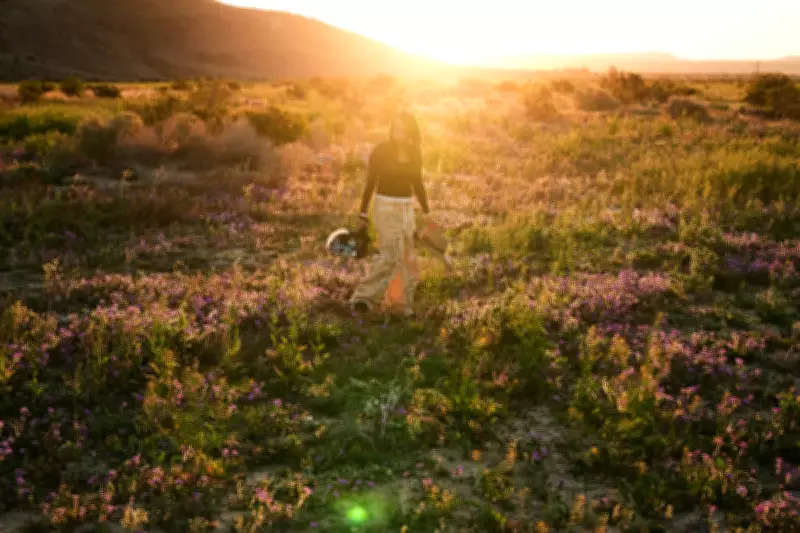
Death Valley and regions across southern California have erupted in a spectacular display of wildflowers, driven by unprecedented rainfall that is fostering blooms approaching the magnitude of a superbloom. In the notoriously arid national park, this rare phenomenon has blanketed miles of terrain with vibrant hues of yellow and purple, transforming the landscape into a floral spectacle.
Superbloom Conditions Emerge
Park authorities announced on Sunday that Death Valley is experiencing an "above-average bloom year" that is edging closer to superbloom status, an occurrence typically unfolding once every decade. The most recent superbloom, which saw millions of flowers in 2016, requires "perfect conditions" including "well-spaced rainfall" and mild temperatures, as highlighted in an official statement.
Abby Wines, Death Valley's acting deputy superintendent, recently informed the Pahrump Valley Times, "It looks like it will be a superbloom – maybe not fully developed yet – but we're heading in that direction." While the current bloom does not match the density of past superbloom years, it significantly surpasses usual levels, marking a notable botanical event.

Record Rainfall Sets the Stage
This development follows record-breaking rains last autumn in Death Valley, one of the hottest and driest locations on Earth, which prepared the soil for wildflower germination and even revived an ancient lake. The moisture has created ideal growing conditions, leading to an explosion of flora across the park.
Similarly, other southern California parks are witnessing major blooms. Anza-Borrego Desert State Park, which received approximately 3.5 inches of rain over the past three months, has experienced a burst of orange, purple, and white flowers. Although a full superbloom has not materialized there this year, the park reports "rewarding and meaningful wildflower experiences" for visitors.
Bloom Timeline and Visitor Impact
In Death Valley, officials anticipate that lower-elevation blooms will persist through March, while higher elevations are expected to showcase flowers from April to June. Superblooms often become viral sensations online, attracting large crowds of tourists eager to photograph the stunning displays.
While widespread visitor surges have not yet occurred this season, social media users have recently shared images and videos of the vivid floral expanses. AccuWeather noted on its Instagram account, "The hottest place in North America may soon be covered in wildflowers due to the weather, marking the first superbloom in 10 years."
This event underscores the dramatic impact of climate patterns on natural ecosystems, offering a rare glimpse into the resilience of desert flora amid changing weather conditions.