Djibouti's Carbon Levy: A Lifeline for Climate Action in East Africa
In the Tadjourah region of Djibouti, a small Francophone nation nestled between Ethiopia and Somalia, the mid-2025 rainy season brought disappointment, leaving arid landscapes and pushing thousands of nomads toward the coastline in search of water. Compounding this crisis, severe overseas aid cuts from the United States under Donald Trump dried up emergency funding pools, leaving authorities scrambling for solutions.
Emergency Response Through Carbon Revenue
What followed was a groundbreaking move that could reshape climate finance across Africa. Authorities in Tadjourah turned to Djibouti's Sovereign Carbon Agency (SCA), a national body established in 2023 to manage funds from the country's pioneering carbon emissions levy. The SCA responded swiftly, deploying water trucks and solar-powered desalination units to avert disaster and prevent large-scale displacement. This intervention is among approximately 80 projects supported by the levy, which targets major polluters to finance Djibouti's climate response.
Bruno Pardigon, a French businessman who helped establish the carbon levy and now directs the SCA, explains, "We will never replace the UN, and we will never replace aid, but we can react quickly to events, we have a lot of local knowledge, and we can really make a difference in crises." Other initiatives funded include plastic collection schemes, recycling programmes, mangrove forest restoration, and the acquisition of a new electric vehicle fleet.

Focus on Shipping Emissions
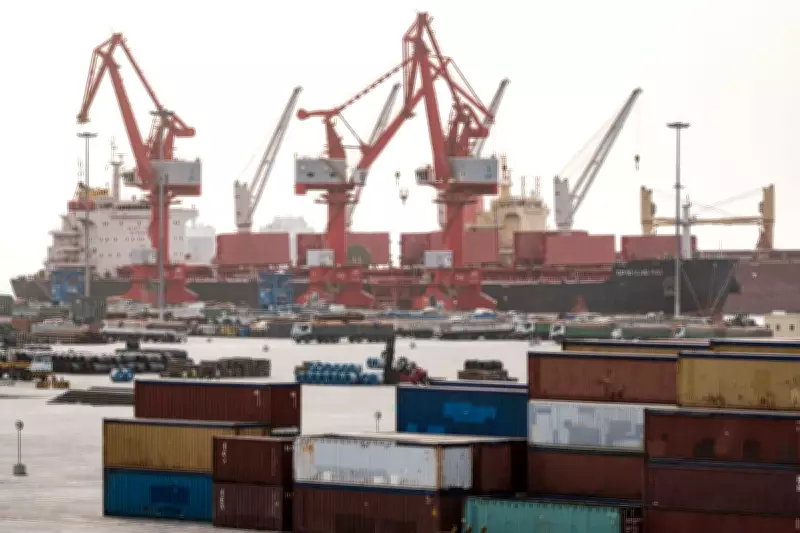
The levy primarily targets Djibouti's port, one of Africa's largest, with 2,500 visiting ships annually handling about 95% of neighbouring Ethiopia's trade. Paul Sebastien, a former carbon trader with UN and business experience, played a key technical role in developing the system. Ships are charged $17 per tonne of carbon dioxide emitted, covering 50% of emissions per voyage. Independent monitoring ensures compliance with international standards, and funds are allocated to projects benefiting Djiboutians, coordinated with aid groups and the government.
Pardigon notes that NGOs and community associations often propose projects, which are vetted for overlap and ethical guidelines before financing. Over two and a half years, the levy has raised "less than ten million dollars," a significant sum for Djibouti's 1.1 million people and $3.7 billion GDP. "People look at us on the map and they see Yemen or Somalia and assume we are in a Civil War," says Pardigon. "We are also not a country like Kenya - Bill Gates and Jeff Bezos are not lining up to fund our green projects - so this money really can go a long way, and is helping to derisk other projects."
A Model for Other African Nations
The carbon levy originated from discussions at the Cop27 UN climate conference in Sharm El-Sheikh, Egypt, in late 2022. President Ismail Guelleh was frustrated that African nations, contributing only 4% of global emissions but suffering disproportionately, were not implementing similar taxes. Unlike other African schemes criticised for favouring Global North emitters, Djibouti's model was developed independently to address local needs.
Initially met with skepticism, the levy has gained traction as aid cuts have intensified. "We approached some international humanitarian groups at the start for support, and they were initially hesitant," says Pardigon. "But now that there is no funding post-Trump, and we have shown what we can do, they have been coming to us asking for money."
While South Africa introduced a carbon tax in 2019, Djibouti offers a blueprint for smaller, less-industrialised countries to capitalise on emissions from international companies without significantly impacting consumer costs. Sebastien adds, "Djibouti has paved the way for other countries in the continent to generate revenues from carbon emissions. The model we have developed - with its strict carbon accounting methodologies, third-party verification, and robust governance - can now be used by others."

The Africa Sovereign Carbon Registry promotes this model overseas, with Gabon and Liberia already establishing their own initiatives and at least 15 other countries considering similar moves. Plans include relocating the foundation's headquarters to Addis Ababa, Ethiopia, to align with pan-African institutions.
Global Context and Expert Perspectives
Globally, over 50 countries have implemented "polluter pays" systems, with the European Emissions Trading System being the largest, raising billions for green transitions. For shipping, the EU covers 50% of emissions from large vessels, but at a higher price of around €70 per tonne.
Carbon market experts praise Djibouti's approach. Agathe Peigney from Transport and Environment notes, "Carbon pricing can provide sovereign revenues for countries like Djibouti. These revenues are very valuable, unlike aid, which is often conditional and irregular." Modelling suggests African countries could raise billions annually with a $100 per tonne carbon price.
Jenny Helle from Carbon Market Watch adds, "It is positive that Djibouti, which is classified by the United Nations as a Least Developed Country, addresses its shipping emissions by introducing a carbon price signal." However, she emphasises that higher prices are needed to incentivise emission reductions beyond fundraising.
The International Maritime Organisation's efforts for a global carbon pricing system have faced delays, but experts argue regional measures are crucial. Peigney states, "Countries needn't wait for a multilateral decision at the IMO, as the EU has already shown. Every year that countries don't price these emissions, they miss out on huge revenues." Helle concurs, encouraging more nations to develop complementary measures.
An IMO spokesperson highlighted the importance of a harmonised global framework to avoid fragmentation, but Djibouti's initiative demonstrates how unilateral actions can fill gaps left by international bodies, offering a sustainable path forward for climate finance in vulnerable regions.