People in Edinburgh have been warned against putting traffic cones on top of statues as it could pose a safety hazard, according to a senior city councillor.
Councillor's Concerns
Stephen Jenkinson, Edinburgh’s transport and environment convener, said: “Whilst I’m sure these have been put up in good humour and with the best intentions, we need to consider the safety of the public above all. Unsecured traffic cones could potentially cause injury or present a road safety hazard, which is why they’ve been removed.”
Jenkinson acknowledged the trend, made famous by a statue in Glasgow, was in “good humour” but said it should not spread elsewhere in Scotland. “I think we can all agree that there is only one statue in Scotland that has truly immortalised the cone, so I’d urge people to not attempt any imitations,” he added.

Recent Incidents in Edinburgh
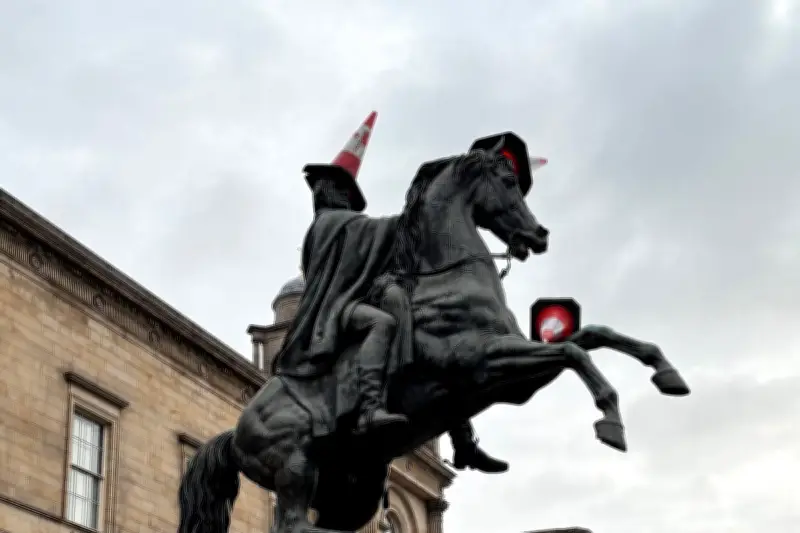
Cones have begun to appear upon statues around Edinburgh in recent days, echoing the long-standing tradition in Glasgow. The equestrian statue of the Duke of Wellington at Waterloo Place sported three traffic cones on Friday morning: one on the Duke’s head, another on the horse’s head and another on the horse’s raised foreleg. Other statues, including those of Adam Smith and Sherlock Holmes, have also been “coned”.
Glasgow's Iconic Tradition
The traffic cone tradition is most associated with the statue of the Duke of Wellington outside the Gallery of Modern Art in Glasgow. Since the late 1980s, a cone has been atop the statue’s head and has been persistently replaced whenever it is removed. When Scotland fans travelled to the US for the World Cup, the Tartan Army decorated statues in Boston and Miami with cones in a similar way. Boston’s mayor Michelle Wu even put a cone on a statue herself.
Council Action
The City of Edinburgh Council has been working to remove the cones that have popped up around the city. The council emphasizes that safety is the primary concern, and cones are removed promptly to prevent injury or road hazards.