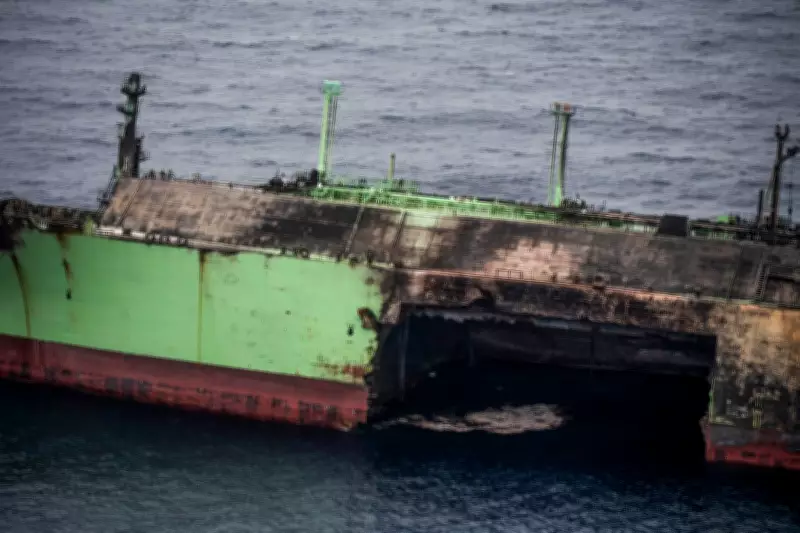
A sanctioned Russian tanker, drifting in the Mediterranean Sea with a dangerous cargo of fuel and natural gas, could explode at any moment and trigger a catastrophic ecological disaster, according to urgent warnings from European Union officials. The vessel, identified as the Arctic Metagaz, is currently floating in waters between Malta and Italy, presenting a dual challenge of maritime safety and environmental protection amid ongoing EU sanctions against Russia.
Imminent Risk of Explosion and Environmental Catastrophe
The tanker is carrying approximately 700 metric tonnes of various types of fuel and a substantial amount of natural gas, making it a ticking time bomb in the heart of the Union's maritime space. Alfredo Mantovano, the secretary of Italy's Council of Ministers, has urgently stated that the tanker could "explode at any moment," highlighting the precarious condition of the vessel. This warning was echoed in a joint letter from nine EU countries to the European Commission, which described the Arctic Metagaz as an "environmental bomb" waiting to go off.
Background of the Incident and Sanctions Evasion
The EU has identified the tanker as part of Russia's "Shadow Fleet," a network of vessels intended to circumvent sanctions imposed following Russia's 2022 invasion of Ukraine. The Arctic Metagaz set sail from the Russian port of Murmansk in February but caught fire in early March under mysterious circumstances. Russia has condemned the incident as an "act of international terrorism and maritime piracy," alleging that the attack involved drones launched from Libya near Maltese international waters. However, Kyiv has not claimed responsibility for the attack.

Despite the fire, all 30 Russian crew members were reported safe by Russia's transport ministry. Currently, the tanker is unmanned, with a gaping hole that is leaking fuel and natural gas into the sea, exacerbating the environmental threat. Maria Zakharova, a spokeswoman for the Russian foreign ministry, emphasized that international legal norms place responsibility on coastal countries to resolve the situation and prevent an ecological disaster, while noting that further involvement from Russia would depend on specific circumstances.
EU Response and Ongoing Concerns
The joint letter from EU countries stressed that the combination of the vessel's damaged state and its specialised cargo creates an imminent and serious risk of a major ecological disaster. This situation underscores the broader challenges of enforcing maritime safety in the context of geopolitical tensions and sanctions. Officials are closely monitoring the tanker's condition, as any explosion could lead to widespread pollution, affecting marine ecosystems and coastal communities in the Mediterranean region.
As the international community watches, the drifting tanker serves as a stark reminder of the environmental vulnerabilities exposed by conflicts and sanctions evasion. Efforts to address this crisis are ongoing, with EU authorities coordinating to mitigate the threat and uphold environmental protections in one of Europe's key maritime zones.