Former Climate Activist's Dramatic Reversal Sparks Debate
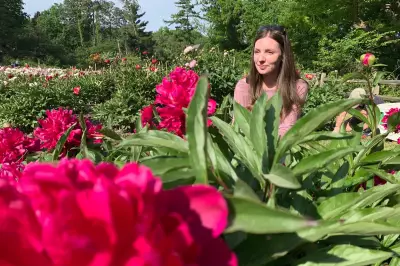
A social media manager who once championed climate change causes has made a stunning public reversal, claiming she was "brainwashed" by environmental ideology and now warns others against what she describes as flawed science. Lucy Biggers, now in her mid-30s, revealed that during her 20s she was among the most vocal advocates for climate action, but has since completely changed her perspective after what she witnessed during the Covid-19 pandemic and becoming a parent.
From Activist to Skeptic: A Personal Journey
Biggers detailed her former activism with notable pride, stating "I interviewed Greta Thunberg, I have interviewed AOC, I pushed ideas like the Green New Deal, plastic straw bans, plastic bag bans - anything you could think that is like the typical climate activist, I pushed those things." Her work placed her at the forefront of environmental advocacy, collaborating with some of the movement's most prominent figures and promoting policies that have gained significant traction in recent years.
However, her perspective underwent a radical transformation following two life-changing events: the global pandemic and the birth of her first child. "I think this idea that warming is bad for humans can't hold up to any scrutiny if you look at it honestly," Biggers asserted in a video that has been viewed more than 500,000 times on social media platform X. She pointed to what she observed during Covid-19 lockdowns as particularly revealing, noting that even with worldwide economic activity dramatically reduced for over a year, there was minimal impact on climate emissions.

Questioning the Scientific Consensus
The former activist presented several arguments challenging mainstream climate science, claiming Earth has been experiencing natural warming since the end of the Little Ice Age in the 1600s. She referenced historical documentation from figures like former President Thomas Jefferson, who recorded warmer conditions in the 1700s, suggesting current warming patterns are part of longer natural cycles rather than unprecedented human-caused change.
"Climate change isn't dangerous, and there isn't a consensus on how much of it we can even control, and if the solutions like solar and wind even work," Biggers argued in her social media posts. She produced what she described as conflicting climate data spanning several years, which she claims casts serious doubt on the narrative that modern human activities are having a major environmental impact.
The Intellectual Shift Through Reading
Biggers revealed that her transformation from activist to what she now calls a "climate realist" was significantly influenced by two books that presented alternative perspectives on environmental issues. The first, Apocalypse Never by former environmental activist Michael Shellenberger, argues against doomsday predictions and highlights environmental progress that has already improved living conditions worldwide.
The second influential work was Unsettled by physicist Steve Koonin, who served under President Obama. This book explores uncertainties in current climate models and data, challenging simplified catastrophic predictions about Earth's future. Biggers explained that these readings helped her understand climate science as more complex and less alarming than what she had previously promoted.
Reevaluating Carbon Dioxide's Role
One of Biggers' most controversial claims centers on carbon dioxide, which climate scientists identify as a primary greenhouse gas driving global warming. She challenged this consensus, stating "And the increase in CO₂, we've seen global greening go up 15 to 20 percent in some areas. Plants have better growing seasons because CO₂ is a plant food, if you remember from biology class."
Her position finds support from some scientific quarters, including Professor Emeritus Richard Lindzen of the Massachusetts Institute of Technology, who recently argued that current CO₂ levels are actually too low from a geological perspective. Lindzen suggested increased carbon dioxide has expanded arable land by 30 to 40 percent and could help food production in arid regions by reducing plants' water requirements.

Concerns About Youth and Education
Following the birth of her second child, Biggers expressed growing concern about how climate change is taught in schools. She claims children and young adults are being presented with an alarmist view that she describes as overly simplistic and fear-inducing. "The opposite is true. We live in a really abundant, safe, prosperous time, and humans have never had more choice than they do now," she contended.
Biggers argues this educational approach has contributed to a mental health crisis among youth, causing feelings of nihilism about the future, reluctance to have children, and a belief that modern society is doomed. Her dramatic reversal from climate activist to vocal skeptic represents a significant personal journey that continues to generate discussion about environmental science, activism, and how society addresses complex ecological challenges.