Exiled Iranian Scientist Wins Prestigious Water Prize Amid Personal Risk
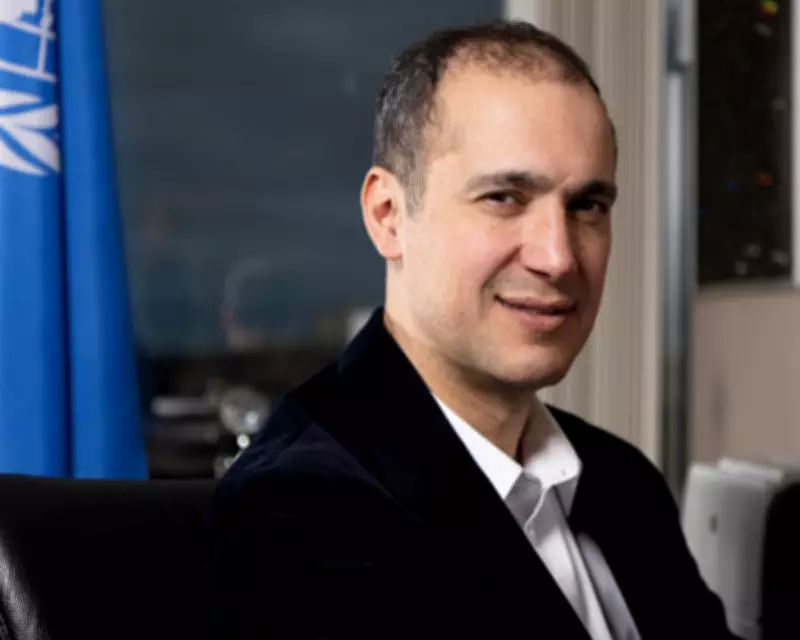
Professor Kaveh Madani, an Iranian scientist now in exile, has been awarded the Stockholm Water Prize, the world's most prestigious accolade in water management. The award recognises his groundbreaking research that combines water management with policy, diplomacy, and global outreach, often undertaken under significant personal risk and political complexity.
A Bittersweet Victory Amid Conflict
Madani expressed feeling "encouraged and humbled" by the honour, but described the moment as bittersweet due to the ongoing war in Iran. He voiced concern that his compatriots in Iran may not be able to celebrate with him, as many are disconnected from global news. "The people who supported me and didn't give up on me," he said, "I don't even know if they will hear about this."
From Childhood Trauma to Global Recognition
Madani's relationship with danger began early in life. At age six, an Iraqi missile struck near his home in Tehran while he was watching television. He recalls the explosion vividly, describing a building rising into the air and his mother bleeding. This traumatic event has left lasting nightmares of attacks and explosions.

After studying civil engineering in Tabriz, he left Iran on a restrictive passport, eventually finding refuge in Sweden. A PhD at the University of California, Davis, and a position at Imperial College London followed, where he built an international reputation by applying game theory to water management. His research highlighted that water crises in Iran and elsewhere stem not just from climate breakdown but from severe mismanagement.
Accusations and Interrogations in Iran
In 2017, the Iranian government invited Madani back to a cabinet-level position as deputy head of the environment department. Despite hopes for reform, he was arrested at passport control in Tehran and interrogated by the Revolutionary Guards, who accused him of being a spy for Western intelligence agencies. His work on water scarcity was reframed as sabotage, with hardliners labeling him a "water terrorist" and even a "bioterrorist."
Madani's time in government was brief but impactful, as he pushed for internal reforms, including appointing women to senior roles. However, the accusations escalated, and in 2018, he faced multiple arrests during a crackdown on environmental experts. He eventually fled Iran, resurfacing in the US and taking up roles at Yale and later leading the United Nations University Institute for Water, Environment and Health.
Global Water Bankruptcy and Political Challenges
Madani emphasises that water scarcity is a global issue, citing examples like Cape Town, Chennai, and São Paulo facing their own "day zero" crises. He criticises the notion that political change alone can solve these problems, noting that empty reservoirs render power struggles irrelevant. "If day zero arrives and the reservoirs are empty," he said, "it doesn't matter who is in power."
The ongoing war in the Middle East has further buried environmental conversations, with displacement and conflict taking precedence. As a UN official, Madani must maintain diplomatic impartiality, even as events in Iran weigh heavily on him. In his acceptance statement, he wrote that "water does not wait for politics," urging recognition of shared vulnerability to find peace.
This award underscores Madani's resilience and dedication to addressing water crises worldwide, despite personal and political adversities.