Massive Geoengineering Experiment Injects Red Chemicals into Gulf of Maine Waters
In a bold and contentious move last August, scientists pumped 65,000 litres of bright red chemicals into the Gulf of Maine, sparking intense debate over geoengineering as a tool against global warming. Contrary to initial fears of an industrial disaster, this was a deliberate experiment in Ocean Alkalinity Enhancement (OAE), aimed at accelerating the ocean's natural capacity to absorb carbon dioxide.
How Ocean Alkalinity Enhancement Works
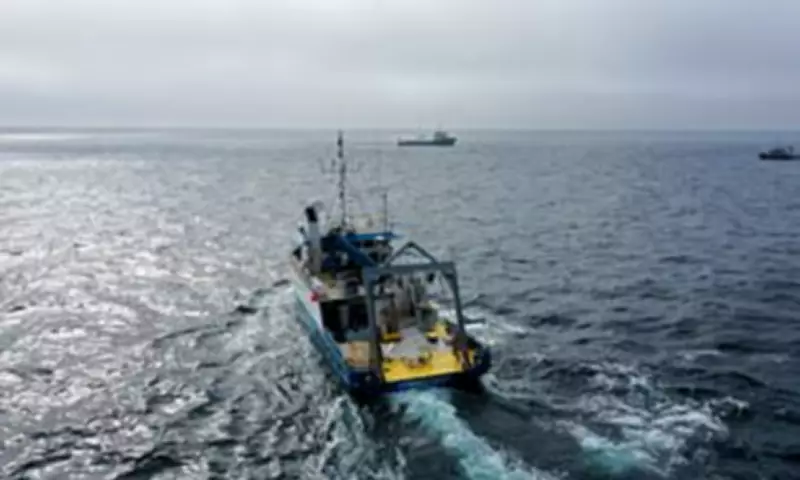
The oceans already store approximately 38,000 billion tonnes of CO2, primarily as dissolved sodium bicarbonate. OAE seeks to enhance this process by increasing ocean pH levels. Over four days, researchers from the Woods Hole Oceanographic Institution released vast quantities of sodium hydroxide, an alkaline substance tagged with a red dye for tracking, into waters 50 miles off the coast of Boston. By making the ocean more alkaline, the method encourages greater CO2 absorption from the atmosphere, potentially locking away excess greenhouse gases.
Scientific Monitoring and Initial Findings
As part of the LOC-NESS project, the first large-scale open-water test of OAE, scientists employed advanced technology including autonomous gliders and underwater vehicles to monitor the chemical spread. Measurements indicated a pH increase from 7.95 to 8.3, reverting to pre-industrial levels, with about 10 tonnes of carbon entering the water. In optimistic projections, the sodium hydroxide could absorb up to 50 tonnes of carbon annually, equivalent to the emissions of five average UK citizens. Principal investigator Adam Subhas highlighted that the trial demonstrated precise engineering and monitoring capabilities, though he stressed the need for independent research to validate such solutions.

Ecological Concerns and Criticisms
Despite promising results, critics warn of unknown risks to marine ecosystems. Gareth Cunningham, Director of Conservation and Policy at the Marine Conservation Society, cautioned that OAE is resource-intensive and its ecological impacts remain poorly understood. The experiment showed no immediate harm to plankton, fish, or lobster larvae, but effects on adult fish were not assessed, raising concerns in a region vital for lobster, cod, and haddock fisheries. Rachel Davitt, a PhD student involved in ecological assessments, reported no significant impact based on current data, but acknowledged limitations in the study's scope.
Broader Implications and Historical Context
OAE is promoted as a dual solution, addressing both CO2 accumulation and ocean acidification, which harms marine life by dissolving shells and damaging coral. However, scaling up to mitigate industrial emissions would require dumping billions of tonnes of sodium hydroxide yearly, potentially releasing trace metals that could accumulate and pose ecological risks. Critics argue this approach is a short-term fix that fails to tackle the root causes of climate change, advocating instead for natural solutions like restoring seagrass and shellfish reefs. Historically, similar alkalinity adjustments have been used, such as in Scandinavian rivers in the 1980s to combat acid rain, but the ocean's vast scale presents unprecedented challenges.
Debate Over Geoengineering Strategies
The controversy extends beyond OAE to other geoengineering proposals, including afforestation, artificial ocean upwelling, and solar radiation management. Each carries potential drawbacks, such as unintended climate effects or limited efficacy. As global warming accelerates, the debate intensifies over whether technological interventions like OAE offer viable paths forward or distract from essential emissions reductions and sustainable practices.